Turkey, pasture-raised
Serving: 4.00 oz (113.4g, 167 cal)
Key Nutrients
| Nutrient | Amount | DV% | Rating |
|---|---|---|---|
| vitamin B3 | 13.32 mg | 83% | Excellent |
| protein | 22.34 g | 45% | Very Good |
| selenium | 24.83 mcg | 45% | Very Good |
| vitamin B6 | 0.92 mg | 54% | Very Good |
| phosphorus | 260.82 mg | 37% | Very Good |
| choline | 57.61 mg | 10% | Good |
| pantothenic acid | 1.02 mg | 20% | Good |
| zinc | 2.66 mg | 24% | Good |
| vitamin B2 | 0.23 mg | 18% | Good |
| vitamin B12 | 0.42 mcg | 18% | Good |
| tryptophan | 0.38 g | 118.8% | Excellent |
vitamin B3
Excellentprotein
Very Goodselenium
Very Goodvitamin B6
Very Goodphosphorus
Very Goodcholine
Goodpantothenic acid
Goodzinc
Goodvitamin B2
Goodvitamin B12
Goodtryptophan
ExcellentAbout Turkey, pasture-raised
What’s new and beneficial about turkey
- Pasture foraging on leguminous plants like clovers and vetch increases the omega-3 content of turkey meat and improves the omega-6 to omega-3 ratio. Conventionally fed turkey averages approximately 10:1 or higher (omega-6:omega-3); pasture feeding lowers this to approximately 7:1. Feed supplementation with linseed oil also raises omega-3 levels, confirming that the fatty acid composition of turkey meat directly reflects dietary intake. Natural pasture feeding is preferable to oil supplementation because the birds also consume insects, seeds, and other whole-food sources that contribute additional micronutrients.
- A study found that skinless turkey consumption of 1-4 oz/day or more was associated with decreased pancreatic cancer risk. Consuming turkey with skin did not change risk. Beef, by contrast, was associated with slightly increased pancreatic cancer risk. The study did not differentiate between pasture-raised and conventional poultry.
- Turkey falls into a group of high-protein foods (alongside tuna and egg whites) that stabilize post-meal insulin levels. The mechanism is straightforward: high protein content slows meal digestion and moderates the insulin response. Four ounces of skinned turkey breast delivers 30-35 g of protein with less than 1 g total fat. By comparison, 4 oz of canned white tuna provides 26 g of protein, and 4 oz of egg whites provides 12 g. Skinned turkey breast is the most protein-dense of the three.
Turkey, pasture-raised, light meat, roasted
4.00 oz
(113.40 grams)
Calories: 167
GI: very low
NutrientDRI/DV
vitamin B383%
protein68%
selenium62%
vitamin B654%
phosphorus37%
choline22%
pantothenic acid20%
vitamin B218%
zinc18%
vitamin B1218%
- Health Benefits
- Description
- History
- How to Select and Store
- Tips for Preparing and Cooking
- How to Enjoy
- Individual Concerns
- Nutritional Profile
- References
Health benefits
Broad nutrient support
Because most cuts of turkey provide valuable amounts of protein, turkey is often regarded as a high-protein food. Skinned turkey breast will provide the most protein per serving, at 34 grams in 4 ounces. But you will still get 31 grams from 4 ounces of turkey leg and 21 grams from 4 ounces of turkey thigh.
In addition to protein, however, turkey is also rich in other nutrients. All B vitamins are present in turkey meat, including B1, B2, B3, B5, B6, B12, folate, biotin, and choline. (Because the biotin content of turkey meat is sensitive to the turkey’s dietary intake, the amount of this vitamin can vary greatly, with an approximate average of 0.8 micrograms in 4 ounces of turkey breast.) Turkey is an excellent for vitamin B3 (niacin) and provides over 13 milligram in 4 ounces, or over 80% of the Dietary Reference Intake (DRI). It’s also a very good source of vitamin B6, at 0.92 milligrams in 4 ounces (54% DRI). By providing 22% DRI for choline in 4 ounces, turkey also ranks as a good source of this B vitamin.
In terms of minerals, turkey is richest in selenium and provides over 60% of the DRI in a single 4-ounce serving. Zinc, copper, phosphorus, magnesium, potassium, and iron are also provided by this food in noteworthy amounts.
All cuts of turkey contain omega-3 fats. However, the content of omega-3s in turkey can vary widely, depending on the turkey’s diet. One of the reasons we recommend pasture-raised turkey is the ability of turkeys to enjoy omega-3 containing plants and insects in natural pasture settings. As a general rule, the most favorable ratio of omega-6 to omega-3 fats is found in skinned turkey breast, where the ratio in non-pasture-raised turkey is approximately 10:1. This same ratio is about 13:1 in non-pasture-raised turkey leg or turkey thigh with skin. While there are only a few studies documenting the omega-6 to omega-3 ratio in pasture-raised turkey, those studies suggest that pasture feeding can lower the ratio to approximately 7:1. (There are some studies on pasture-raised chickens that show similar results.) Within the omega-3 family of fats, it is possible to get 10-60 milligrams of DHA (docosahexaenoic acid) from a 4-ounce serving of turkey, depending on the cut and diet consumed by the turkey. DHA is a unique omega-3 fat in terms of its ability to support healthy nerve function.
Protein richness
Among 100+ WHF ranked by protein density (protein per calorie), turkey ranks third. A 4-ounce serving of skinned baked turkey breast provides about 34 grams of protein and over two-thirds of the Daily Value (DV). With 4 ounces of turkey leg, this number drops just slightly to 31-32 grams of protein. With 4 ounces of turkey thigh, it drops to about 21 grams. In these examples, the protein values are changing from cut-to-cut partly because of the way the turkey moves and uses its muscles, and partly because of the fat content of the various cuts. If the health benefit you are seeking from turkey is focused on protein richness, you’ll probably want to stick with skinned turkey breast as your preferred cut.
Other health benefits
Turkey has less research coverage than chicken. Preliminary studies suggest its high protein content may help regulate blood sugar and insulin metabolism, consistent with the general principle that adequate protein intake throughout the day moderates glycemic response. Cancer research on turkey mostly differentiates it from red meat (primarily beef): turkey intake is not associated with increased cancer risk the way red meats are, though it has not been shown to lower cancer risk either. No studies have examined pasture-raised turkey and cancer risk specifically.
Description
Like chicken, turkey belongs to the bird (Aves) class of animals, and to the family of birds called Phasianidae. While there are many different breeds of turkeys, most of them belong to the same genus and species of bird, namely Meleagris gallopavo. Turkeys are truly native to North and South America - they were not brought to the “New World” by European settlers but were instead discovered to be already present and intimately involved with Native American cultures. Turkeys are relatively large birds that can reach about 30-35 pounds in weight. They can fly short distances at speeds of about 50-55 miles per hour and run at approximately 20-25 miles per hour.
When provided with natural pasture, turkeys will spend extensive time foraging. They are very diverse in their food selection! Pasture-raised turkey enjoy eating acorns, beechnuts, pine seeds, grasses, grass seeds, sedges, farbs, tubers, bulbs, crabgrass, wild berries, alfalfa, clovers, beetles, grasshoppers, and leafhoppers. This very broad natural diet is one of the reasons that we recommend pasture-raised turkey.
“Poults” is the name often used for young turkeys (and other young fowl). Female turkeys are called hens, and male turkeys are called toms or gobblers. In their first weeks of life, poults are typically kept in a brooder area that is temperature controlled (often 90-100°F) and may have limited pasture depending on the exact circumstances with the flock and habitat safety.
Many different breeds of turkey are pasture-raised for food. These breeds include Broad-breasted Whites, Standard Bronze, White Holland, Bourbon Reds, Narragansetts, and Royal Palm.
History
As mentioned in the Description section, turkeys are truly native to North and South America and were an important part of Native American cultures long before the arrival of the European colonists. While Native American cultures did domesticate numerous breeds of turkeys, other breeds remained wild and were hunted in woodlands instead of domesticated. However, from fossil evidence and DNA analysis, we do know that turkeys were indeed domesticated in Mesoamerica (Mexico and Central America) prior to the arrival of the European colonists. They were domesticated once again by the Spanish and British who eventually brought them back to Europe and introduced them into the food supplies of their homelands.
At 2.5 million tons of turkey meat per year, the U.S. is by far the world’s largest producer of turkey. (All countries in the European Union combined produce 1.75 million tons.) Smaller amounts of turkey are produced in Africa, Asia, and the Mediterranean. At about 450,000 tons, Brazil is the largest turkey producer in South America.
In the U.S., we consume an average of 16.5 pounds of turkey per person per year. That about is about one-quarter of our chicken consumption. According to the National Turkey Federation, about 20% of all turkey (just over three pounds per person) is consumed on Thanksgiving Day.
How to select and store
Several aspects of turkey selection affect its nutritional quality. First, fresh turkey is preferable to frozen. Technically, the U.S. Department of Agriculture (USDA) guidelines allow use of the word “fresh” only when turkey has never been stored a temperature below 26°F (-3°C). (Otherwise, the term “frozen” or “previously frozen” would be required.) Additives like sodium erythorbate, MSG, and salt are not allowed on fresh turkey, and that’s a major health advantage for you.
Second, we encourage the purchase of certified organic turkey. Federal organic standards require organic turkey to be raised on organic feed, providing you with a food that is far less likely to contain unwanted contaminants.
However, we also encourage you to go even further in your selection process and choose certified organic turkey that has also been pasture-raised. The terms “free ranging,” “free roaming,” and “cage free” as allowed on labeling by the USDA do not guarantee that the turkeys actually spent any routine time outdoors in a natural pasture setting. Unfortunately, neither does organic certification. While certified organic turkeys are required to have had “access” to the “outdoors,” the actually amount of time spent outside is not specific in the organic regulations and neither is the quality of the space described as “outdoors.” So we recommend that you select turkey that is not only certified organic but also pasture-raised. You will usually need to talk to your grocer or the turkey producer to obtain this information. l
One additional important note about organic turkey: don’t assume that it won’t be available in your local grocery. In a fascinating recent study on poultry purchasing, researchers found that 41% of consumers who had never bought organic turkey assumed that it would not be available in their local store and didn’t even consider selecting it because of this assumption. In addition to the fact that many stores already carry organic turkey, you’ll find that the members of the meat department staff in your local grocery are often willing to help make organic meats—including organic turkey—available to their customers.
Instead of purchasing skinned turkey breasts at the store to get the lowest fat form of turkey, purchase turkey breasts with the skin still intact. Wait to remove the skin from the turkey breasts after cooking. (In this way you’ll improve the moisture, flavor, and aroma of your turkey while not significantly increasing the total fat content.)
However, not all individuals seek the lowest fat version of turkey. Provided that the turkey you select is both organic and pasture-raised, it is likely to contain high-quality fat, including a valuable amount of omega-3s. We realize that most people for personal health reasons will probably be seeking to avoid cuts of turkey that are higher in fat, higher in saturated fat, or higher in calories. However, if you are an individual who has room in your personal meal plan for higher amounts of calories and fats from turkey, you may not necessarily want to choose the lowest-fat version of organic, pasture-raised turkey. The chart below will give you a better idea about cuts of turkey and their fat-related content.
Cuts of non-pasture-raised turkey and their fat-related content*
Form of Chicken
Amount
Calories
Total Fat (g)
Saturated Fat (g)
Omega-6 to Omega-3 ratio
Cholesterol (mg)
Breast without skin
4 ounces
153
0.84
0.27
10:1
94
Breast with skin
4 ounces
214
8.4
2.38
11.4:1
84
Leg with skin
4 ounces
236
11.14
3.47
13:1
96
Thigh with skin
4 ounces
178
9.68
3.01
13:1
70
* At present, there is simply insufficient research data to provide an accurate chart for this cut-by-cut, fat-related nutrient content in turkeys who were pasture-raised.
When purchasing ground turkey, the same principles apply: certified organic and pasture-raised is preferable. Organic standards require organic feed and prohibit synthetic pesticides.
Labeling claims like “95% fat-free” are based on weight, not nutrient content. When possible, look on the back of the packaging for a Nutrition Facts Panel, and check serving size and actual grams of total fat and saturated fat per serving. We’ve seen organic ground turkey that contains 9 grams of fat and 180 calories in 4 ounces, making it 45% fat in terms of calories. This same ground turkey also contained 2.5 grams of saturated fat, or about 13% of the daily limit. For many people (although not everyone), that amount of total fat and saturated fat in a small serving of turkey could be difficult to blend in with an overall balanced diet. Yet we’ve also seen organic ground turkey that only contained 2 grams of fat, 0.5 grams of saturated fat, and 130 calories in 4 ounces. That second product was only 14% fat in terms of calories—an easier amount to incorporate into an overall diet that is balanced in terms of calories and fat.
Safe handling of turkey is critical due to bacterial contamination risk. When you purchase raw turkey, try to make the grocery store your last stop before heading home. When you arrive back home, promptly get your turkey into the refrigerator. In addition, it’s worth checking your refrigerator’s temperature if you have never done so. A temperature of 40°F/4°C or below is needed for raw turkey safety. Turkey should also be stored in the coldest section of your refrigerator (usually at the bottom, in the back). If the store packaging is intact and secure, store it this way since this will reduce the amount of handling. (The only exception being that if you buy a whole turkey with giblets, it’s important to remove the giblets and store them in another container and then rewrap the turkey). Yet, if the packaging is not secure, and it seems as if the turkey liquids will leak, rewrap it securely before storing. This is very important to make sure that the turkey does not contaminate other foods in the refrigerator.
Refrigerated raw turkey can keep for one or two days while cooked turkey will keep for about three-to-four days. Remember to always store the turkey meat separately from any stuffing or gravy you have prepared.
Be very careful when handling raw turkey that it does not come in contact with other foods, especially those that will be served uncooked. Wash the cutting board, utensils, and your hands very well with hot soapy water after handling the turkey.
If your recipe requires marinating, you should always do so in the refrigerator as turkey is very sensitive to heat, which can increase the chances of spoilage. When defrosting a frozen turkey, do so in the refrigerator and not at room temperature. Put the turkey on a plate to collect any liquid drippings.
Tips for preparing and cooking
The healthiest way of cooking turkey
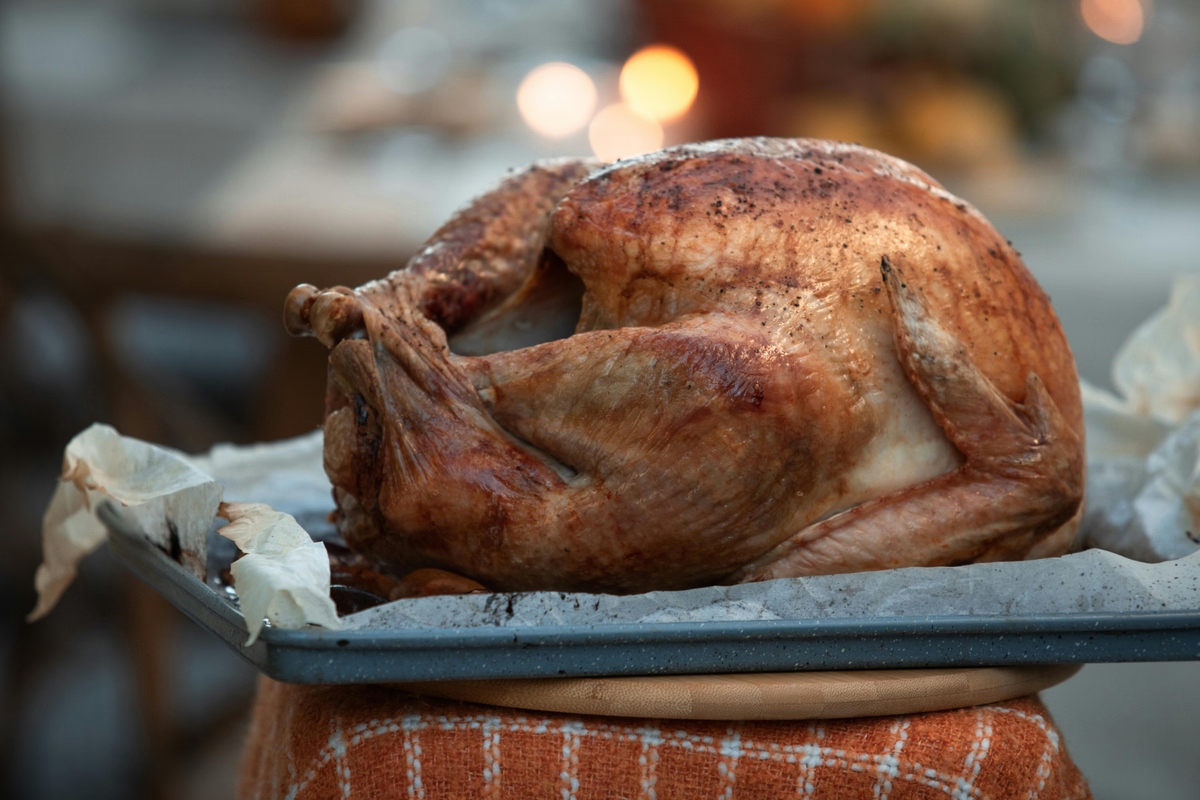
Roasting brings out the best flavor, though it requires several hours.
Preheat the oven to 350°F (175°C). Rub 3 TBS lemon juice and some salt and pepper on the outside of the turkey. Then lift up the skin where you can and rub these seasonings directly on the flesh.
Place the turkey breast side down in a shallow roasting pan. Roast unstuffed turkey for 15 minutes for each pound.
At 30 to 60 minutes before it is done, measure the internal temperature with a thermometer. (The range reflects the differing size of the turkey; do so at 30 minutes for smaller turkeys and 60 minutes for larger ones.) When it reaches 125°F/74°C, you should turn the turkey and then increase the oven temperature to 400°F/200°C for the remaining roasting time.
To judge it as done, its internal temperature must read 165°-170°F/74°-77°C when the thermometer is inserted into the mid-thigh. When it is done, remove it to a platter, and let it sit for 15-20 minutes before carving to allow the juices to be redistributed and the meat to become moist throughout.
If you want optimal safety, it is better to cook turkey stuffing outside of the turkey, for the simple reason that contamination of the stuffing with microorganisms from the raw turkey is not possible if the stuffing is cooked separately. However, many people look forward to the special flavor of stuffing cooked inside the turkey, and if you decide to use that procedure, please make sure that the center of your stuffing is tested with a cooking thermometer and reaches a minimum of 165°F/74°C.
For details, see Holiday Turkey with Rice Stuffing & Gravy with Fresh Herbs.
How to enjoy
Serving ideas
- Use ground turkey instead of ground beef in chili con carne recipes. (See our special tips on ground turkey selection provided in the How to Select and Store section.)
- On a bed of romaine lettuce, serve diced turkey, cooked cubed sweet potatoes, cranberries and walnuts. Toss with a light vinaigrette for a salad that emanates the flavors of Thanksgiving.
- Use ground turkey to make turkey burgers or turkey meat loaf. (Once again, see our special tips on ground turkey selection provided earlier.)
- Say olé to turkey burritos. Place cooked turkey pieces on a corn tortilla, sprinkle with shredded cheese and diced tomatoes and onions. Broil for a few minutes until hot.
- Turkey salad can be prepared numerous ways and can be served for lunch or dinner. One of our favorite recipes is to combine the turkey with celery, leeks, dried apricots and almonds.
Recipes that feature turkey
- Healthy Breakfast Frittata
- 15-Minute Turkey Chef’s Salad
- Crispy Turkey Salad
- Turkey and Vegetable Chili Verde
- Holiday Turkey with Rice Stuffing & Gravy with Fresh Herbs
- Roast Turkey Breast with Chipotle Chili Sauce
Individual concerns
Bacterial contamination of turkey
Several consumer watchdog organizations in the U.S. have reported frequent contamination of raw turkey - especially raw ground turkey—with unwanted bacteria, including E. coli, Enterococcus, and Staphylococcus. (Similar problems have been identified with raw chicken.) For example, one recent study showed over half of all raw turkey samples to contain the bacterium Enterococcus durans. Furthermore, due to the routine use of antibiotics in conventional raising of turkeys, bacteria found on raw turkey have also shown greater antibiotic resistance than expected. One recent study compared organic turkey to conventional turkey, analyzing not only the bacterial content but also the degree of antibiotic resistance. The researchers found that even though the bacterial counts were often similar in conventional versus organic turkey, the degree of antibiotic resistance was significantly higher in bacteria found on the conventional turkey.
If you decide to include turkey in your meal plan, the best way to address these contamination concerns is to use the utmost care in handling and storing turkey and fully cook turkey before you consume it. For more details on proper handling and storing, please see our How to Select and Store and Tips for Preparing and Cooking.
Humane treatment of turkeys
An increasing number of consumers have raised questions about the quality of life for turkeys, and a variety of different third-party animal welfare organizations have started to offer certification for turkey producers who would like to display some label on their packaging that address animal welfare issues. In general animal welfare and humane treatment issues include:
- quality of the indoor environment
- access to the outdoors
- quality of the outdoor environment
- quality of the food supply
- naturalness of the food supply
- role of forced molting
- role of beak trimming and debeaking
- flock size
- exposure to natural day/night cycles
- transport standards
- quality of slaughter methods
Unfortunately, current labeling and certification standards do not provide any easy way to assure humane treatment of turkeys when purchasing this food. Like assurance of pasture-raising, assurance of humane treatment is an issue that will require you to follow-up with your grocer or directly with the turkey producer.
Nutritional profile
Four oz (113.4g) at 167 calories provides tryptophan (118.8% DV), vitamin B3 (83% DV), protein (68% DV), selenium (62% DV), vitamin B6 (54% DV), phosphorus (37% DV), choline (22% DV), pantothenic acid (20% DV), zinc (18% DV), vitamin B2 (18% DV), vitamin B12 (18% DV). Turkey is perhaps best known for its protein richness. Skinned turkey breast provides about 34 grams of protein in a 4-ounce serving. All B vitamins are present in turkey meat, including B1, B2, B3, B5, B6, B12, folate, biotin and choline.
All cuts of turkey contain omega-3 fats. However, the content of omega-3s in turkey can very widely, depending on the turkey’s diet. As a general rule, the most favorable ratio of omega-6 to omega-3 fats is found in organic, pasture-raised, skinned turkey breast, where the ratio is approximately 7:1. Within the omega-3 family of fats, it is possible to get 10-60 milligrams of DHA (docosahexaenoic acid) from a 4-ounce serving of turkey, depending on the cut and diet consumed by the turkey.
Shopping for turkey
- Stick with organic: Organic standards help lower risk of contaminated feed and organic turkey usually has higher nutrient quality. However, remember that organic by itself does not guarantee a natural lifestyle for the turkeys.
- Ask for pasture-raised: Go beyond organic by asking for pasture-raised. Don’t get sidetracked by the confusing array of labeling terms. You are likely to find phrases like “pasture-raised,” “pastured,” “free-range” and “cage-free” on turkey meat packaging, but labeling laws allow products to display these terms even if the turkeys spend little or no time outdoors in a pasture setting. Talk to your grocer or the turkey farmer and find out how the animals were actually raised.
- Consider local farms: Organic, pasture-raised turkey may be available from local farms with small flocks and a natural lifestyle for their turkeys. Two websites that can help you find small local farms in your area are www.localharvest.org and www.eatwild.com. Both sites are searchable by zip code.
Recommendations
One of the great advantages of turkey is that much of the fat can be easily removed making it a very lean source of protein. We recommend roasting turkey to keep it moist and bring out is best flavor. Turkey dries out quickly so it is important not to overcook it; it is also important not to undercook it. For more on the Healthiest Way of Cooking Turkey see the How to Enjoy section below. While usually associated with the holidays, turkey can be enjoyed year round.
Nutrients in
Turkey
4.00 oz-wt (113.40 grams)
Nutrient%Daily Value
tryptophan118.7%
protein68.1%
selenium52%
vitamin B342.5%
vitamin B632%
phosphorus25.4%
choline22.5%
zinc13.1%
Calories (153)8%
Cast iron is ideal for getting a good sear on fish and meat. The Lodge Chef Collection 12" Cast Iron Skillet is a professional-weight pan that improves with every use.
Recipes with Turkey, pasture-raised
- Holiday Turkey with Rice Stuffing & Gravy with Fresh Herbs
- Healthy Breakfast Frittata
- 15-Minute Turkey Chef's Salad
- Crispy Turkey Salad
- Turkey and Vegetable Chili Verde
- Roast Turkey Breast with Chipotle Chili Sauce
- 5-Minute Cold Cucumber Salad 2
- 4-Minute Broccoli with Feta Cheese and Kalamata Olives
- 7-Minute "Quick Steamed" Butternut Squash
- 5-Minute "Quick Steamed" Brussels Sprouts
- 3-Minute "Healthy Sautéed" Green Peas
Full Nutrient Profile
Related Articles
References
- Baggio SR, Miguel AMR, and Bragagnolo N. Simultaneous determination of cholesterol oxides, cholesterol and fatty acids in processed turkey meat products. Food Chemistry, Volume 89, Issue 3, February 2005, Pages 475-484. https://doi.org/10.1016/j.foodchem.2004.05.039
- Chan JM, Wang F, and Holly EA. Pancreatic cancer, animal protein and dietary fat in a population-based study, San Francisco Bay Area, California. Cancer Causes Control. 2007 Dec;18(10):1153-67. Epub 2007 Sep 1. https://doi.org/10.1007/s10552-007-9054-0
- Dunn M and Howk S. Nutrient composition of poultry from different farms and management systems. Livestock Reseach, Practical Farmers of Iowa. January 2013, pages 1-4. Available online at: www.practicalfarmers.org. https://doi.org/10.3390/molecules23040795
- Komprda T, Zelenka J, Fajmonová E et al. Arachidonic acid and long-chain n-3 polyunsaturated fatty acid contents in meat of selected poultry and fish species in relation to dietary fat sources. J Agric Food Chem. 2005 Aug 24;53(17):6804-12. 2005. https://doi.org/10.1021/jf0504162
- Kuffa M, Priesbe TJ, Krueger CG, et al. Ability of dietary antioxidants to affect lipid oxidation of cooked turkey meat in a simulated stomach and blood lipids after a meal. Journal of Functional Foods, Volume 1, Issue 2, April 2009, Pages 208-216. https://doi.org/10.1016/j.jff.2009.01.010
- Micha R, Wallace SK and Mozaffarian D. Red and processed meat consumption and risk of incident coronary heart disease, stroke, and diabetes mellitus: a systematic review and meta-analysis. Circulation. 2010 Jun 1;121(21):2271-83. Epub 2010 May 17. 2010. https://doi.org/10.1161/circulationaha.110.967604
- Miranda JM, Guarddon M, Mondragon A, et al. Antimicrobial resistance in Enterococcus spp. strains isolated from organic chicken, conventional chicken, and turkey meat: a comparative survey. Food Prot. 2007 Apr;70(4):1021-4. https://doi.org/10.4315/0362-028x-70.4.1021
- Mora M, Curti E, Vitadini E, et al. Effect of different air/steam convection cooking methods on turkey breast meat:Physical characterization, water status and sensory properties. Meat Science, Volume 88, Issue 3, July 2011, Pages 489-497. https://doi.org/10.1016/j.meatsci.2011.01.033
- Ntzimani AG, Paleologos EK, Savvaidis IN, et al. Formation of biogenic amines and relation to microbial flora and sensory changes in smoked turkey breast fillets stored under various packaging conditions at 4 degrees C. Food Microbiology, Volume 25, Issue 3, May 2008, Pages 509-517. https://doi.org/10.3390/app12042202
- Pal S and Ellis V. The acute effects of four protein meals on insulin, glucose, appetite and energy intake in lean men. Circulation. 2010 Jun 1;121(21):2271-83. Epub 2010 May 17. 2010. https://doi.org/10.1017/s0007114510001911
- Rymer C and Givens DI. Effect of species and genotype on the efficiency of enrichment of poultry meat with n-3 polyunsaturated fatty acids. Lipids. 2006 May;41(5):445-51. 2006. https://doi.org/10.1007/s11745-006-5118-2
- Schernhammer ES, Feskanich D, Niu C et al. Dietary correlates of urinary 6-sulfatoxymelatonin concentrations in the Nurses' Health Study cohorts. Am J Clin Nutr. 2009 Oct;90(4):975-85. Epub 2009 Aug 12. 2009. https://doi.org/10.3945/ajcn.2009.27826
- Spellera CF, Kemp BM, Wyatt SD et al. Ancient mitochondrial DNA analysis reveals complexity of indigenous North American turkey domestication Proceedings of the National Academy of Sciences (USA), 107(7): 2807-2812. https://doi.org/10.34101/actaagrar/2/12594
- Van Loo E, Caputo V, Nayga Jr. RM et al. Effect of Organic Poultry Purchase Frequency on Consumer Attitudes Toward Organic Poultry Meat. Journal of Food Science, Volume 75, Number 7, September 2010 , pp. S384-S397(14). 2010.
- Verzelloni E, Tagliazucchi D and Conte A. From balsamic to healthy: traditional balsamic vinegar melanoidins inhibit lipid peroxidation during simulated gastric digestion of meat. Food Chem Toxicol. 2010 Aug-Sep;48(8-9):2097-102. Epub 2010 May 12. 2010. https://doi.org/10.1016/j.fct.2010.05.010