Sunflower seeds
Serving: 0.25 cup (35g, 204 cal)
Key Nutrients
| Nutrient | Amount | DV% | Rating |
|---|---|---|---|
| vitamin E | 12.31 mg (ATE) | 82% | Excellent |
| copper | 0.63 mg | 70% | Very Good |
| vitamin B1 | 0.52 mg | 43% | Very Good |
| selenium | 18.55 mcg | 34% | Good |
| phosphorus | 231 mg | 33% | Good |
| manganese | 0.68 mg | 30% | Good |
| vitamin B6 | 0.47 mg | 28% | Good |
| magnesium | 113.75 mg | 27% | Good |
| folate | 79.45 mcg | 20% | Good |
| vitamin B3 | 2.92 mg | 18% | Good |
| tryptophan | 0.1 g | 31.2% | Good |
vitamin E
Excellentcopper
Very Goodvitamin B1
Very Goodselenium
Goodphosphorus
Goodmanganese
Goodvitamin B6
Goodmagnesium
Goodfolate
Goodvitamin B3
Goodtryptophan
GoodAbout Sunflower seeds
Health benefits
A quarter-cup (35g) of sunflower seeds delivers 82% DV of vitamin E, 27% DV of magnesium, and 34% DV of selenium in 204 calories.
Vitamin E and cardiovascular protection
Sunflower seeds provide 12.31 mg of alpha-tocopherol per quarter-cup (82% DV), making them one of the most concentrated food sources of vitamin E. As the body’s primary fat-soluble antioxidant, vitamin E protects lipid-containing structures (cell membranes, lipoproteins, neural tissue) from free radical oxidation. It intercepts reactive oxygen species before they can damage polyunsaturated fatty acids in membrane phospholipids.
In the cardiovascular system, vitamin E prevents oxidative modification of LDL cholesterol. Oxidized LDL is taken up by macrophages in arterial walls, forming foam cells that contribute to atherosclerotic plaque. Epidemiological data associate higher vitamin E intake with reduced cardiovascular mortality, though clinical trial results with supplemental vitamin E have been less consistent than findings from dietary intake studies.
Sunflower seeds’ phytosterols lower cholesterol
Phytosterols are plant compounds structurally similar to cholesterol. They compete with cholesterol for intestinal absorption, reducing blood cholesterol levels when consumed in sufficient amounts. Research also links adequate phytosterol intake to modulation of immune responses and reduced risk of certain cancers.
Nuts and seeds are naturally concentrated sources of phytosterols alongside fiber, minerals, and unsaturated fats.
In a study in the Journal of Agricultural and Food Chemistry, researchers published the amounts of phytosterols present in nuts and seeds commonly eaten in the United States.
Sesame seeds had the highest total phytosterol content (400-413 mg per 100 grams), and English walnuts and Brazil nuts the lowest (113 mg/100grams and 95 mg/100 grams). (100 grams is equivalent to 3.5 ounces.) Of the nuts and seeds typically consumed as snack foods, sunflower seeds and pistachios were richest in phytosterols (270-289 mg/100 g), followed by pumpkin seeds (265 mg/100 g).
Magnesium and neuromuscular function
A quarter-cup of sunflower seeds provides 113.75 mg of magnesium (27% DV). Magnesium is associated with reduced severity of asthma, lower blood pressure, and fewer migraine headaches in clinical studies.
About two-thirds of the body’s magnesium resides in bone, contributing to both skeletal structure and mineral reserves. In nerve cells, magnesium acts as a physiological calcium channel blocker, preventing excessive calcium influx that would overactivate the nerve. This counterbalancing of calcium helps maintain relaxation of nerves, blood vessels, and muscles. When dietary magnesium is insufficient, unopposed calcium entry can trigger excessive nerve firing and muscle contraction, contributing to hypertension, bronchospasm, vascular spasm, and migraine.
Selenium and glutathione peroxidase
Sunflower seeds provide 18.55 mcg of selenium per quarter-cup (34% DV). Prospective studies, intervention trials, and animal models show an inverse correlation between selenium intake and cancer incidence. Selenium induces DNA repair in damaged cells, inhibits cancer cell proliferation, and triggers apoptosis (programmed cell death that eliminates abnormal cells).
Selenium is incorporated at the active site of glutathione peroxidase, one of the body’s primary antioxidant enzymes. In the liver, glutathione peroxidase neutralizes hydrogen peroxide and lipid hydroperoxides. When selenium status is inadequate and glutathione peroxidase activity falls, these reactive molecules accumulate, damaging cellular DNA.
Description
Sunflower seeds are the gift of the beautiful sunflower, a plant with rays of petals emanating from its bright yellow, seed-studded center. The sunflower’s Latin scientific name, Helianthus annuus, reflects its solar appearance since helios is the Greek word for sun, and anthos is the Greek word for flower.
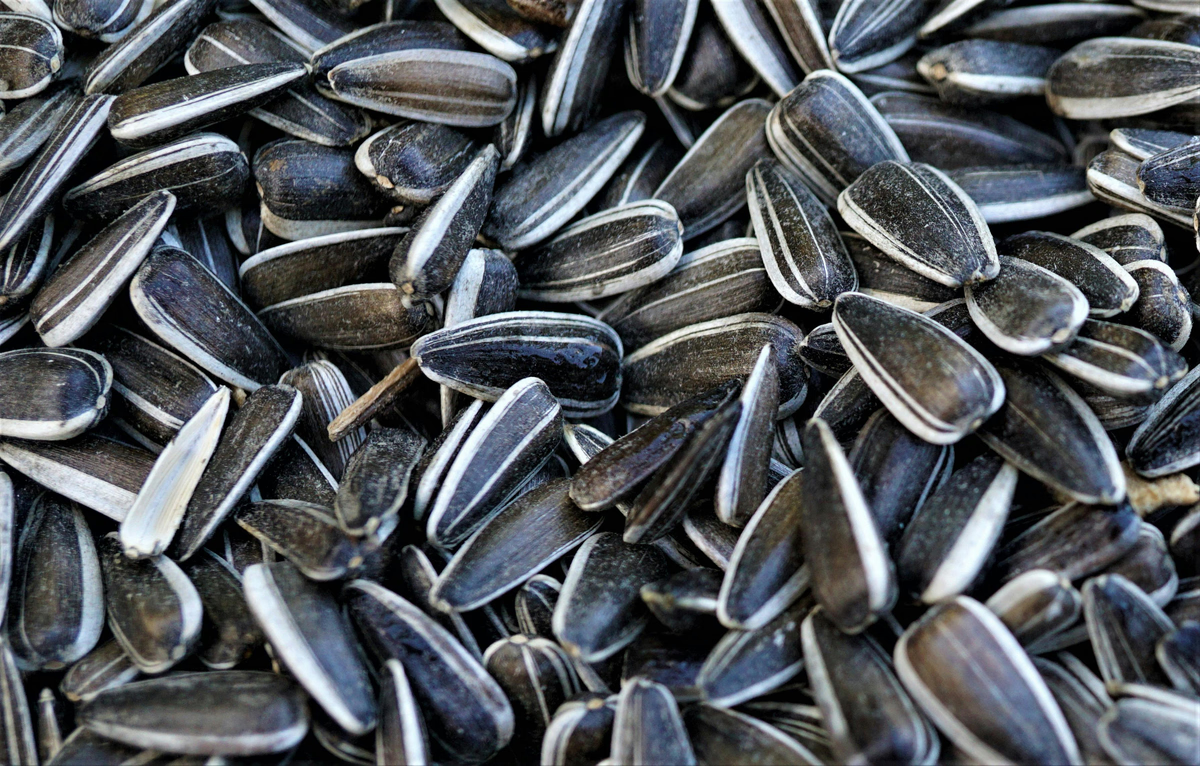
The sunflower produces grayish-green or black seeds encased in tear-dropped shaped gray or black shells that oftentimes feature black and white stripes. Since these seeds have a very high oil content, they are one of the main sources used to produce polyunsaturated oil. Shelled sunflower seeds have a mild nutty taste and firm, but tender texture. Their taste is oftentimes compared with the Jerusalem artichoke (not to be confused with the bulb artichoke), another member of the Helianthus family.
History
While sunflowers are thought to have originated in Mexico and Peru, they are one of the first plants to ever be cultivated in the United States. They have been used for more than 5,000 years by the Native Americans, who not only used the seeds as a food and an oil source, but also used the flowers, roots and stems for varied purposes including as a dye pigment. The Spanish explorers brought sunflowers back to Europe, and after being first grown in Spain, they were subsequently introduced to other neighboring countries. Currently, sunflower oil is one of the most popular oils in the world. Today, the leading commercial producers of sunflower seeds include the Russian Federation, Peru, Argentina, Spain, France and China.
How to select and store
Sunflower seeds are sold either shelled or unshelled and are generally available in prepackaged containers as well as bulk bins. Just as with any other food that you may purchase in the bulk section, make sure that the bins containing the sunflower seeds are covered and that the store has a good product turnover so as to ensure the seeds’ maximal freshness.
When purchasing unshelled seeds, make sure that the shells are not broken or dirty. They should be firm, not limp. When purchasing shelled seeds, avoid those that appear yellowish in color as they have probably gone rancid. In addition, if you are purchasing sunflower seeds from a bulk bin, smell them to ensure that they are still fresh and have not spoiled.
Since sunflower seeds have a high fat content and are prone to rancidity, it is best to store them in an airtight container in the refrigerator. They can also be stored in the freezer since the cold temperature will not greatly affect their texture or flavor.
Tips for preparing and cooking
Preparation
If you want to remove the shells from unshelled sunflower seeds, there are easier ways to remove the shell than by hand, which requires a lot of diligence and time. The quickest way to shell sunflower seeds is to grind them in a seed mill and then place them in cold water where the shells will float to the top and can be skimmed off with a slotted spoon.
While not as efficient, another alternative for those who don’t have seed mills (which is probably the majority of us) is to put a small amount of seeds into the bowl of an electric mixer, pulsing the mixer on and off a few times for a few seconds each time, until the shells separate but not too many seeds are crushed. Then plunge the seeds into cold water as described above to separate them from the shells. However, shelled sunflower seeds are plentiful in the stores so there is no need to go through the trouble unless you have harvested them from your garden.
How to enjoy
Serving ideas
- Add sunflower seeds to your favorite tuna, chicken or turkey salad recipe.
- Garnish mixed green salads with sunflower seeds.
- Adding sunflower seeds to scrambled eggs will give them a unique taste and texture.
- Use fine ground sunflower seeds to dust your meats with in place of flour.
- Sprinkle sunflower seeds onto hot and cold cereals.
For recipe ideas, see Recipes.
Nutritional profile
0.25 cup (35g) at 204 calories provides vitamin E (82% DV), copper (70% DV), vitamin B1 (43% DV), selenium (34% DV), phosphorus (33% DV), tryptophan (31.2% DV), manganese (30% DV), vitamin B6 (28% DV), magnesium (27% DV), folate (20% DV), vitamin B3 (18% DV).
Individual concerns
Sunflower seeds are not a commonly allergenic food and are not known to contain measurable amounts of oxalates or purines.
Toasting nuts and seeds on a heavy-gauge Nordic Ware Natural Half Sheet Pan (2-Pack) brings out their natural oils and deepens flavor — a simple step that makes a real difference.
Recipes with Sunflower seeds
Full Nutrient Profile
Related Articles
- Are sprouts good for me?
- Do you have diet suggestions for me and also what amount of protein that I get from various foods so that I can make sure I am getting enough protein.
- Foods for Fall
- How the healthy fats in nuts help protect against cardiovascular disease
- What Is the best way to roast nuts and seeds?
References
- Ensminger AH, Ensminger, ME, Kondale JE, Robson JRK. Foods & Nutriton Encyclopedia. Pegus Press, Clovis, California. 1983.
- Ensminger AH, Esminger M. K. J. e. al. Food for Health: A Nutrition Encyclopedia. Clovis, California: Pegus Press; 1986. 1986. PMID:15210.
- Fortin, Francois, Editorial Director. The Visual Foods Encyclopedia. Macmillan, New York. 1996.
- Phillips KM, Ruggio DM, Ashraf-Khorassani M. Phytosterol composition of nuts and seeds commonly consumed in the United States. J Agric Food Chem. 2005 Nov 30;53(24):9436-45. 2005. PMID:16302759. https://doi.org/10.1021/jf051505h
- Vogt, T. M. Ziegler, R. G. Graubard, B. I et al. Serum selenium and risk of prostate cancer in U.S. blacks and whites. Int J Cancer. 2003 Feb 20; 103(5):664-70. 2003.
- Wood, Rebecca. The Whole Foods Encyclopedia. New York, NY: Prentice-Hall Press; 1988. 1988. PMID:15220. https://doi.org/10.1002/food.19770210206