Sage
Serving: 2.00 tsp (1.4g, 4 cal)
Key Nutrients
| Nutrient | Amount | DV% | Rating |
|---|---|---|---|
| vitamin K | 24 mcg | 27% | Excellent |
vitamin K
ExcellentAbout Sage
Health benefits
Like rosemary, its sister herb in the mint (Labitae) family, sage contains a variety of volatile oils, flavonoids (including apigenin, diosmetin, and luteolin), and phenolic acids, including rosmarinic acid (the phenolic acid named after rosemary).
Anti-oxidant/anti-inflammatory actions
Rosmarinic acid can be readily absorbed from the GI tract, and once inside the body, acts to reduce inflammatory responses by altering the concentrations of inflammatory messaging molecules (like leukotriene B4). The rosmarinic acid in sage and rosemary also functions as an antioxidant. The leaves and stems of the sage plant also contain antioxidant enzymes, including SOD (superoxide dismutase) and peroxidase. When combined, these three components of sage (flavonoids, phenolic acids, and oxygen-handling enzymes) give it a unique capacity for stabilizing oxygen-related metabolism and preventing oxygen-based damage to the cells. Increased intake of sage as a seasoning in food is recommended for persons with inflammatory conditions (like rheumatoid arthritis),as well as bronchial asthma, and atherosclerosis. The ability of sage to protect oils from oxidation has also led some companies to experiment with sage as a natural antioxidant additive to cooking oils that can extend shelf life and help avoid rancidity.
Better brain function
Research published in the June 2003 issue of Pharmacological Biochemical Behavior confirms what herbalists have long known: sage is an outstanding memory enhancer. In this placebo-controlled, double-blind, crossover study, two trials were conducted using a total of 45 young adult volunteers. Participants were given either placebo or a standardized essential oil extract of sage in doses ranging from 50 to 150 microls. Cognitive tests were then conducted 1, 2, 4, 5, and 6 hours afterwards. In both trials, even the 50 microl dose of sage significantly improved subjects’ immediate recall.
In other research presented at the British Pharmaceutical Conference in Harrogate (September 15-17, 2003), Professor Peter Houghton from King’s College provided data showing that the dried root of Salvia miltiorrhiza, also known as Danshen or Chinese sage, contains active compounds similar to those developed into modern drugs used to treat Alzheimer’s Disease. Sage has been used in the treatment of cerebrovascular disease for over one thousand years. Four compounds isolated from an extract from the root of Chinese sage were found to be acetylcholinesterase (AChE) inhibitors. The memory loss characteristic of Alzheimer’s disease is accompanied by an increase of AChE activity that leads to its depletion from both cholinergic and noncholinergic neurons of the brain. Amyloid beta-protein (A beta), the major component of amyloid plaques which form in the brain in Alzeeimer’s disease, acts on the expression of AChE, and AChE activity is increased around amyloid plaques. By inhibiting this increase in AChE activity, sage provides a useful therapeutic option to the use of pharmaceutical AChE inhibitors. (October 24, 2003)
Description
Sage has a soft, sweet savory flavor and has been used in folk medicine for millennia. Its long-standing medicinal reputation is reflected in its scientific name, Salvia officinalis, derived from the Latin word, salvere, which means “to be saved.”
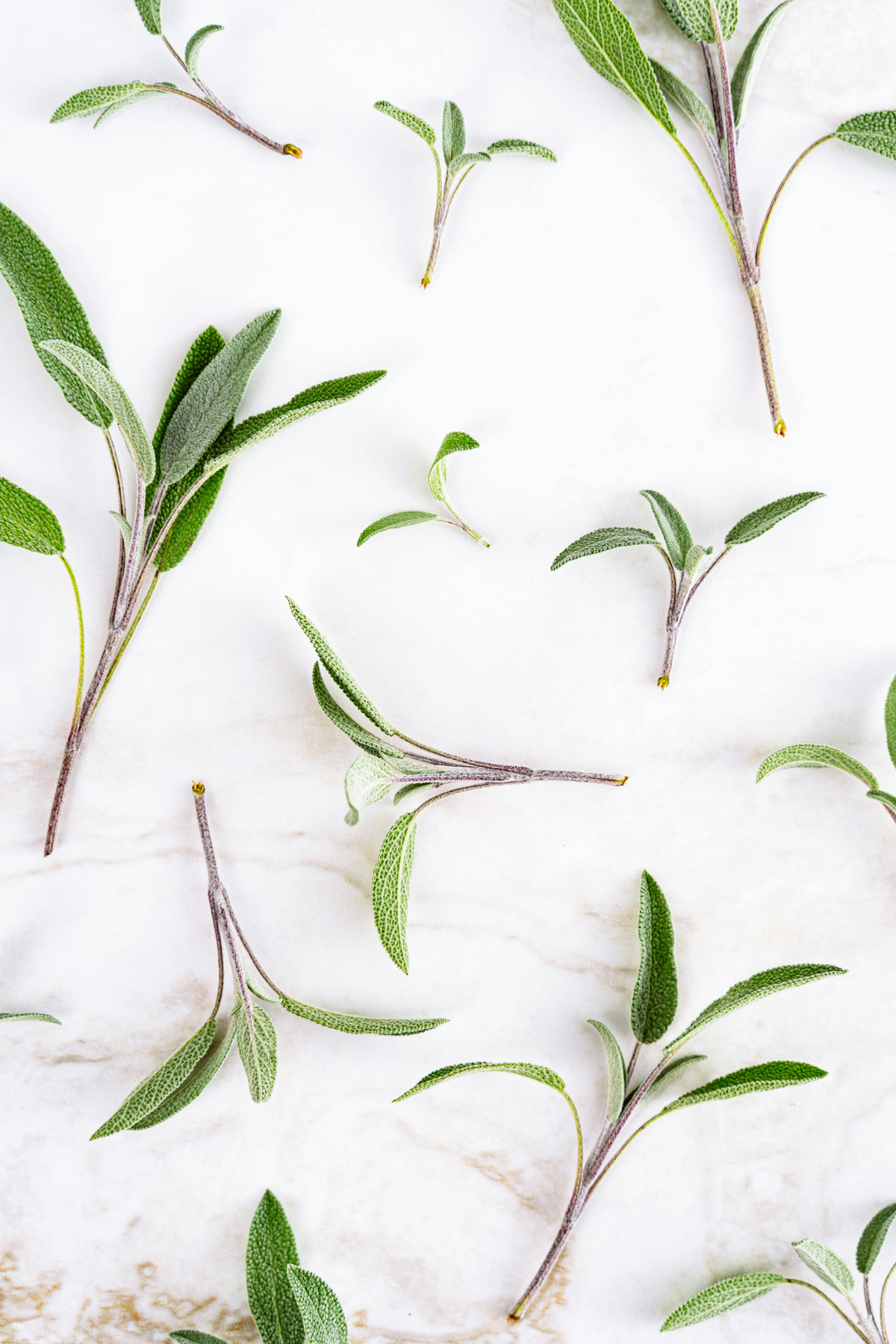
Sage leaves are grayish green in color with a silvery bloom covering. They are lance-shaped and feature prominent veins running throughout. Sage is available fresh or dried in either whole, rubbed (lightly ground) or powder form.
History
Sage is native to countries surrounding the Mediterranean Sea and has been consumed in these regions for thousands of years. In medicinal lore, sage has one of the longest histories of use of any medicinal herb.
The Greeks and Romans were said to have highly prized the many healing properties of sage. The Romans treated it as sacred and created a special ceremony for gathering sage. Both civilizations used it as a preservative for meat, a tradition that continued until the beginning of refrigeration. What these cultures knew from experience, that sage could help to reduce spoilage, is now being confirmed by science, which has isolated the herb’s numerous terpene antioxidants.
Sage’s legendary status continued throughout history. Arab physicians in the 10th century believed that it promoted immortality, while 14th century Europeans used it to protect themselves from witchcraft. Sage was in so much demand in China during the 17th century, appreciated for the delicious tea beverage that it makes, that the Chinese are said to have traded three cases of tea leaves (camellia sinensis) to the Dutch for one case of sage leaves.
And the esteem with which sage is regarded has not faded. In 2001, the International Herb Association awarded sage the title of “Herb of the Year.”
How to select and store
Whenever possible, choose fresh sage over the dried form of the herb since it is superior in flavor. The leaves of fresh sage should look fresh and be a vibrant green-gray in color. They should be free from darks spots or yellowing.
Even through dried herbs and spices like sage are widely available in supermarkets, you may want to explore the local spice stores in your area. Oftentimes, these stores feature an expansive selection of dried herbs and spices that are of superior quality and freshness compared to those offered in regular markets. Just like with other dried spices, when purchasing dried sage, try to select organically grown sage since this will give you more assurance that it has not been irradiated (among other potential adverse effects, irradiating sage may lead to a significant decrease in its vitamin C and carotenoid content.)
To store fresh sage leaves, carefully wrap them in a damp paper towel and place inside a loosely closed plastic bag. Store in the refrigerator where it should keep fresh for several days. Dried sage should be kept in a tightly sealed glass container in a cool, dark and dry place where it will keep fresh for about six months.
Tips for preparing and cooking
Preparation
Since the flavor of sage is very delicate, it is best to add the herb near the end of the cooking process so that it will retain its maximum essence.
How to enjoy
Serving ideas
- Mix cooked navy beans with olive oil, sage and garlic and serve on bruschetta.
- Use sage as a seasoning for tomato sauce.
- Add fresh sage to omelets and frittatas.
- Sprinkle some sage on top of your next slice of pizza.
- Combine sage leaves, bell peppers, cucumbers and sweet onions with plain yogurt for an easy to prepare, refreshing salad.
- When baking chicken or fish in parchment paper, place some fresh sage leaves inside so that the food will absorb the flavors of this wonderful herb.
For recipe ideas, see Recipes.
Nutritional profile
Two tsp (1.4g) at 4 calories provides vitamin K (27% DV). Sage contains a variety of volatile oils, flavonoids (including apigenin, diosmetin, and luteolin), and phenolic acids, including rosmarinic acid (the phenolic acid named after rosemary).
Individual concerns
Sage is not a commonly allergenic food and is not known to contain measurable amounts of oxalates or purines.
A santoku knife like the Zwilling Pro 7" Santoku Knife excels at fine mincing of herbs and aromatics — the hollow edge keeps things from sticking to the blade.
Recipes with Sage
Full Nutrient Profile
Related Articles
References
- al-Sereiti MR, Abu-Amer KM, Sen P. Pharmacology of rosemary (Rosmarinus officinalis Linn.) and its therapeutic potentials. Indian J Exp Biol 1999 Feb;37(2):124-30. 1999.
- Calucci L, Pinzino C, Zandomeneghi M et al. Effects of gamma-irradiation on the free radical and antioxidant contents in nine aromatic herbs and spices. J Agric Food Chem 2003 Feb 12; 51(4):927-34. 2003. https://doi.org/10.5142/jgr.2012.36.3.308
- Ensminger AH, Esminger M. K. J. e. al. Food for Health: A Nutrition Encyclopedia. Clovis, California: Pegus Press; 1986. 1986. PMID:15210.
- Fortin, Francois, Editorial Director. The Visual Foods Encyclopedia. Macmillan, New York. 1996.
- Grieve M. A Modern Herbal. Dover Publications, New York. 1971.
- Houghton P. Sage, alternative treatment to Alzheimer's drug. Research presented at the British Pharmaceutical Conference in Harrogate, September 15-17, 2003. 2003. https://doi.org/10.1111/j.1755-5949.2010.00202.x
- Kelm MA, Nair MG, Strasburg GM, DeWitt DL. Antioxidant and cyclooxygenase inhibitory phenolic compounds from Ocimum sanctum Linn. Phytomedicine 2000 Mar;7(1):7-13. 2000. PMID:12240.
- Malencic D, Gasic O, Popovic M, Boza P. Screening for antioxidant properties of Salvia reflexa hornem. Phytother Res 2000 Nov;14(7):546-8. 2000. PMID:12230.
- Tildesley NT, Kennedy DO, Perry EK, Ballard CG, Savelev S, Wesnes KA, Scholey AB. Salvia lavandulaefolia (Spanish Sage) enhances memory in healthy young volunteers. Pharmacol Biochem Behav. 2003 Jun;75(3):669-74. 2003. https://doi.org/10.1016/s0091-3057(03)00122-9
- Wood, Rebecca. The Whole Foods Encyclopedia. New York, NY: Prentice-Hall Press; 1988. 1988. PMID:15220. https://doi.org/10.1002/food.19770210206