Pears
Serving: 1.00 medium (178g, 101 cal)
Key Nutrients
About Pears
What’s new and beneficial about pears
- For nutritional reasons, we’re often advised to consume the skins of fruits. However, it’s less often that research provides strong evidence in support of this advice. Recent studies have shown that the skin of pears contains at least three to four times as many phenolic phytonutrients as the flesh. These phytonutrients include antioxidant, anti-inflammatory flavonoids, and potentially anti-cancer phytonutrients like cinnamic acids. The skin of the pear has also been show to contain about half of the pear’s total dietary fiber.
- In recent studies measuring risk of type 2 diabetes in U.S. women, pears have earned very special recognition. Researchers now know that certain flavonoids in food can improve insulin sensitivity, and of special interest in this area have been three groups of flavonoids (flavonols, flavan-3-ols, and anthocyanins). All pears contain flavonoids falling within the first two groups, and red-skinned pears contain anthocyanins as well. Intake of these flavonoid groups has been associated with decreased risk of type 2 diabetes in both women and men. However, a new analysis of the Nurses’ Health Study has shown that among all fruits and vegetables analyzed for their flavonoid content, the combination of apples/pears showed the most consistent ability to lower risk of type 2 diabetes. This observed benefit for women may extend to men as well, though confirmatory studies are still needed.
- You’ve no doubt heard someone say that cloudy fruit juices containing fruit pulp provide better nourishment than clear fruit juices that have had their pulp removed through filtering. Scientists have now proven that statement to be correct with respect to pear juice. With their pulp removed, pear juices were determined to lose up to 40% of their total phenolic phytonutrients, and to have significantly reduced antioxidant capacity. “Cloudy” pear juices (technically referred to as “high turbidity” juices) emerged as the superior juice type in terms of nutrient content as well as antioxidant benefits.
Pear, fresh
1.00 medium
(178.00 grams)
Calories: 101
GI: low
NutrientDRI/DV
fiber20%
copper17%
vitamin C10%
vitamin K9%
- Health Benefits
- Description
- History
- How to Select and Store
- Tips for Preparing and Cooking
- How to Enjoy
- Individual Concerns
- Nutritional Profile
- References
Health benefits
Antioxidant and anti-inflammatory support of pears
While pears are not an unusual source of conventional antioxidant or anti-inflammatory nutrients (for example, vitamin E or omega-3 fatty acids), the phytonutrient category is where this fruit excels. For example, in the Baltimore Longitudinal Study of Aging (1,638 participants, average age range 62-69 years), the combination of apples/pears ranked as the second highest source of flavonols among all fruits and vegetables - partly due to the epicatechin richness of pears. Average flavonol intake in the study was about 14 milligrams per day, and one pear can provide about half of this amount all by itself. The list of phytonutrients found in pears has been of special interest to researchers, and the list below summarizes their findings about key phytonutrients provided by this fruit.
Hydroxybenzoic acids
- chlorogenic acid
- gentisic acid
- syringic acid
- vanillic acid
Hydroxycinnamic acids
- coumaric acid
- ferulic acid
- 5-caffeoylquinic acid
Hydroxyquinones
- arbutin
Flavanols, also known as flavan-3-ols
- catechin
- epicatechin
Flavonols
- isorhamnetin
- quercetin
- kaempferol
Anthocyanins (in red-skinned varieties, including red anjou, red bartlett, comice, seckel, and starkrimson)
Carotenoids
- beta-carotene
- lutein
- zeaxanthin
Virtually all of these phytonutrients have been shown to provide us with antioxidant as well as anti-inflammatory benefits. As a result, intake of pears has now been associated with decreased risk of several common chronic diseases that begin with chronic inflammation and excessive oxidative stress. These diseases include heart disease and type 2 diabetes.
Pears may possibly decrease risk of type 2 diabetes and heart disease
As a very good source of dietary fiber, pears might logically be expected to help protect us from development of type 2 diabetes (or DM2, which stands for “diabetes mellitus type 2) as well heart disease. Adequate intake of dietary fiber is a long-established factor in reducing our risk of both diseases, and in the case of pears, this benefit may be even more pronounced due to the helpful combination of both soluble and insoluble fiber in this fruit. In addition to their fiber content, however, pears have other ways of helping to protect us against these diseases. In the case of DM2, scientists now know that pear flavonols (including isorhamnetin, quercetin, and kaempferol), flavan-3-ols (especially epicatechin), and the anthocyanins (found in red-skinned varieties including Red Anjou, Red Bartlett, Comice, Seckel, and Starkrimson) all help improve insulin sensitivity. (More and more research attention is being given to mechanisms of action in this area, including regulation of the enzyme NADPH oxidase.) In the case of heart disease, recent research has shown that pear fibers are able to bind together with bile acids in the intestine, lowering the pool of bile acids and decreasing the synthesis of cholesterol. In addition, the phytonutrients in pear may play a special role in these fiber-bile acid interactions. The ability of pear fibers (and other fruit fibers) to bind bile acids has actually been compared to the cholesterol-lowering drug cholestyramine, with pears showing about 5% of the ability of the drug to accomplish this result. (Among commonly eaten fruits, only bananas and pineapples showed more bile acid-binding ability at 9% and 6%, respectively.)
Pears may possibly reduce cancer risk
The health benefits of pear fiber also extend into the area of cancer risk. Fiber from pear can bind together not only with bile acids as a whole, but also with a special group of bile acids called secondary bile acids. Excessive amounts of secondary bile acids in the intestine can increase our risk of colorectal cancer (as well as other intestinal problems). By binding together with secondary bile acids, pear fibers can help decrease their concentration in the intestine and lower our risk of cancer development. In the case of stomach cancer (gastric cancer), intake of pears has also been shown to lower cancer risk. Here the key focus has not been on pear fiber, however, but on pear phytonutrients, especially cinnamic acids (including coumaric acid, ferulic acid, and 5-caffeoylquinic acid). In a recent study from Mexico City, it took approximately 2 total fruit servings per day and 4 daily vegetable servings to accomplish a decrease in gastric cancer risk. Pears and mangos were among the key foods determined to provide cinnamic acids in the study.
Esophageal cancer (specifically, esophageal squamous cell carcinoma, or ESCC) is a third cancer type for which pear intake helps lower risk. In a very large-scale study conducted by the National Institutes of Health and the American Association of Retired Persons (involving 490,802 participants), pears were found to be a key food associated with reduced risk of ESCC. Interestingly, numerous foods belonging the rose (Rosaceae) family were also found to lower risk of ESCC, including apples, plums, and strawberries.
Other health benefits of pears
It’s become fairly common to hear both laypersons and healthcare practitioners talking about pear as one of the more easily digested fruits. In fact, many practitioners recommend that pear be one of the first fruits considered when it comes time to introducing an infant to his or her first pureed fruits. Even though large-scale human studies supporting these digestibility claims have not been identified, anecdotal reports of easier digestion with pears versus other fruits are common. One factor that may come into play here is the low acid nature of pears, especially in comparison to widely enjoyed citrus fruits like lemons, grapefruits, and oranges.
It’s also become fairly common to hear pears being described as a “hypoallergenic” (low allergy) food. Healthcare practitioners often allow clients to continue eating pears when following a low-allergy diet plan, and many individuals report having fewer allergy-related symptoms when consuming pears versus other fruits. Of course, no fruits are classified as major allergens according to the U.S. Centers for Disease Control and their rules for identification of allergenic foods on product labels. In addition, large-scale research studies supporting low-allergy claims for pears have not been identified. Still, many individuals report fewer allergy-related symptoms with pears compared to other fruits.
It’s very possible that these two experiences - better digestibility and decreased allergic response - are related, and that future research will help us understand why pears may provide us with special health benefits in these areas.
Description
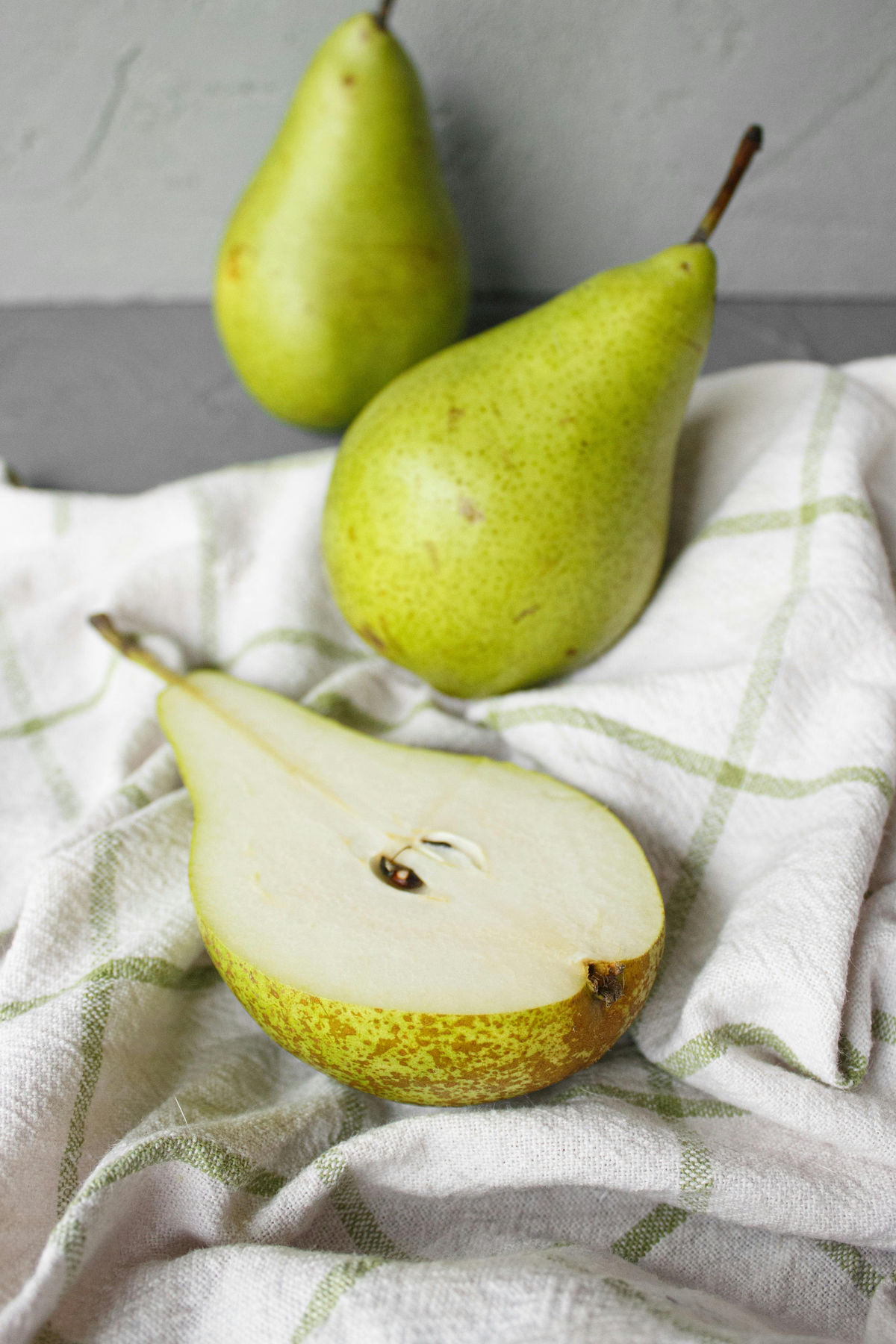
Pears are a member of the rose family of plants (Rosaceae), which, in addition (of course) to roses, contains a long list of fruits including apples, apricots, cherries, chokeberry, crabapples, loquats, peaches, plums, quinces, raspberries, serviceberries, and strawberries as well as the tree nut, almonds. The many different varieties of pears commonly found in U.S. groceries all belong to the same category known as European Pear (Pyrus communis). These pears typically have a rounded body that tapers into a neck of various lengths.
They are distinct from (but closely related to) the fruit we commonly call “pear apple.” Pear apples are completely round with no necks, and while they remind of us of apples in shape, their skins make us think they are pears. Contrary to popular belief, pear apples are not a cross between apples and pears. Pear apples belong to a second category of pear, broadly referred to as Asian pear. Included in this second category are Chinese pear, Japanese pear, and Korean pear (Pyrus pyrifolia) as well as Siberian/Manchurian pear (Pyrus ussuriensis). When these categories are combined, they account for more than 3,000 varieties of pears that people enjoy worldwide.
Pears are found in a variety of colors, including many different shades of green, red, yellow/gold, and brown. Many varieties fail to change color as they ripen, making it more difficult to determine ripeness. (For more about selection of pears, please see our How to Select and Store section.)
The list below describes some of the more commonly enjoyed varieties of pears:
- Bartlett: best known of the pear varieties in the U.S., and most often the variety found in cans. Bartletts are yellow/green and speckled, and sometimes called Williams pears
- Bosc: cinnamon brown-skinned pears with long tapered necks with a honey-like but complex flavor
- Comice: round, short pears with either green and red coloring, or sometimes almost completely red with especially soft and juicy flesh
- Concorde: tall, skinny, and golden/green pears with flesh that is firmer and more dense than many other varieties
- Forelle: red/green and speckled like a trout, and thus the name, meaning “trout” in German. A small-sized pear that yellows as it ripens.
- Green Anjou: a widely available, compact, and short-necked pear. It doesn’t change color much while ripening, so you’ll need to use the stem test described in our How to Select and Store section.
- Red Anjou: very much like its green counterpart, except a rich reddish maroon in color and higher in anthocyanins (which is the main reason for its rich red color)
- Red Bartlett: very much like its yellow/green counterpart, except with an all-round bright red skin, they sometimes feature light vertical striping, and like Red Anjou, they are rich in anthocyanins
- Seckel: smallest of the commonly eaten pears, usually yellow/green or olive green in color, and mixed with broad patches of red
- Starkrimson: bright crimson red color, more narrow-necked that Red Anjou, but equally rich in anthocyanins and especially gorgeous in a salad
History
There is some debate about the exact origins of the European pear, but many experts believe that European pears (Pyrus communis) and Asian pears (both Pyrus pyrifolia and Pyrus ussuriensis) evolved separately and during the same approximate time in history (roughly 1000 BC). Certain species of pear are also native to parts of Africa.
Beginning in the 1500’s, Eurpoean colonists began to bring pears to North America, where they apparently were not native or enjoyed before that time. While pears were cultivated there during those years, the colonists continued to import most of the pears they consumed from Europe, and especially from France. Today, pears grown in Europe have become a very small part of the U.S. diet. While the U.S. continues to import over 75,000 metric tons of pears each year, the vast majority now come from Argentina, Chile, China, South Korea and New Zealand.
On a worldwide basis, China has become the world’s largest grower of pears. Out of 21 million tons produced worldwide, China now produces about 15.5 million tons, or nearly three-quarters of the world total. Of the remaining 5.5 million tons, another 2.7 come from Europe, 1.1 from Argentina and Chile, 0.8 from the U.S., and smaller amounts from New Zealand, South Korea, and other countries.
Within the U.S., the state of Washington is by far the largest grower of pears, accounting for about half of all U.S.-produced pears. California and Oregon follow next, with significant commercial production also occurring in New York and Pennsylvania.
How to select and store
Since pears are very perishable once they are ripe, the pears you find at the market will generally be unripe and will require a few days of maturing. Look for pears that are firm, but not too hard. They should have a smooth skin that is free of bruises or mold. The color of good quality pears may not be uniform as some may feature russetting where there are brown-speckled patches on the skin; this is an acceptable characteristic and oftentimes reflects a more intense flavor. Avoid pears that are punctured or have dark soft spots.
It is possible, of course, that you may find ripe pears at the market. When trying to determine whether a pear is ripe, don’t start by squeezing the whole fruit. Instead, a reliable method is to press gently at the top of the pear, near its stem. If that spot gives in to pressure, the pear is probably optimally ripe for eating. If the flesh feels extremely soft, almost to the point of being squishy, the pear is overripe. For food safety reasons, we recommend that overripe pears only be used in cooked recipes rather than eaten raw.
Certified organic pears reduce exposure to pesticide residues and heavy metals. Over 250 certified organic farms in the U.S. now produce more than 20,000 tons of organic pears annually. In supermarkets, look for the USDA organic logo.
If you will not be consuming the pears immediately once they have ripened, you can place them in the refrigerator where they will remain fresh for a few days. If you want to hasten the ripening process, place them in a paper bag, turning them occasionally, and keep them at room temperature. Storing pears in sealed plastic bags or restricted spaces where they are in too close proximity to each other should be avoided since they will have limited exposure to oxygen, and the ethylene gas that they naturally produce will greatly increase their ripening process, causing them to degrade. Pears should also be stored away from other strong smelling foods, whether on the countertop on in the refrigerator, as they tend to absorb smells.
Tips for preparing and cooking
Fresh pears are delicious eaten as is after gently washing the skin by running it under cool water and patting it dry. Since their skin provides about half of the pear’s total dietary fiber as well as its antioxidant and anti-inflammatory phytonutrients,, it is best to not peel the fruit but eat the entire pear. To cut the pear into pieces, you can use an apple corer, cutting from the fruit’s base to remove the core, and then cutting it into the desired sizes and shapes. Once cut, pears will oxidize quickly and turn a brownish color. You can help to prevent this by applying several drops of lemon, lime or orange juice to the flesh.
How to enjoy
Serving ideas
- Combine pears with mustard greens, watercress, leeks and walnuts for a delicious salad.
- Serve pears with goat or bleu cheese for a delightful dessert.
- Add chopped pears, grated ginger and honey to millet porridge for a pungently sweet breakfast treat.
- Core pears, and poach in apple juice or wine.
Recipes that feature pears
- Holiday Cranberry Relish
Individual concerns
Between 2008-2011, concerns arose in both the U.S. and Canada over contamination with arsenic of certain brand-name pear juices. While we have never seen official reports pinpointing the exact source of the contamination, it would not be uncommon for a food like pear juice - made from pears that may have been imported from nearly a dozen countries throughout the world - to pick up unwanted heavy metal residues (like arsenic) from groundwater contamination, soil contamination, sewage sludge fertilization, or some combination of these sources. Pear juices found to be contaminated were recalled by the U.S. Food and Drug Association (FDA) and the Canadian Food Inspection Agency (CFIA), and the FDA also set a Level of Concern for arsenic in fruit juices (including pear juice) of 23 parts per million (for long-term, routine consumption of pear juice). Companies who voluntarily chose to monitor their pear juice production were then able to use this standard as a guideline. These events are one of the reasons we encourage selection of organic pear juice (and fresh pears). Organic food regulations greatly lessen the chance of exposure to heavy metals like arsenic not only in pear juice and pears but in all other foods as well.
Nutritional profile
One medium (178g) at 101 calories provides fiber (20% DV), copper (17% DV), vitamin C (10% DV). Smaller but measurable amounts of vitamin K (9% DV) round out the profile. Pears are a concentrated source of phenolic phytonutrients, including hydroxybenzoic acids (chlorogenic acid, gentisic acid, syringic acid, and vanillic acid); hydroxycinnamic acids (coumaric acid, ferulic acid, and 5-caffeoylquinic acid); hydroxyquinones (arbutin), flavanols (catechin, epicatechin); flavonols (isorhamnetin, quercetin, kaempferol); anthocyanins (in red-skinned varieties, including Red Anjou, Red Bartlett, Comice, Seckel, and Starkrimson); and carotenoids (beta-carotene, lutein, zeaxanthin).
A well-made peeler saves time and waste. The Rösle Stainless Steel Round-Handle Peeler glides through skin in long, even strips — the kind of small upgrade you notice every day.
Recipes with Pears
Full Nutrient Profile
Related Articles
- Can I effectively wash off pesticides from my fruits and vegetables?
- How does fruit juice compare to whole fruit?
- How popular are organic foods and why have they become a food trend?
- If I am Mostly Eating Plant Foods, do I Still Need to be Concerned About Food Quality?
- Organic foods higher in vitamins, minerals, phytonutrients, lower in nitrates
- Why the Healthiest Way of Eating Is Also the World's Safest Way of Eating
References
- Aguedo M, Kohne S, Rabetafika N et al. Composition of by-products from cooked fruit processing and potential use in food products. Journal of Food Composition and Analysis, Volume 27, Issue 1, August 2012, Pages 61-69. https://doi.org/10.1016/j.jfca.2012.04.005
- Buchner FL, Bueno-de-Mesquita HB, Ros MM et al. Consumption of vegetables and fruit and the risk of bladder cancer in the European Prospective Investigation into Cancer and Nutrition. Int J Cancer. 2009 Dec 1;125(11):2643-51. https://doi.org/10.1002/ijc.24582
- Chen J, Wang Z, Wu J et al. Chemical compositional characterization of eight pear cultivars grown in China. Food Chemistry, Volume 104, Issue 1, 2007, Pages 268-275. https://doi.org/10.1016/j.foodchem.2006.11.038
- Colaric M, Stampar F and Hudina M. Content levels of various fruit metabolites in the "Conference" pear response to branch bending. Scientia Horticulturae, Volume 113, Issue 3, 20 July 2007, Pages 261-266. https://doi.org/10.1016/j.scienta.2007.03.016
- Freedman ND, Park Y, Subar AF et al. Fruit and vegetable intake and esophageal cancer in a large prospective cohort study. Int J Cancer. 2007 Dec 15;121(12):2753-60. https://doi.org/10.1002/ijc.22993
- Hernandez-Ramirez RU, Galvan-Portillo MV, Ward MH et al. Dietary intake of polyphenols, nitrate and nitrite and gastric cancer risk in Mexico City. Int J Cancer. 2009 Sep 15;125(6):1424-30. https://doi.org/10.1002/ijc.24454
- Kahlon TS and Smith GE. In vitro binding of bile acids by bananas, peaches, pineapple, grapes, pears, apricots and nectarines. Food Chemistry, Volume 101, Issue 3, 2007, Pages 1046-1051. https://doi.org/10.1016/j.foodchem.2006.02.059
- Li P and Cheng L. The elevated anthocyanin level in the shaded peel of "Anjou" pear enhances its tolerance to high temperature under high light. Plant Science, Volume 177, Issue 5, November 2009, Pages 418-426. https://doi.org/10.1016/j.plantsci.2009.07.005
- Linseisen J, Rohrmann S, Miller AB et al. Fruit and vegetable consumption and lung cancer risk: updated information from the European Prospective Investigation into Cancer and Nutrition (EPIC). Int J Cancer. 2007 Sep 1;121(5):1103-14. https://doi.org/10.1002/ijc.22807
- Maras JE, Talegawkar SA, Qiao N et al. Flavonoid intakes in the Baltimore Longitudinal Study of Aging. Journal of Food Composition and Analysis, Volume 24, Issue 8, December 2011, Pages 1103-1109. https://doi.org/10.1016/j.jfca.2011.04.007
- Muchuweti M and Chikwambi Z. Isolation and Identification of Anthocyanins in the Fruit Peels of Starkrimson and Marx Red Bartlett Common Pear Cultivars and Their Bud Mutants. American Journal of Food Technology Year: 2008 Vol: 3 Issue: 1 Pages/record No.: 1-12. https://doi.org/10.3923/ajft.2008.1.12
- Predieri S and Gatti E. Effects of cold storage and shelf-life on sensory quality and consumer acceptance of "Abate Fetel" pears. Postharvest Biology and Technology, Volume 51, Issue 3, March 2009, Pages 342-348. https://doi.org/10.1016/j.postharvbio.2008.09.006
- Salta J, Martins A, Santos RG et al. Phenolic composition and antioxidant activity of Rocha pear and other pear cultivars - A comparative study. Journal of Functional Foods, Volume 2, Issue 2, April 2010, Pages 153-157. https://doi.org/10.1016/j.jff.2010.02.002
- Tanrioven D and Eksi A. Phenolic compounds in pear juice from different cultivars. Food Chemistry, Volume 93, Issue 1, November 2005, Pages 89-93. https://doi.org/10.1016/j.foodchem.2004.09.009
- Wedick NM, Pan A, Cassidy A et al. Dietary flavonoid intakes and risk of type 2 diabetes in US men and women. Am J Clin Nutr. 2012 Apr;95(4):925-33. Epub 2012 Feb 22. https://doi.org/10.3945/ajcn.111.028894
- Yazdani N, Arzani K, Mostofi Y et al. α-Farnesene and antioxidative enzyme systems in Asian pear (Pyrus serotina Rehd.) fruit. Postharvest Biology and Technology, Volume 59, Issue 3, March 2011, Pages 227-231.
- Colaric M, Stampar F and Hudina M. Content levels of various fruit metabolites in the ‘Conference’ pear response to branch bending. Scientia Horticulturae, Volume 113, Issue 3, 20 July 2007, Pages 261-266. https://doi.org/10.1016/j.scienta.2007.03.016
- Li P and Cheng L. The elevated anthocyanin level in the shaded peel of ‘Anjou’ pear enhances its tolerance to high temperature under high light. Plant Science, Volume 177, Issue 5, November 2009, Pages 418-426. https://doi.org/10.1016/j.plantsci.2009.07.005
- Predieri S and Gatti E. Effects of cold storage and shelf-life on sensory quality and consumer acceptance of ‘Abate Fetel’ pears. Postharvest Biology and Technology, Volume 51, Issue 3, March 2009, Pages 342-348. https://doi.org/10.1016/j.postharvbio.2008.09.006
- Salta J, Martins A, Santos RG et al. Phenolic composition and antioxidant activity of Rocha pear and other pear cultivars – A comparative study. Journal of Functional Foods, Volume 2, Issue 2, April 2010, Pages 153-157. https://doi.org/10.1016/j.jff.2010.02.002
- Cho E, Seddon JM, Rosner B, Willett WC, Hankinson SE. Prospective study of intake of fruits, vegetables, vitamins, and carotenoids and risk of age-related maculopathy. Arch Ophthalmol. 2004 Jun;122(6):883-92. 2004. PMID:15197064. https://doi.org/10.1001/archopht.122.6.883
- Davis CD. Low dietary copper increases fecal free radical production, fecal water alkaline phosphatase activity and cytotoxicity in healthy men. J Nutr. 2003 Feb; 133(2):522-7 2003. https://doi.org/10.1093/jn/133.2.522
- Ensminger AH, Ensminger, ME, Kondale JE, Robson JRK. Foods & Nutriton Encyclopedia. Pegus Press, Clovis, California 1983.
- Ensminger AH, Esminger M. K. J. e. al. Food for Health: A Nutrition Encyclopedia. Clovis, California: Pegus Press; 1986 1986. PMID:15210.
- Fortin, Francois, Editorial Director. The Visual Foods Encyclopedia. Macmillan, New York 1996.
- Suzuki R, Rylander-Rudqvist T, Ye W, et al. Dietary fiber intake and risk of postmenopausal breast cancer defined by estrogen and progesterone receptor status--a prospective cohort study among Swedish women. Int J Cancer. 2008 Jan 15;122(2):403-12. 2008. PMID:17764112. https://doi.org/10.1002/ijc.23060
- Wood, Rebecca. The Whole Foods Encyclopedia. New York, NY: Prentice-Hall Press; 1988 1988. PMID:15220. https://doi.org/10.1002/food.19770210206