Green beans
Serving: 1.00 cup (125g, 44 cal)
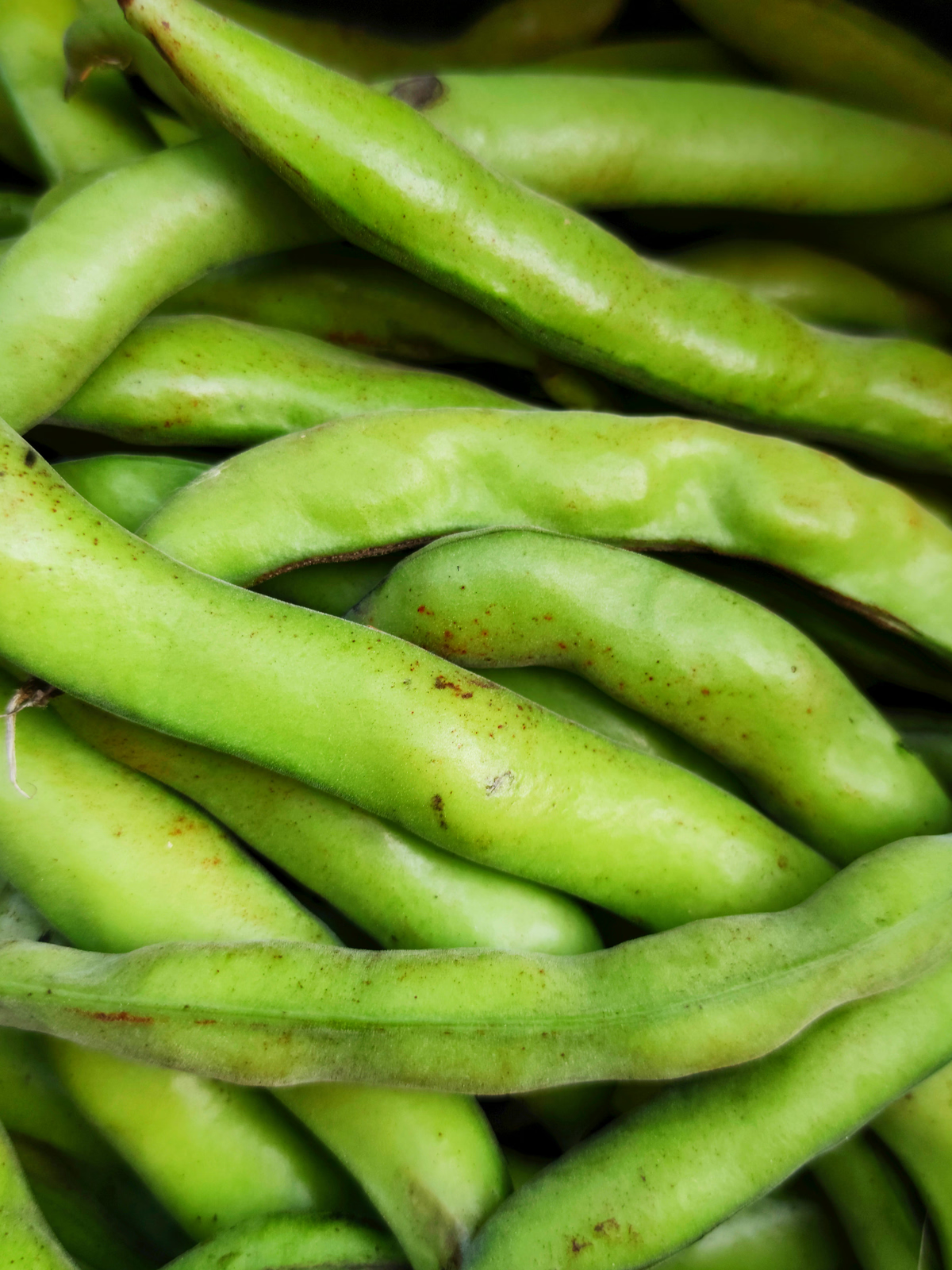
Key Nutrients
| Nutrient | Amount | DV% | Rating |
|---|---|---|---|
| vitamin K | 20 mcg | 22% | Excellent |
| vitamin C | 12.13 mg | 16% | Very Good |
| manganese | 0.36 mg | 16% | Very Good |
| fiber | 4 g | 14% | Very Good |
| folate | 41.25 mcg | 10% | Very Good |
| vitamin B2 | 0.12 mg | 9% | Very Good |
| copper | 0.07 mg | 8% | Good |
| vitamin B1 | 0.09 mg | 8% | Good |
| chromium | 2.04 mcg | 6% | Good |
| calcium | 55 mg | 6% | Good |
| magnesium | 22.5 mg | 5% | Good |
| phosphorus | 36.25 mg | 5% | Good |
| choline | 21.13 mg | 5% | Good |
| vitamin A | 43.75 mcg RAE | 5% | Good |
| vitamin B3 | 0.77 mg | 5% | Good |
| protein | 2.36 g | 5% | Good |
| omega-3 fats | 0.11 g | 5% | Good |
| iron | 0.81 mg | 5% | Good |
| vitamin B6 | 0.07 mg | 4% | Good |
| potassium | 182.5 mg | 4% | Good |
| vitamin E | 0.56 mg (ATE) | 4% | Good |
| molybdenum | 52 mcg | 116% | Very Good |
| tryptophan | 0.02 g | 6.2% | Very Good |
| omega 3 fatty acids | 0.07 g | 2.9% | Good |
vitamin K
Excellentvitamin C
Very Goodmanganese
Very Goodfiber
Very Goodfolate
Very Goodvitamin B2
Very Goodcopper
Goodvitamin B1
Goodchromium
Goodcalcium
Goodmagnesium
Goodphosphorus
Goodcholine
Goodvitamin A
Goodvitamin B3
Goodprotein
Goodomega-3 fats
Goodiron
Goodvitamin B6
Goodpotassium
Goodvitamin E
Goodmolybdenum
Very Goodtryptophan
Very Goodomega 3 fatty acids
GoodAbout Green beans
What’s new and beneficial about green beans
- At WHF, we include green beans among our 38 profiled vegetables because most of our website visitors have become accustomed to seeing green beans in the produce section of their local store and treat green beans as a natural fit for the vegetable food group. In a more science-based context, however, green beans rightfully belong in the Beans & Legumes food group, are many aspects of their nutrient content are quite close to other foods in the Beans & Legumes family. For example, both green beans and other legumes provide concentrated amounts of fiber, folate, and numerous minerals. In this context, it is not surprising that a recent review study has included green beans among other legumes that have repeatedly shown the ability to lower our risk of chronic diseases. Included in the list of diseases are type 2 diabetes, high blood pressure, coronary heart disease, and metabolic syndrome.
- Our short steaming time for green beans is not always directly analyzed in research study protocols. (Those protocols often tend to “overcook” in comparison to our very short cooking times at WHF.) Although vegetable blanching typically involves direct submersion of vegetables in boiling or near-boiling water, blanching usually involves very brief submersion and we often like to look at blanching studies to get a better idea about the potential impact of our short cooking times, even if they involve steaming instead of boiling. We have seen one recent study on green beans that showed quick blanching,following by either refrigeration or freezing,to have no significant impact on the amount of beta-carotene in the green beans. By contrast, the same blanching process did end up lowering the beta-carotene in some other vegetables, including peas and carrots. Vitamins B2, C, and E in green beans were also found to be well retained in this quick blanching-plus-refrigeration study on green beans.
- Silicon is mineral that has yet to become fully woven into the field of nutrition. For example, Dietary Reference Intake (DRI) recommendations have yet to be created for silicon, and its average dietary intake in the U.S. has yet to be routinely analyzed. However, health scientists have identified a clear need for silicon in our bodies, primarily in support of our connective tissue and bones. For this reason, new research on silicon and food is always of interest to us, and two recent studies on green beans have caught our eye in this regard. Green beans are typically considered to be a silicon-rich food. Our 1-cup serving size of green beans would be expected to average about 7 milligrams of silicon. Since 20-30 milligrams appears to be a common average intake in the U.S. (and some other countries as well), the amount of silicon provided by 1 cup of steamed green beans would represent about 25-35% of an average day’s intake. Interestingly, the silicon in green beans appears to be fairly well absorbed, in the range of 25-50%. This range also appears to compare favorably with other silicon-containing foods. At least one set of researchers have speculated that somewhat higher levels of dietary silicon intake,in the vicinity of 40 milligrams per day,may have a preventive role to play in bone health. More specifically, they have suggested that the risk of osteoporosis in post-menopausal women might be lowered by dietary silicon intake in this higher-than-average range.
- At WHF, Quick Steaming is our preferred method for cooking green beans. We use this approach to maximize flavor and to preserve the best texture as well. We’ve also learned from a recent study that the steaming of green beans may provide cholesterol-lowering benefits by binding together with bile acids. When the green bean components bind together with bile acids, the liver works to replace the bile acids by mobilizing cholesterol and breaking it down into bile acids. As a result, circulating levels of cholesterol in the blood stream get reduced. Interestingly, the study we reviewed showed greater bile acid binding ability from steamed green beans as compared to raw green beans.
- Because of their rich green color, we don’t always think about green beans as providing us with important amounts of colorful pigments like carotenoids. But they do! Recent studies have confirmed the presence of lutein, beta-carotene, violaxanthin, and neoxanthin in green beans. In some cases, the presence of these carotenoids in green beans is comparable to their presence in other carotenoid-rich vegetables like carrots and tomatoes. The only reason we don’t see these carotenoids is because of the concentrated chlorophyll content of green beans and the amazing shades of green that it provides.
Recommendations
Our outstanding level of green vegetable intake at WHF is 8 servings of green vegetables per day. A variety of days in our WHF Meal Plan provide this outstanding amount, without compromising the delicious balance of textures and flavors in our WHF Meal Plan Recipes. The many different types of green vegetables available to provide you with exceptional nourishment are nothing short of astonishing! Not only can you choose from dark green leafy vegetables from the cruciferous group (for example, mustard greens, turnip greens, kale, or collards), but also from the squash/gourd group (including zucchini and cucumber), the parsley/umbelliferous group (like fennel and celery), green allium vegetables like leeks, green lettuces like romaine, the asparagus group that includes asparagus, and finally, of course, the leguminous vegetable group that includes both green beans and green peas. Rather than relying exclusively on any one of these green vegetable subgroups, we recommend that you consider including green vegetables across all of these subgroups when putting together your weekly meal plan.
Green Beans, cooked
1.00 cup
(125.00 grams)
Calories: 44
GI: very low
NutrientDRI/DV
vitamin K22%
vitamin C16%
manganese16%
fiber14%
folate10%
vitamin B29%
copper8%
vitamin B18%
chromium6%
calcium6%
vitamin A5%
omega-3 fats5%
phosphorus5%
magnesium5%
iron5%
choline5%
vitamin B35%
protein5%
potassium4%
vitamin E4%
vitamin B64%
- Health Benefits
- Description
- History
- How to Select and Store
- Tips for Preparing and Cooking
- How to Enjoy
- Nutritional Profile
- References
Health benefits
Unique nutritional support from green beans
We like to think about green beans as a “crossover” food that can provide you with some of the great benefits that are usually reserved for legumes, as well as many equally strong benefits that are more closely associated with vegetables. Unlike their very close relatives in the dried bean category (including navy, pinto, and black beans), green beans are lighter weight and less densely packed with carbohydrates. A one-cup serving of cooked green beans will provide about 45 calories and 10 grams of carbs. By contrast, one cup of cooked black beans will provide about 225 calories and 40 grams of carbs. So with green beans, you are getting a lighter and lower calorie food, as well as one with a remarkable crunchy although soft texture; yet you are still getting some of the key nutrient benefits that are usually associated with legumes. For example: like their fellow legumes, green beans qualify as an important source of dietary fiber and dietary protein, as well as a source of key minerals like copper, magnesium, and iron. At the same time, however, green beans go on to provide other benefits more closely associated with vegetables. You are not going to find legumes in our Top 50 foods for vitamin C, yet you are going to find green beans there. Nor will you find legumes in our Top 25 list for vitamin K. But once again, you will find green beans on that Top 25 list. You are also going to find green beans achieving rankings of excellent, very good, or good for 21 nutrients. While this high total number of rankings is not unusual for a vegetable, it is unusual for legumes. Black beans, for example only have 11 total nutrient rankings. Not that 11 rankings is a small number of nutrient rankings for a food! It’s just that numbers in this range are more indicative of legumes than they are of vegetables. So as you can see, “leguminous vegetables” like green beans have a way of delivering unique nutritional support that draws from both the legume and vegetable food groups.
Studies show that the chlorophyll content of green beans varies between 7-13 milligrams per 100 grams. In our 1-cup (125 gram) serving of cooked green beans, the average amount would be expected to fall around 12 milligrams. While not nearly as high as a standout vegetable like spinach (which provides twice this amount of chlorophyll per cup), the contribution of chlorophyll from green beans is still on the high side in comparison with many other foods. So chlorophyll can be added to the unique list of supportive nutrients that are provided by green beans.
Alongside of their chlorophyll content, green beans also provide a host of other phytonutrients. Included here are carotenoids like lutein, beta-carotene, violaxanthin, and neoxanthin) and also flavonoids like quercetin, kaemferol, catechins, epicatechins, and procyanidins. Purple green beans like Purple Queen and Royalty Purple also provide anthocyanin flavonoids.
All of the phytonutrients described above function as both antioxidants and anti-inflammatory agents in human metabolism. In the antioxidant context, we have also seen a recent study suggesting that some of the peptide (protein-related) components that get created when green beans are cooked may have helpful antioxidant properties. In this particular study, yellow string beans were the variety of green beans studied.
Popularity of green beans across the life cycle
One of the most interesting aspects of research on green beans involves their popularity across the course of the life cycle from childhood through later life. At the childhood end of the spectrum, we’ve seen studies on green beans in which the green beans were used as a “control” vegetable,in other words, intake of all other vegetables was compared with intake of green beans, and green beans were chosen to serve as the standard for comparison. The familiarity of children with green beans was noted in one study as a key reason for selection of this vegetable as a standard for comparison. At the other end of the life cycle, we have also seen a recent study on food intake by 70+ year old men and women in which green beans ranked in the top 5 foods for total polyphenol content. In fact, green beans were the only vegetable to rank in the top 5 for polyphenols. What better way for a food to provide us with health benefits than to find a place for itself in our food practices throughout all stages of our life cycle.
Other potential health benefits from green beans
As a leguminous vegetable, green beans are sometimes included alongside of other legumes when analyzing potential health benefits. This practice makes very good sense to us because green beans belong to the exact same genus/species of plant,Phaseolus vulgaris, as highly popular legumes like black beans, navy beans, pinto beans, and kidney beans. When green beans are analyzed within this legume-based context, they often get linked to risk reduction for chronic disease. Here we are talking about decreased risk of type 2 diabetes, high blood pressure, coronary heart disease, and metabolic syndrome. It is not surprising to us that green beans might help lower risk of these particular health problems because they are rich in nutrients that have been shown to provide health protection in these disease areas. Included in this nutrient list would be fiber and protein (green beans are a very good source of the former, and a good source of the latter); B vitamins for support of carbohydrate-related metabolism and blood sugar regulation (especially B1, B2, and B3); B vitamins for cardiovascular support (especially B6 and folate); minerals helpful in blood sugar regulation (especially chromium); and minerals helpful for cardiovascular function (especially magnesium). It’s also worth noting that green beans qualify as a good source of omega-3 fats in our WHF rating system due to their alpha-linolenic acid (ALA) content. Our one-cup serving of cooked green beans provides 110 milligrams of omega-3s. While this amount is less than 1/10th of the amount provided by one serving of salmon, it is nevertheless sufficient to rank green beans among our Top 25 foods for omega-3s. Due to the helpfulness of omega-3s in preventing unwanted inflammation,and due to their critical role in healthy functioning of our cardiovascular system,it makes good sense for green beans to provide us with cardiovascular support partly due to their omega-3 contribution.
Bone and connective tissue support is an area in which we expect to see more research studies involving green beans. You’ll often find green beans being included on lists of silicon-rich foods. Our 1-cup serving size of green beans would be expected to average about 7 milligrams of silicon. While this amount may not sound like a lot, it probably represents at least one fourth,and many as much as one third,of our average daily silicon intake in the U.S. (Unfortunately, not a lot is known about silicon intake in the U.S. and silicon is itself a sparsely researched mineral in terms of diet. For example, the National Academy of Sciences has yet to set Dietary Reference Intake (DRI) recommendations for silicon. Still, silicon has clearly been shown to play an important role in the health of our bone and connective tissue, and we would expect green beans to contribute to health protection in those areas due to their silicon content. Silicon in green beans also appears to be fairly well absorbed, in the range of 25-50%.
One silicon-related area of special interest involves the potential for silicon-rich foods to help reduce risk of osteoporosis in post-menopausal women. We expect that future studies may show a helpful role for green beans in this very specific context.
We have yet to find a large-scale human study that links green bean intake to support of the digestive tract, but we would definitely expect to see health benefits in this area. Because the pod of the green bean is eaten right along with the seed, we would expect not only very good fiber intake from consumption of this vegetable but also helpful consumption of specific polysaccharides that are present in the cell walls of the pod. While the polysaccharide composition of the pod cells walls is known to change along with the maturation of the green beans (for example, homogalacturonan is known to increase in quantity), researchers have yet to determine how these polysaccharide changes might be related to support of digestive tract function. It is also worth noting here that green beans provide a robust mix of both soluble and insoluble fibers. In our nutritional profile for one-cup of cooked green beans, we show 1.62 grams of insoluble fiber (41% of the 4-gram total) and 2.37 grams of insoluble fiber (59% of the 4-gram total) in a single serving of this leguminous vegetable.
Description
Although the term “green beans” is a very commonplace and familiar way to refer to this remarkable leguminous vegetable, green beans are actually known by a wide variety of names. Like the term “green beans” itself, all of these names can have a few advantages and disadvantages. For example, “green beans” are definitely not always green! Yellow wax beans are a popular variety of “green beans” as are purple bush beans and even several purple/beige heirloom varieties like Dragon’s Tongue.
“Snap beans” (or even just “snaps”) and “string beans” are two other widely used terms for green beans. If you have ever broken off the ends of a fresh green bean or broken one in the middle, you undoubtedly know how these vegetables came to be known as “snap beans.” The healthy snapping sound that they make when fresh is unmistakable.
You may or may not have come across green bean varieties that still feature a fiber-like string that runs lengthwise along the entire edge of the pod. The reason you may not have encountered a green bean with this feature is the success that has occurred over time with hybridization of green beans. Most green bean varieties that you will find in the supermarket are hybrid varieties that have been selected for the absence of this string. Still, this feature of some green beans is the origin of the term “string beans.” Today, you may even find some green bean varieties that go by the entertaining name, “stringless string beans.” At WHF, we like to stick with the very commonplace term of “green beans.” But “snap beans” and “string beans” make equally good names for this much-loved vegetable.
Another common distinction that you may hear in descriptions of green beans is the distinction between “bush” and “pole” beans. As a very general rule, bush beans are varieties that are able to grow on their own without support, and pole beans are varieties that need support (like a pole) in order to thrive. Because of this distinction, you may sometimes hear green beans simply being referred to as either “bush beans” or “pole beans.”
Regardless of the name that is used to refer to a green bean,or the reason that a particular name has been chosen,green beans are perhaps best known for their edible pods. While their pod gives green beans their characteristic shape, it may also be possible to see the presence of the seeds that are sheltered inside of the pod since the seeds may cause the pod to bulge slightly outward. At other times, however, the seeds of the green bean are sufficiently immature to be visible along the outer surface of the pod. “Edible pod beans” is yet another name you may hear for green beans.
When it comes to color, most of the green beans that you will find in the supermarket are in fact green in color. However, you will also find yellow beans, purple beans, and purple/beige beans that are simply different varieties of green beans. In all cases, what we are talking about here are fresh beans with edible pods. The name of any particular green bean variety may end up combining combine several aspects of its features. For example, a variety might be called a “purple bush bean” or a “purple string bean” or a “yellow pole bean.”
“Haricot vert” is a phrase that literally means “bean green” in French. Not surprisingly, “Haricot Vert” is a term that has used interchangeable with “French Green Bean” and these varieties feature a longer and narrower pod. You may also come across varieties of green beans that are called “Italian flat pod beans.” Like their name suggests, Italian flat pod beans have a flatter and less rounded pod than most other green bean varieties.
All of the green bean varieties described above belong to the same genus and species of plant called Phaseolus vulgaris. Within this single genus/species, there are literally hundreds of much-loved green bean varieties. Included here would be bush beans like Tendergreen, Provider, Contender, Blue Lake, and Kentucky Wonder; pole beans including McCaslin, Derby, Blue Lake, and Kentucky Wonder; yellow wax beans including Gold Mine and Yellow Wax; purple beans including Royalty Purple and Purple Queen; heirloom bean varieties like Dragon’s Tongue; Italian flat pod beans like Dulcina; and a great many others.
It’s also worth noting that this single genus/species of plant,Phaseolus vulgaris,also houses many varieties that are grown not for their edible pods, but for the seeds that they contain. In this case, we are talking about dried beans, several of which we feature on our website. Included alongside of green beans as Phaseolus vulgaris plants are black beans, navy beans, kidney beans, and pinto beans The presence of these many popular bean types within a single genus/species of plant can sometimes make it confusing to sort out different research findings and the exact foods involved.
History
Green beans are native to North, South, and Central America. Plant specialists have documented their native status in numerous parts of Mexico, as well as Costa Rica, El Salvador, Guatemala, Honduras, and Nicaragua. In South America, the native status of green beans has been linked to Venezuela, Bolivia, Argentina, Columbia, Ecuador, and Peru. Over time, green beans have become naturalized and cultivated worldwide, and they are enjoyed in virtually all types of cuisines.
Because of their diverse naturalization and cultivation, green beans are grown in exportable amounts in many countries throughout the world. Among the world’s green bean producing countries are China, India, and Indonesia in Asia and Southeast Asia; Turkey, Egypt, and Morocco in the Middle East and Northern Africa; France, Belgium, Spain, the Netherlands, Italy, and Greece in Europe; Guatemala, Nicaragua, Honduras, and Costa Rica in Central America; Argentina in South America; and Mexico, Canada, and the United States in North America. In 2015, two thirds of all green beans imported into the U.S. came from Mexico, and 26% from Guatemala, for a total of 93% of all imported green beans.
Within the United States, green beans are commercially grown in many states. Included as major producers of green beans are Illinois, Wisconsin, Michigan, Georgia, Florida, California, New York, Oregon, North Carolina, Delaware, and Pennsylvania. To a significant extent, the marketplace for green beans is divided up into smaller categories. For example, most green beans grown for processing (into canned and frozen products) are grown in the Midwestern states, while most “fresh market” green beans are grown in the Southern states, Southeastern states, or West Coast states.
How to select and store
If possible, purchase green beans at a store or farmer’s market that sells them loose so that you can sort through them to choose the beans of best quality. Purchase beans that have a smooth feel and a vibrant green color, and that are free from brown spots or bruises. They should have a firm texture and “snap” when broken.
Certified organically grown green beans reduce exposure to pesticide residues and heavy metals. Some local growers sell organic green beans without formal USDA certification. In supermarkets, look for green beans displaying the USDA organic logo.
Store unwashed fresh beans pods in a plastic bag kept in the refrigerator crisper. Whole beans stored this way should keep for about seven days.
Here is some background on why we recommend refrigerating green beans. Whenever food is stored, four basic factors affect its nutrient composition: exposure to air, exposure to light, exposure to heat, and length of time in storage. Vitamin C, vitamin B6, and carotenoids are good examples of nutrients highly susceptible to heat, and for this reason, their loss from food is very likely to be slowed down through refrigeration.
Many people wonder about the possibility of freezing green beans, or purchasing green beans that have already been frozen. Both options can work,green beans are definitely a vegetable that can be frozen. We’ve seen several research studies on the nutritional consequences of freezing green beans, and most studies show the ability of green beans to retain valuable amounts of nutrients for 3-6 months after freezing. If you don’t have fresh green beans available on a year-round basis, purchasing frozen green beans can definitely provide you with a nutritionally valuable option.
If you wish to freeze green beans we recommend that you steam the green beans for 2-3 minutes. Remove from heat and let them cool thoroughly before placing them in freezer bags and storing them in your freezer.
It is good to remember that the passage of time appears to lessen the concentration of multiple nutrients. There appears to be less nutrient loss at 3 months than at 6 months, and you may want to limit your freezer storage of green beans (whether frozen at home or pre-purchased in frozen form) to about 3 months for this reason.
Tips for preparing and cooking
Preparation
Just prior to using the green beans, wash them under running water. Remove both ends of the beans by either snapping them off or cutting them with a knife.
Cooking for nutrient retention
We recommend Quick Steaming green beans. We find that Quick Steaming green beans gives them maximum flavor.
Quick Steaming,similar to Quick Boiling and Healthy Sauté, our other recommended cooking methods,follows three basic cooking guidelines that are generally associated in food science research with improved nutrient retention. These three guidelines are: (1) minimal necessary heat exposure; (2) minimal necessary cooking duration; (3) minimal necessary food surface contact with cooking liquid.
Fill the bottom of a steamer pot with 2 inches of water. While waiting for the water to come to a boil, rinse green beans. It is best to cook green beans whole for even cooking. Steam for 7 minutes, checking tenderness with a fork, and toss with our Mediterranean Dressing and top with your favorite optional ingredients. For details see, .
How to enjoy
Serving ideas
- Green beans are a classic ingredient in Salad Nicoise, a French cold salad dish that combines steamed green beans with tuna fish and potatoes.
- Healthy sauté green beans with shiitake mushrooms.
- Prepare the perennial favorite, green beans almondine, by sprinkling slivered almonds on healthy sautéed beans.
Recipes that feature green beans
- Marinated Bean Salad
- 5 Spice Chicken
- 7-Minute Green Beans
- Fennel Green Beans
Nutritional profile
One cup (125g) at 44 calories provides vitamin K (22% DV), vitamin C (16% DV), manganese (16% DV), fiber (14% DV), folate (10% DV). Additional nutrients include vitamin B2 (9% DV), copper (8% DV), vitamin B1 (8% DV), molybdenum (6.7% DV), tryptophan (6.2% DV), chromium (6% DV), calcium (6% DV), magnesium (5% DV), among others. Green beans have also been shown to contain valuable amounts of the mineral silicon, and in a form that makes it easier for us to absorb this bone-supportive and connective tissue-supportive nutrient. Green beans have also been shown to contain valuable amounts of the mineral silicon, and in a form that makes it easier for us to absorb this bone-supportive and connective tissue-supportive nutrient.
Individual concerns
Can you tell me what oxalates are and in which foods they can be found?
For sautéing, a tri-ply stainless pan like the All-Clad D3 Stainless Sauté Pan gives you even heat and a good sear without non-stick coatings.
Recipes with Green beans
Full Nutrient Profile
Related Articles
- Can you tell me about oxalates, including the foods that contain them and how are they related to nutrition and health?
- Can you tell me more about chlorophyll, including what foods it can be found in and the effect that cooking has upon it?
- High-Temperature Cooking & The World's Healthiest Foods
- How do cooking and handling affect the chlorophyll in food?
- How does cooking affect the nutrients in green beans?
- How Does Cutting, Slicing, and Chopping Affect Fresh Vegetables?
- References for Series of Articles on Chlorophyll
- Rejuvenating Foods for Springtime
- Veggie Advisor: How do our vegetable recommendations at WHFoods compare with common public health recommendations?
References
- Baardseth P, Bjerke F, Martinsen BK et al. Vitamin C, total phenolics and antioxidative activity in tip-cut green beans (Phaseolus vulgaris) and swede rods (Brassica napus var. napobrassica) processed by methods used in catering. J Sci Food Agric. 2010 May;90(7):1245-55. 2010. https://doi.org/10.1002/jsfa.3967
- Bernad C, Philippon D, Garcia-Segovia P, et al. Optimizing the texture and color of sous-vide and cook-vide green bean pods. LWT - Food Science and Technology, 2013, 51, 2, pp. 507-513. https://doi.org/10.1016/j.lwt.2012.12.001
- Bouchenak M and Lamri-Senhadji M. Nutritional quality of legumes, and their role in cardiometabolic risk prevention: a review. J Med Food. 2013 Mar;16(3):185-98. doi: 10.1089/jmf.2011.0238. Epub 2013 Feb 11. https://doi.org/10.1089/jmf.2011.0238
- Bouzari, A, Holstege D, and Barrett DM. Vitamin retention in eight fruits and vegetables: a comparison of refrigerated and frozen storage. Journal of Agricultural and Food Chemistry, 2015, 63, 3, pp. 957-962. https://doi.org/10.1021/jf5058793
- Danesi F and Bordoni A. Effect of home freezing and Italian style of cooking on antioxidant activity of edible vegetables. J Food Sci. 2008 Aug; 73(6):H109-12. 2008. https://doi.org/10.1111/j.1750-3841.2008.00826.x
- de Wild VW, de Graaf C, and Jager G. Use of Different Vegetable Products to Increase Preschool-Aged Children's Preference for and Intake of a Target Vegetable: A Randomized Controlled Trial. J Acad Nutr Diet. 2016 Dec 22. pii: S2212-2672(16)31397-1. https://doi.org/10.1186/1479-5868-5-15
- EL-Qudah JM. Identification and Quantification of Major Carotenoids in Some Vegetables. American Journal of Applied Sciences, 2009; 6(3):492-497. 2009. https://doi.org/10.3844/ajassp.2009.492.497
- Gimba JD, Daniel VN, Chundusu ES, et al. Effects of blanching time on anti oxidant (vitamin C) status in some fresh vegetables (carrot, cabbage, and green beans). Continental Journal of Food Science and Technology, 2012, 6, 1, pp 1-3. https://doi.org/10.5707/cjfst.2012.6.1.1.3
- Gonzalez S, Fernandez M, Cuervo A, et al. Dietary intake of polyphenols and major food sources in an institutionalised elderly population. J Hum Nutr Diet. 2014 Apr;27(2):176-83. doi: 10.1111/jhn.12058. Epub 2013 Mar 24. https://doi.org/10.1111/jhn.12058
- Guillen S, Mir-Bel J, Oria R, et al. Influence of cooking conditions on organoleptic and health-related properties of artichokes, green beans, broccoli and carrots. Food Chemistry, 2017, 217, pp. 209-216. https://doi.org/10.1016/j.foodchem.2016.08.067
- Iborra-Bernad C, Garcia-Segovia P, and Martinez-Monzo J. Physico-chemical and structural characteristics of vegetables cooked under sous-vide, cook-vide, and conventional boiling. Journal of Food Science, 2015, 80, 8, pp. E1725-E1734. https://doi.org/10.1111/1750-3841.12950
- Kahlon TS, Chiu MCM, and Chapman MH. Steam cooking significantly improves in vitro bile acid binding of beets, eggplant, asparagus, carrots, green beans, and cauliflower Original Research ArticleNutrition Research, Volume 27, Issue 12, December 2007, Pages 750-755.
- Karas M, Jakubczyk A, Szymanowska U, et al. Antioxidant activity of protein hydrolysates from raw and heat-treated yellow string beans (Phaseolus vulgaris L.). Acta Sci Pol Technol Aliment. 2014 Oct-Dec;13(4):385-391. https://doi.org/10.17306/j.afs.2014.4.5
- Oomah BD, Corb A and Balasubramanian P. Antioxidant and Anti-inflammatory Activities of Bean (Phaseolus vulgaris L.) Hulls. J. Agric. Food Chem., 2010, 58 (14), pp 8225-8230. 2010. https://doi.org/10.3390/ijms18112331
- Price CT, Koval KJ, and Langford JR. Silicon: a review of its potential role in the prevention and treatment of postmenopausal osteoporosis. Int J Endocrinol. 2013;2013:316783. doi: 10.1155/2013/316783. https://doi.org/10.1155/2013/316783
- Ranilla LG, Genovese MI and Lajolo FM. Effect of different cooking conditions on phenolic compounds and antioxidant capacity of some selected Brazilian bean (Phaseolus vulgaris L.) cultivars. J Agric Food Chem. 2009 Jul 8; 57(13):5734-42. 2009. https://doi.org/10.1021/jf900527v
- Rickman JC, Barrett DM and Bruhn CM. Nutritional comparison of fresh, frozen and canned fruits and vegetables. Part 1. Vitamins C and B and phenolic compounds. J Sci Food Agric 87:930-944 (2007). 2007. https://doi.org/10.1177/1559827614522942
- Ruiz-Ojeda LM and Penas FJ. Comparison study of conventional hot-water and microwave blanching on quality of green beans. Innovative Food Science & Emerging Technologies, 2013, 20, pp. 191-197. https://doi.org/10.1016/j.ifset.2013.09.009
- Sripanyakorn S, Jugdaohsingh R, Dissayabutr W et al. The comparative absorption of silicon from different foods and food supplements. The British Journal of Nutrition. Cambridge: Sep 28, 2009. Vol. 102, Iss. 6; pg. 825-834. 2009. https://doi.org/10.1017/s0007114509311757
- Adams MR, Golden DL, Chen H et al. A Diet Rich in Green and Yellow Vegetables Inhibits Atherosclerosis in Mice. The Journal of Nutrition. Bethesda: Jul 2006. Vol. 136, Iss. 7; pg. 1886-1889. 2006. https://doi.org/10.1093/jn/136.7.1886
- Anthon GE and Barrett DM. Characterization of the temperature activation of pectin methylesterase in green beans and tomatoes. J Agric Food Chem. 2006 Jan 11;54(1):204-11. 2006. https://doi.org/10.1021/jf051877q
- Blackburn GL, Phillips JC, Morreale S. Physician's guide to popular low-carbohydrate weight-loss diets. Cleve Clin J Med 2001 Sep;68(9):761, 765-6, 768-9, 773-4. 2001. PMID:18590. https://doi.org/10.1002/jps.2600660726
- López Hernández J, González-Castro MJ, Simal-Lozano J et al. GC determination of fatty acids in green beans grown in Galicia (N.W. Spain). Grasas y Aceites, 1996; 47(3):182-185. 1996. https://doi.org/10.3989/gya.1996.v47.i3.858
- Luthria DL and Pastor-Corrales MA. Phenolic acids content of fifteen dry edible bean (Phaseolus vulgaris L.) varieties. Journal of food composition and analysis, 2006; 19(2-3): 205-211. 2006. https://doi.org/10.1016/j.jfca.2005.09.003
- Nursal B and Yücecan S. Vitamin C losses in some frozen vegetables due to various cooking methods. Nahrung. 2000 Dec; 44(6):451-3. 2000. https://doi.org/10.1002/1521-3803(20001201)44:6<451::aid-food451>3.0.co;2-5
- Rumm-Kreuter D and Demmel I. Comparison of vitamin losses in vegetables due to various cooking methods. J Nutr Sci Vitaminol (Tokyo). 1990; 36 Suppl 1:S7-14; discussion S14-5. 1990. https://doi.org/10.3177/jnsv.36.4-supplementi_s7
- Tosun BN and S. Yucecan. Influence of Home Freezing and Storage on Vitamin C Contents of Some Vegetables. Pakistan Journal of Nutrition, 2007; 6(5):472-477. 2007.
- Venkateswaran S, Pari L and Saravanan G. Effect of Phaseolus vulgaris on Circulatory Antioxidants and Lipids in Rats with Streptozotocin-Induced Diabetes. Journal of Medicinal Food. June 2002, 5(2): 97-103. 2002. https://doi.org/10.1089/109662002760178186
- López Hernández J, González-Castro MJ, Simal-Lozano J et al. GC determination of fatty acids in green beans grown in Galicia (N.W. Spain). Grasas y Aceites, 1996; 47(3):182-185. 1996. https://doi.org/10.3989/gya.1996.v47.i3.858