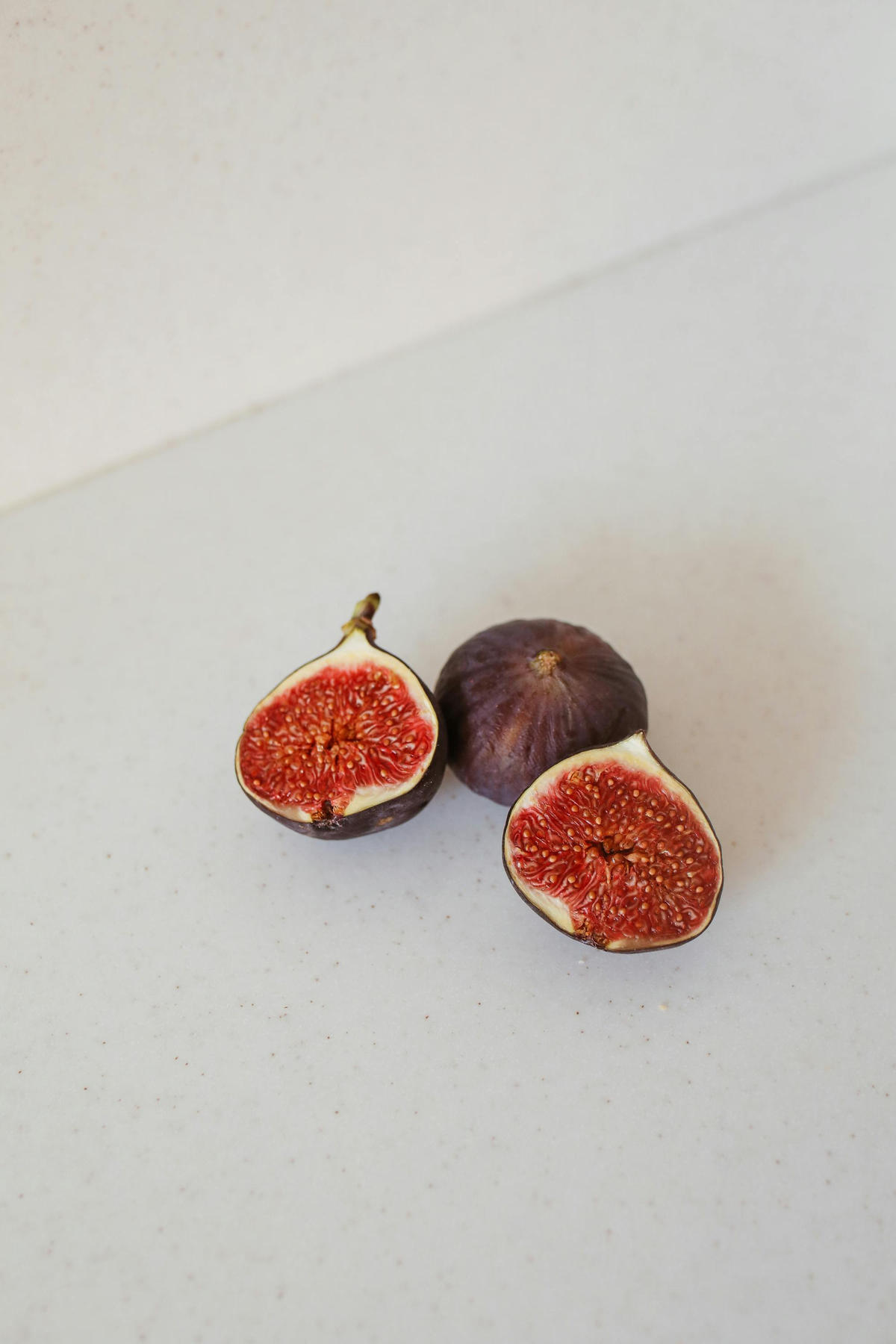
Figs
Serving: 1.00 medium (50g, 37 cal)
Key Nutrients
| Nutrient | Amount | DV% | Rating |
|---|---|---|---|
| fiber | 1.45 g | 5% | Good |
| vitamin B6 | 0.06 mg | 4% | Good |
| copper | 0.03 mg | 3% | Good |
| pantothenic acid | 0.15 mg | 3% | Good |
| potassium | 116 mg | 3% | Good |
| manganese | 0.06 mg | 3% | Good |
fiber
Goodvitamin B6
Goodcopper
Goodpantothenic acid
Goodpotassium
Goodmanganese
GoodAbout Figs
Health benefits
Potassium and blood pressure regulation
Figs are a good source of potassium. Low potassium intake, especially combined with high sodium consumption from processed foods, contributes to hypertension. In the DASH (Dietary Approaches to Stop Hypertension) trial, participants who replaced snacks with fruits and vegetables (increasing potassium, magnesium and calcium intake) lowered systolic blood pressure by 5.5 points and diastolic by 3.0 points over eight weeks compared to controls.
Fiber and weight management
One medium fig provides 1.45 g of fiber (5% DV). In one study, women who increased fiber intake significantly reduced total energy consumption without changes in hunger or satiety scores. The fiber in figs contributes to this effect by slowing gastric emptying and prolonging the feeling of fullness.
Fruit and cereal fiber—which is found in figs—protective against postmenopausal breast cancer
Results of a prospective study involving 51,823 postmenopausal women for an average of 8.3 years showed a 34% reduction in breast cancer risk for those consuming the most fruit fiber compared to those consuming the least. In addition, in the subgroup of women who had ever used hormone replacement, those consuming the most fiber, especially cereal fiber, had a 50% reduction in their risk of breast cancer compared to those consuming the least. Fruits richest in fiber include apples, dates, figs, pears and prunes. When choosing a high fiber cereal, look for whole grain cereals as they supply the most bran (a mere 1/3rd cup of bran contains about 14 grams of fiber).
Fig leaf may have insulin-lowering properties
You probably do not think about the leaves of the fig tree as one of fig’s edible parts. But in some cultures, fig leaves are a common part of the menu, and for good reason. The leaves of the fig have repeatedly been shown to have antidiabetic properties and can actually reduce the amount of insulin needed by persons with diabetes who require insulin injections. In one study, a liquid extract made from fig leaves was simply added to the breakfast of insulin-dependent diabetic subjects in order to produce this insulin-lowering effect.
Cardiovascular effects of fig leaves
In animal studies, fig leaves lowered circulating triglyceride levels. In vitro, fig leaf extracts inhibited the growth of certain cancer cell lines. The specific compounds responsible for these effects have not been identified.
Figs are also a good source of the trace mineral manganese.
Fruit intake and macular degeneration
A prospective study published in the Archives of Ophthalmology, involving over 100,000 participants followed for up to 18 years, found that consuming 3 or more servings of fruit per day was associated with a 36% lower risk of neovascular age-related macular degeneration (ARMD) compared to consuming fewer than 1.5 servings daily.
Intakes of vegetables, individual antioxidant vitamins and carotenoids were not independently associated with ARMD risk in this study. The protective effect appears specific to whole fruit consumption, suggesting synergistic interactions among fruit phytonutrients rather than any single nutrient.
Description
Figs are not only the main ingredient in a very popular cookie, the fig bar, but are a culinary delicacy par excellence. Part of the wonder of the fig comes from its unique taste and texture. Figs are lusciously sweet and feature a complex texture that combines the chewiness of their flesh, the smoothness of their skin, and the crunchiness of their seeds. In addition, since fresh figs are so delicate and perishable, some of their mystique comes from their relative rarity. Because of this, the majority of figs are dried, either by exposure to sunlight or through an artificial process, creating a sweet and nutritious dried fruit that can be enjoyed throughout the year.
Figs grow on the Ficus tree (Ficus carica), which is a member of the Mulberry family. They are unique in that they have an opening, called the “ostiole” or “eye,” which is not connected to the tree, but which helps the fruit’s development, aiding it in communication with the environment.
Figs range dramatically in color and subtly in texture depending upon the variety, of which there are more than one hundred and fifty. Some of the most popular varieties are:
- Black Mission: blackish-purple skin and pink colored flesh
- Kadota: green skin and purplish flesh
- Calimyrna: greenish-yellow skin and amber flesh
- Brown Turkey: purple skin and red flesh
- Adriatic: the variety most often used to make fig bars, which has a light green skin and pink-tan flesh
History
Figs can trace their history back to the earliest of times with mentions in the Bible and other ancient writings. They are thought to have been first cultivated in Egypt. They spread to ancient Crete and then subsequently, around the 9th century BC, to ancient Greece, where they became a staple foodstuff in the traditional diet. Figs were held in such esteem by the Greeks that they created laws forbidding the export of the best quality figs. Figs were also revered in ancient Rome where they were thought of as a sacred fruit. According to Roman myth, the wolf that nurtured the twin founders of Rome, Romulus and Remus, rested under a fig tree. During this period of history, at least 29 varieties of figs were already known.
Figs were later introduced to other regions of the Mediterranean by ancient conquerors and then brought to the Western Hemisphere by the Spaniards in the early 16th century. In the late 19th century, when Spanish missionaries established the mission in San Diego, California, they also planted fig trees. These figs turned out to be inferior in quality to those that were imported from Europe, and it wasn’t until the development of further cultivation techniques in the early 20th century that California began focused cultivation and processing of figs. Today, California remains one of the largest producers of figs in addition to Turkey, Greece, Portugal and Spain.
How to select and store
Since fresh figs are one of the most perishable fruits, they should be purchased only a day or two in advance of when you are planning on eating them. Look for figs that have a rich, deep color and are plump and tender, but not mushy. They should have firm stems and be free of bruises. Smelling figs can also give you clues into their freshness and taste. They should have a mildly sweet fragrance and should not smell sour, which is an indication that they may be spoiled.
For the most antioxidants, choose fully ripened figs:
Research conducted at the University of Innsbruck in Austria suggests that as fruits fully ripen, almost to the point of spoilage, their antioxidant levels actually increase.
Key to the process is the change in color that occurs as fruits ripen, a similar process to that seen in the fall when leaves turn from green to red to yellow to brown—a color change caused by the breakdown and disappearance of chlorophyll, which gives leaves and fruits their green color.
California figs are available from June through September with the exact timing varying with the variety. Some European figs are often available throughout autumn. When purchasing dried figs, make sure that they are still relatively soft, free of mold, and have a mellow, pleasant smell. Dried figs are available throughout the year.
Certified organic figs reduce exposure to pesticide residues. Local growers without formal certification may carry comparable quality.
Ripe figs should be kept in the refrigerator where they will stay fresh for about two days. Since they have a delicate nature and can easily bruise, you should store them either arranged on a paper towel-lined plate or shallow container. They should be covered or wrapped in order to ensure that they do not dry out, get crushed or pick up odors from neighboring foods. If you have purchased slightly under-ripe figs, you should keep them on a plate, at room temperature, away from direct sunlight. Dried figs will stay fresh for several months and can either be kept in a cool, dark place or stored in the refrigerator. They should be well wrapped so that they are not over exposed to air that may cause them to become hard or dry.
Tips for preparing and cooking
Preparation
Before eating or cooking figs, wash them under cool water and then gently remove the stem. Gently wipe dry.
Dried figs can simply be eaten, used in a recipe as is, or simmered for several minutes in water or fruit juice to make them plumper and juicier.
How to enjoy
Serving ideas
When preparing oatmeal or any other whole grain breakfast porridge, add some dried or fresh figs.
Poach figs in juice or red wine and serve with yogurt or frozen desserts.
Add quartered figs to a salad of fennel, arugula and shaved Parmesan cheese.
Fresh figs stuffed with goat cheese and chopped almonds can be served as hors d’oeuvres or desserts.
Individual concerns
Dried figs and sulfites
Commercially grown dried figs may be treated with sulfur-containing compounds during processing to extend their shelf life. For details about possible adverse reactions to sulfites, please see our article An Overview of Adverse Food Reactions
Nutritional profile
One medium (50g) provides 37 calories. Smaller but measurable amounts of fiber (5% DV), vitamin B6 (4% DV), copper (3% DV), pantothenic acid (3% DV), potassium (3% DV), manganese (3% DV) round out the profile.
For roasting vegetables, a ceramic baking dish like the Staub Ceramic Baking Dish Set retains heat beautifully and goes straight from oven to table.
Recipes with Figs
Full Nutrient Profile
Related Articles
References
- Appel LJ, Moore TJ, Obarzanek E, et al. A clinical trial of the effects of dietary patterns on blood pressure. DASH Collaborative Research Group. N Engl J Med. 1997 Apr 17;336(16):1117-24. 1997. https://doi.org/10.1056/nejm199704173361601
- Canal JR, Torres MD, Romero A, Perez C. A chloroform extract obtained from a decoction of Ficus carica leaves improves the cholesterolaemic status of rats with streptozotocin- induced diabetes. Acta Physiol Hung 2000;87(1):71-6. 2000. PMID:13400. https://doi.org/10.1098/rspb.1977.0012
- Cho E, Seddon JM, Rosner B, Willett WC, Hankinson SE. Prospective study of intake of fruits, vegetables, vitamins, and carotenoids and risk of age-related maculopathy. Arch Ophthalmol. 2004 Jun;122(6):883-92. 2004. PMID:15197064. https://doi.org/10.1001/archopht.122.6.883
- de Amorin A, Borba HR, Carauta JP, et al. Anthelmintic activity of the latex of Ficus species. J Ethnopharmacol 1999 Mar;64(3):255-8. 1999. PMID:13410. https://doi.org/10.1016/0091-3057(76)90338-5
- Ensminger AH, Esminger M. K. J. e. al. Food for Health: A Nutrition Encyclopedia. Clovis, California: Pegus Press; 1986. 1986. PMID:15210.
- Ludwig DS, Pereira MA, Kroenke CH, et al. Dietary fiber, weight gain, and cardiovascular disease risk factors in young adults. JAMA 1999 Oct 27;282(16):1539-46. 1999. https://doi.org/10.1001/jama.282.16.1539
- Pasman WJ, Saris WH, Wauters MA, et al. Effect of one week of fibre supplementation on hunger and satiety ratings and energy intake. Appetite 1997 Aug;29(1):77-87. 1997. https://doi.org/10.1006/appe.1997.0091
- Perez C, Canal JR, Campillo JE, et al. Hypotriglyceridaemic activity of Ficus carica leaves in experimental hypertriglyceridaemic rats. Phytother Res 1999 May;13(3):188-91. 1999. PMID:13420. https://doi.org/10.1016/0306-039x(76)90082-9
- Rubnov S, Kashman Y, Rabinowitz R, et al. Suppressors of cancer cell proliferation from fig (Ficus carica) resin: isolation and structure elucidation. J Nat Prod 2001 Jul;64(7):993-6. 2001. PMID:13390. https://doi.org/10.1098/rspb.1977.0002
- Sellmeyer DE, Schloetter DE, Schloetter M et al. Potassium citrate prevents urine calcium excretion and bone resorption induced by a high sodium chloride diet. J Clin Endo Metab 2002;87(5):2008-12. 2002. https://doi.org/10.1210/jcem.87.5.8470
- Serraclara A, Hawkins F, Perez C, et al. Hypoglycemic action of an oral fig-leaf decoction in type-I diabetic patients. Diabetes Res Clin Pract 1998 Jan;39(1):19-22. 1998. PMID:13430. https://doi.org/10.1098/rstb.1976.0109
- Suzuki R, Rylander-Rudqvist T, Ye W, et al. Dietary fiber intake and risk of postmenopausal breast cancer defined by estrogen and progesterone receptor status--a prospective cohort study among Swedish women. Int J Cancer. 2008 Jan 15;122(2):403-12. 2008. PMID:17764112. https://doi.org/10.1002/ijc.23060
- Wood, Rebecca. The Whole Foods Encyclopedia. New York, NY: Prentice-Hall Press; 1988. 1988. PMID:15220. https://doi.org/10.1002/food.19770210206