Fennel
Serving: 1.00 cup (87g, 27 cal)
Key Nutrients
| Nutrient | Amount | DV% | Rating |
|---|---|---|---|
| vitamin C | 10.44 mg | 14% | Excellent |
| molybdenum | 4.35 mcg | 10% | Very Good |
| fiber | 1.78 g | 6% | Very Good |
| potassium | 360.18 mg | 8% | Very Good |
| manganese | 0.11 mg | 5% | Very Good |
| copper | 0.06 mg | 7% | Very Good |
| phosphorus | 43.5 mg | 6% | Very Good |
| folate | 32.19 mcg | 8% | Very Good |
| calcium | 42.63 mg | 4% | Good |
| pantothenic acid | 0.2 mg | 4% | Good |
| iron | 0 mg | 0% | Good |
| magnesium | 14.79 mg | 4% | Good |
| vitamin B3 | 0.56 mg | 4% | Good |
vitamin C
Excellentmolybdenum
Very Goodfiber
Very Goodpotassium
Very Goodmanganese
Very Goodcopper
Very Goodphosphorus
Very Goodfolate
Very Goodcalcium
Goodpantothenic acid
Goodiron
Goodmagnesium
Goodvitamin B3
GoodAbout Fennel
Health benefits
Fennel contains phytonutrients with antioxidant activity
Fennel contains the flavonoids rutin, quercetin and various kaempferol glycosides, all of which exhibit antioxidant activity. In comparative assays, fennel extracts performed similarly to BHT (butylated hydroxytoluene), a synthetic antioxidant added to processed foods.
The primary component of fennel’s volatile oil is anethole. In animal studies, anethole reduced inflammation and inhibited tumor development. The proposed mechanism involves suppression of TNF-mediated signaling, which prevents activation of the transcription factor NF-kappaB (a regulator of pro-inflammatory gene expression). Fennel’s volatile oil also protected the livers of experimental animals from chemical injury.
Vitamin C content
Fennel bulb is an excellent source of vitamin C, the primary water-soluble antioxidant in human plasma. Vitamin C neutralizes reactive oxygen species in aqueous compartments and is required for neutrophil chemotaxis and lymphocyte proliferation. It also has direct antimicrobial activity at concentrations achievable in tissue.
Fiber, folate and potassium for cardiovascular function
Fennel’s soluble fiber binds bile acids in the intestine, promoting their fecal excretion and reducing circulating cholesterol. Fiber also accelerates colonic transit, reducing contact time between potential carcinogens and the intestinal epithelium. Fennel is a very good source of folate, the B vitamin required for conversion of homocysteine to methionine via methionine synthase. Elevated homocysteine damages vascular endothelium and is an independent risk factor for heart attack and stroke. Fennel’s potassium content (per-serving amounts in the nutrient profile below) helps counteract sodium-induced vasoconstriction.
Description
Fennel is a versatile vegetable that plays an important role in the food culture of many European nations, especially in France and Italy. Its esteemed reputation dates back to the earliest times and is reflected in its mythological traditions. Greek myths state that fennel was not only closely associated with Dionysus, the Greek god of food and wine, but that a fennel stalk carried the coal that passed down knowledge from the gods to men.
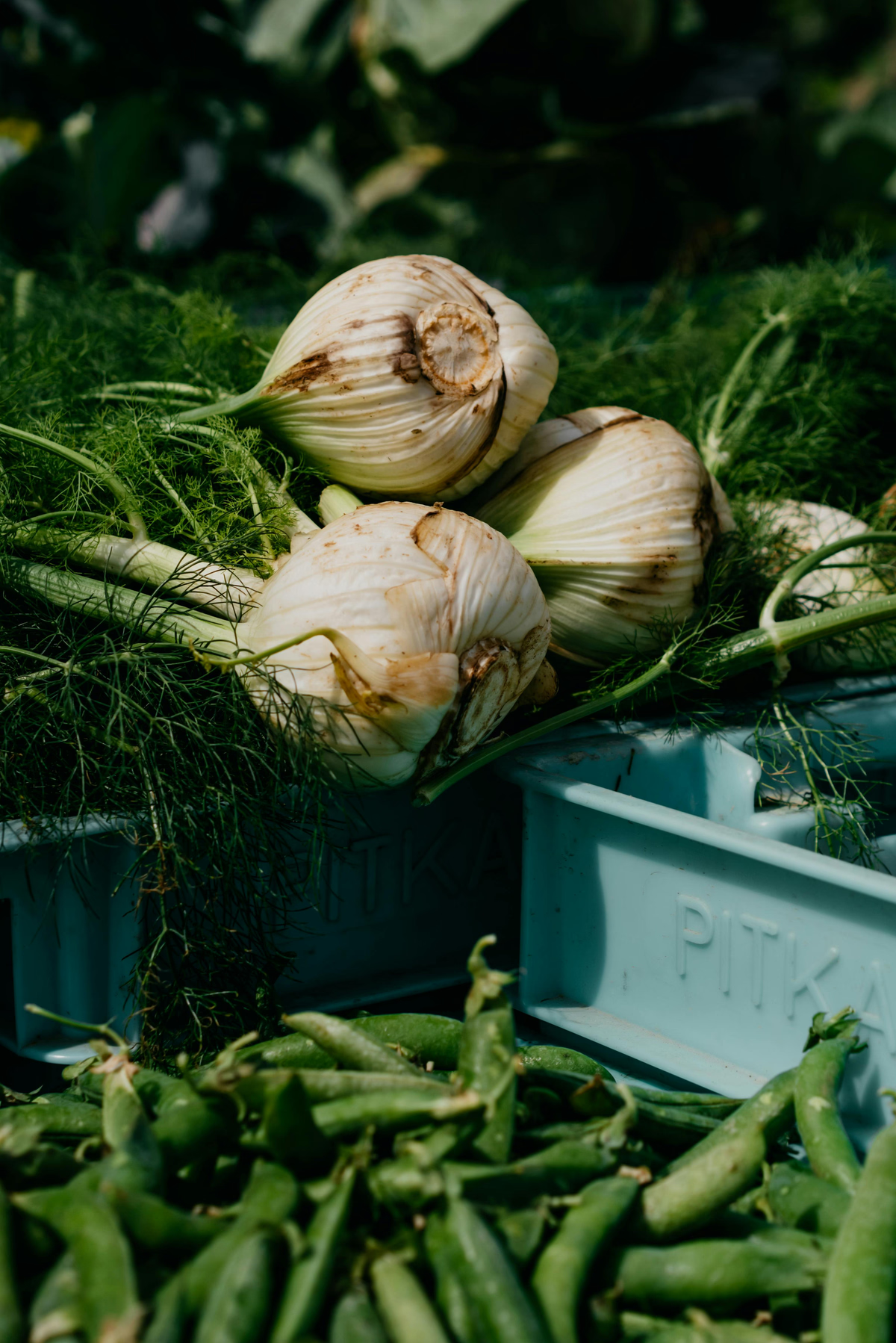
Fennel is composed of a white or pale green bulb from which closely superimposed stalks are arranged. The stalks are topped with feathery green leaves near which flowers grow and produce fennel seeds. The bulb, stalk, leaves and seeds are all edible. Fennel belongs to the Umbellifereae family and is therefore closely related to parsley, carrots, dill and coriander.
Fennel’s aromatic taste is unique, strikingly reminiscent of licorice and anise, so much so that fennel is often mistakenly referred to as anise in the marketplace. Fennel’s texture is similar to that of celery, having a crunchy and striated texture.
The scientific name for fennel is Foeniculum vulgare.
History
Ever since ancient times, fennel has enjoyed a rich history. The ancient Greeks knew fennel by the name “marathron”; it grew in the field in which one of the great ancient battles was fought and which was subsequently named the Battle of Marathon after this revered plant. Fennel was also awarded to Pheidippides, the runner who delivered the news of the Persian invasion to Sparta. Greek myths also hold that knowledge was delivered to man by the gods at Olympus in a fennel stalk filled with coal. Fennel was revered by the Greeks and the Romans for its medicinal and culinary properties.
Fennel has been grown throughout Europe, especially areas surrounding the Mediterranean Sea, and the Near East since ancient times. Today, the United States, France, India and Russia are among the leading cultivators of fennel.
How to select and store
Good quality fennel will have bulbs that are clean, firm and solid, without signs of splitting, bruising or spotting. The bulbs should be whitish or pale green in color. The stalks should be relatively straight and closely superimposed around the bulb and should not splay out to the sides too much. Both the stalks and the leaves should be green in color. There should be no signs of flowering buds as this indicates that the vegetable is past maturity. Fresh fennel should have a fragrant aroma, smelling subtly of licorice or anise. Fennel is usually available from autumn through early spring.
Certified organic fennel reduces exposure to pesticide residues and heavy metals. Local growers without formal certification may carry comparable quality.
Store fresh fennel in the refrigerator crisper for up to four days. Refrigeration slows the loss of heat-sensitive nutrients like vitamin C and B6.
Consume fennel soon after purchase, as its anise-like flavor fades with age. Blanching and freezing preserves texture but sacrifices much of the aroma. Dried fennel seeds keep about six months in an airtight container in a cool, dry location; refrigeration extends that shelf life.
Tips for preparing and cooking
Preparation
The three different parts of fennel—the base, stalks and leaves—can all be used in cooking. Cut the stalks away from the bulb at the place where they meet. If you are not going to be using the intact bulb in a recipe, then first cut it in half, remove the base, and then rinse it with water before proceeding to cut it further. Fennel can be cut in a variety of sizes and shapes, depending upon the recipe and your personal preference. The best way to slice it is to do so vertically through the bulb. If your recipe requires chunked, diced or julienned fennel, it is best to first remove the harder core that resides in the center before cutting it. The stalks of the fennel can be used for soups, stocks and stews, while the leaves can be used as an herb seasoning.
How to enjoy
Serving ideas
- Healthy sautéed fennel and onions make a wonderful side dish.
- Combine sliced fennel with avocados, and oranges for a delightful salad.
- Braised fennel is a wonderful complement to scallops.
- Next time you are looking for a new way to adorn your sandwiches, consider adding sliced fennel in addition to the traditional toppings of lettuce and tomato.
- Top thinly sliced fennel with plain yogurt and mint leaves.
- Fennel pairs well with salmon; their flavors complement each other.
Nutritional profile
One cup (87g) at 27 calories provides vitamin C (14% DV), molybdenum (10% DV), fiber (10% DV). Additional nutrients include potassium (8% DV), manganese (7% DV), copper (7% DV), phosphorus (6% DV), folate (6% DV), calcium (4% DV), pantothenic acid (4% DV), iron (4% DV), among others.
Individual concerns
Fennel is not a commonly allergenic food, is not known to contain measurable amounts of oxalates or purines and is also not included in the Environmental Working Group’s 2010 report “Shopper’s Guide to Pesticides” as one of the 12 foods most frequently containing pesticide residues.
For sautéing, a tri-ply stainless pan like the All-Clad D3 Stainless Sauté Pan gives you even heat and a good sear without non-stick coatings.
Recipes with Fennel
Full Nutrient Profile
Related Articles
References
- Chainy GB, Manna SK, Chaturvedi MM, Aggarwal BB. Anethole blocks both early and late cellular responses transduced by tumor necrosis factor: effect on NF-kappaB, AP-1, JNK, MAPKK and apoptosis. Oncogene 2000 Jun 8;19(25):2943-50. 2000. PMID:12930. https://doi.org/10.1210/endo-100-2-314
- Ensminger AH, Ensminger, ME, Kondale JE, Robson JRK. Foods & Nutriton Encyclopedia. Pegus Press, Clovis, California. 1983.
- Ensminger AH, Esminger M. K. J. e. al. Food for Health: A Nutrition Encyclopedia. Clovis, California: Pegus Press; 1986. 1986. PMID:15210.
- Fortin, Francois, Editorial Director. The Visual Foods Encyclopedia. Macmillan, New York. 1996.
- Grieve M. A Modern Herbal. Dover Publications, New York. 1971.
- Ostad SN, Soodi M, Shariffzadeh M, et al. The effect of fennel essential oil on uterine contraction as a model for dysmenorrhea, pharmacology and toxicology study. J Ethnopharmacol 2001 Aug;76(3):299-304. 2001. PMID:12940.
- Ozbek H, Ugras S, Dulger H et al. Hepatoprotective effect of Foeniculum vulgare essential oil. Fitoterapia 2003 Apr; 74(3):317-9. 2003. https://doi.org/10.1016/s0367-326x(03)00028-5
- Ruberto G, Baratta MT, Deans SG, Dorman HJ. Antioxidant and antimicrobial activity of Foeniculum vulgare and Crithmum maritimum essential oils. Planta Med 2000 Dec;66(8):687-93. 2000. PMID:12920.
- Wood, Rebecca. The Whole Foods Encyclopedia. New York, NY: Prentice-Hall Press; 1988. 1988. PMID:15220. https://doi.org/10.1002/food.19770210206