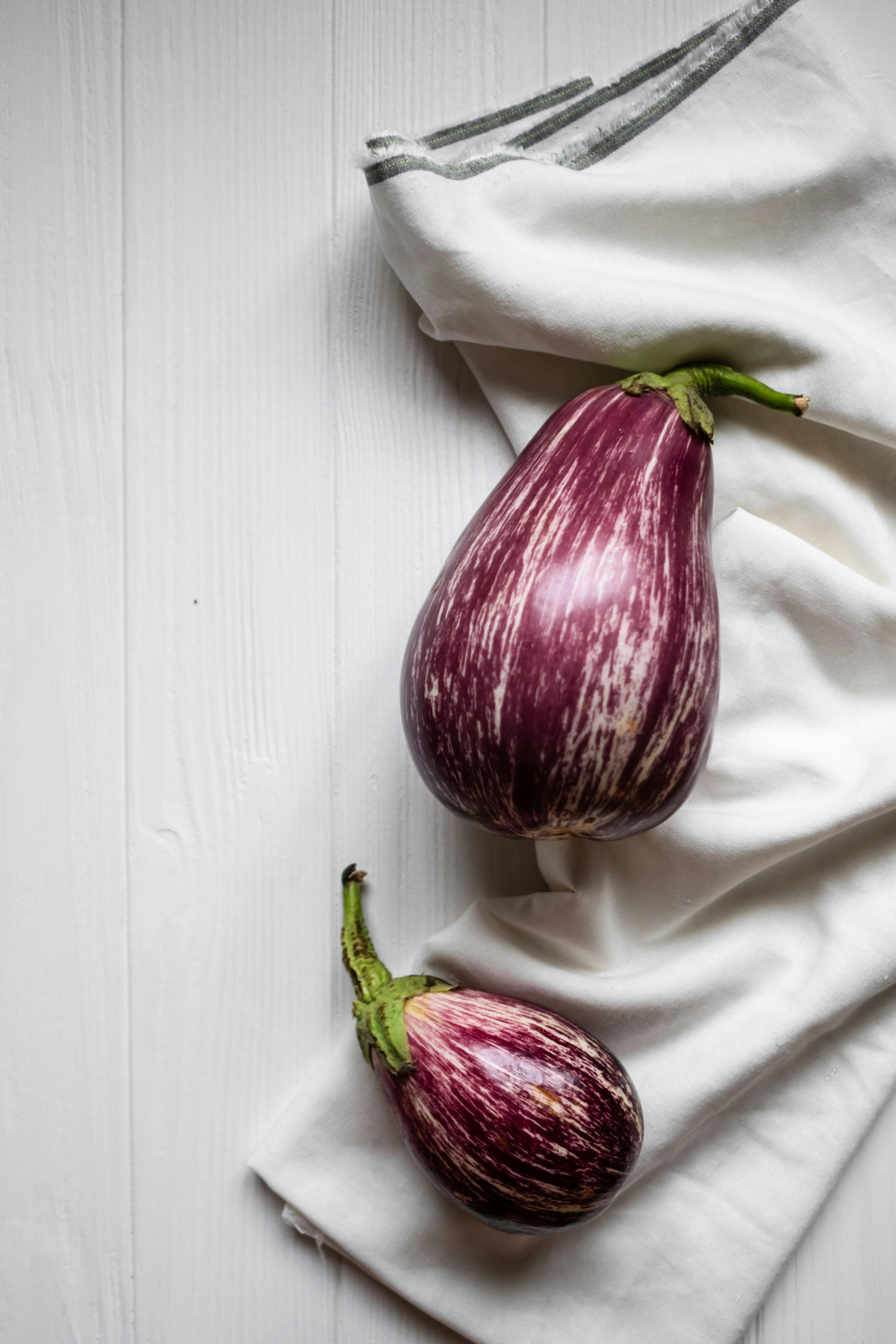
Eggplant
Serving: 1.00 cup (99g, 35 cal)
Key Nutrients
| Nutrient | Amount | DV% | Rating |
|---|---|---|---|
| fiber | 2.47 g | 9% | Very Good |
| copper | 0.06 mg | 7% | Very Good |
| vitamin B1 | 0.08 mg | 7% | Very Good |
| vitamin B6 | 0.09 mg | 5% | Good |
| manganese | 0.11 mg | 5% | Good |
| vitamin B3 | 0.59 mg | 4% | Good |
| folate | 13.86 mcg | 3% | Good |
| vitamin K | 2.87 mcg | 3% | Good |
| potassium | 121.77 mg | 3% | Good |
| molybdenum | 4.1 mcg | 5.5% | Very Good |
| tryptophan | 0.01 g | 3.1% | Good |
| vitamin C | 1.8 mg | 3% | Good |
| magnesium | 11.48 mg | 2.9% | Good |
fiber
Very Goodcopper
Very Goodvitamin B1
Very Goodvitamin B6
Goodmanganese
Goodvitamin B3
Goodfolate
Goodvitamin K
Goodpotassium
Goodmolybdenum
Very Goodtryptophan
Goodvitamin C
Goodmagnesium
GoodAbout Eggplant
Eggplant (Solanum melongena) is a low-calorie vegetable (35 calories per cup cooked) available year-round, though peak season runs August through October.
Eggplants belong to the nightshade family of vegetables, which also includes tomatoes, bell peppers and potatoes. They grow in a manner much like tomatoes, hanging from the vines of a plant that grows several feet in height. While the different varieties do range slightly in taste and texture, one can generally describe the eggplant as having a pleasantly bitter taste and spongy texture.
Eggplant, cubed, cooked
1.00 cup
(99.00 grams)
Calories: 35
GI: low
NutrientDRI/DV
fiber9%
copper7%
vitamin B17%
manganese5%
vitamin B65%
vitamin B34%
vitamin K3%
folate3%
- Health Benefits
- Description
- History
- How to Select and Store
- Tips for Preparing and Cooking
- How to Enjoy
- Individual Concerns
- Nutritional Profile
- References
Health benefits
Eggplant’s most notable bioactive compounds are its phenolic acids (chlorogenic acid, caffeic acid) and the anthocyanin nasunin, concentrated primarily in the purple skin.
Nasunin and brain cell membrane protection
Nasunin, an anthocyanin in eggplant skin, scavenges superoxide, hydroxyl and peroxyl radicals. In animal studies, nasunin protected the lipid bilayers of brain cell membranes from oxidative damage. Since cell membranes are composed almost entirely of phospholipids, lipid peroxidation degrades membrane fluidity and disrupts cellular signaling.
Chlorogenic acid: the dominant phenolic
USDA Agricultural Research Service scientists identified chlorogenic acid as the predominant phenolic compound across seven commercial eggplant cultivars and a collection of wild varieties. Chlorogenic acid has demonstrated antimutagenic, antimicrobial and anti-LDL-oxidation activity in laboratory assays. The cultivar Black Magic contained nearly three times the phenolic content of other commercial varieties studied.
Thirteen additional phenolic acids appeared at varying concentrations across cultivars. These phenolics also cause eggplant’s characteristic browning when cut (via polyphenol oxidase) and contribute to bitterness in some varieties.
Cardiovascular effects in animal models
Hypercholesterolemic animals given eggplant juice showed reduced blood cholesterol, lower arterial wall cholesterol levels and improved vascular relaxation. The effects likely involve both nasunin and terpene phytonutrients specific to eggplant.
Nasunin also chelates iron. While iron is essential for oxygen transport and collagen synthesis, excess free iron catalyzes Fenton reactions that generate hydroxyl radicals. In postmenopausal women and men (who lack regular iron loss through menstruation), iron can accumulate. Iron chelation by nasunin reduces this Fenton chemistry, protecting LDL particles from peroxidation and joint tissues from oxidative damage.
Description
Eggplant (called aubergine in France) belongs to the Solanaceae family alongside tomatoes, bell peppers and potatoes. The most common North American variety is pear-shaped with glossy deep purple skin, cream-colored spongy flesh and seeds in a conical arrangement.
Varieties come in lavender, jade green, orange and yellow-white, ranging from tomato-sized to zucchini-length. The flesh has a mildly bitter flavor and spongy texture that absorbs surrounding flavors during cooking.
History
The ancient ancestors of eggplant grew wild in India and were first cultivated in China in the 5th century B.C. Eggplant was introduced to Africa before the Middle Ages and then into Italy, the country with which it has long been associated, in the 14th century. It subsequently spread throughout Europe and the Middle East and, centuries later, was brought to the Western Hemisphere by European explorers. Today, Italy, Turkey, Egypt, China and Japan are the leading growers of eggplant.
Early European varieties were intensely bitter, which gave eggplant an unfortunate reputation as a cause of insanity and illness. For centuries it served as an ornamental garden plant rather than a food. Only in the 18th century did less bitter cultivars establish eggplant’s place in the cuisines of Italy, Greece, Turkey and France.
How to select and store
Choose eggplants that are firm and heavy for their size. Their skin should be smooth and shiny, and their color, whether it be purple, white or green, should be vivid. They should be free of discoloration, scars, and bruises, which usually indicate that the flesh beneath has become damaged and possibly decayed.
The stem and cap, on either end of the eggplant, should be bright green in color. As you would with other fruits and vegetables, avoid purchasing eggplant that has been waxed. To test for the ripeness of an eggplant, gently press the skin with the pad of your thumb. If it springs back, the eggplant is ripe, while if an indentation remains, it is not.
Certified organic eggplant reduces exposure to pesticide residues. Local growers without formal certification may offer comparable quality.
Eggplants are sensitive to temperature extremes; ideal storage is around 50 degrees F (10 degrees C). Do not cut before storing, as exposed flesh deteriorates rapidly. Place uncut, unwashed eggplant in a plastic bag in the refrigerator crisper for a few days. Remove any plastic film packaging promptly to allow air circulation.
Tips for preparing and cooking
Tips for preparing eggplant
Cut with a stainless steel knife; carbon steel reacts with eggplant phenolics and causes blackening. Most varieties can be eaten skin-on, though large or white-skinned specimens may have tough skins worth peeling.
To reduce bitterness and moisture, sprinkle cut eggplant with salt and rest for 30 minutes. This osmotic process draws out water and reduces oil absorption during cooking. Rinse afterward to remove excess salt.
Bake whole eggplant (pierced with a fork for steam release) at 350 degrees F (177 degrees C) for 15-25 minutes. Eggplant can also be roasted or steamed.
How to enjoy
A few quick serving ideas
- For homemade babaganoush, purée roasted eggplant, garlic, tahini, lemon juice and olive oil.
- Use it as a dip for vegetables or as a sandwich filling.
- Mix cubed baked eggplant with grilled peppers, lentils, onions and garlic and top with balsamic vinaigrette.
- Stuff miniature Japanese eggplants with a mixture of feta cheese, pine nuts and roasted peppers.
- Add eggplant to your next Indian curry stir-fry.
Individual concerns
Eggplant belongs to the nightshade family
Eggplant is a member of the Solanaceae (nightshade) family. Some individuals report adverse reactions to nightshade vegetables, though the mechanisms are not well characterized in clinical research.
Nutritional profile
One cup (99g) of cooked eggplant provides 2.47 g of fiber (9% DV), 0.06 mg of copper (7% DV), 0.08 mg of vitamin B1 (7% DV), 0.11 mg of manganese (5% DV), 0.09 mg of vitamin B6 (5% DV), 0.59 mg of niacin (4% DV), 121.77 mg of potassium (3% DV), 13.86 mcg of folate (3% DV) and 2.87 mcg of vitamin K (3% DV). Eggplant also contains the phytonutrients nasunin and chlorogenic acid.
For sautéing, a tri-ply stainless pan like the All-Clad D3 Stainless Sauté Pan gives you even heat and a good sear without non-stick coatings.
Recipes with Eggplant
Full Nutrient Profile
Related Articles
- 10 Most Controversial WHFoods
- Are bitter vegetables better for you?
- Can I effectively wash off pesticides from my fruits and vegetables?
- Can you get too many antioxidants?
- How do cooking temperatures affect vegetable nutrients?
- Should I Include Meatless Meals In My Diet?
- Veggie Advisor: Why are Vegetables So Indispensable for Healthy Eating?
- What does it mean when a food is referred to as a "nightshade" and should I be concerned about eating these types of foods?
- What's New in 2013
- Which foods are classified as "nightshades," and why are adverse reactions sometimes associated with these foods?
References
- Bliss RM, Elstein D. Scientists get under eggplant's skin. ARS Magazine, 2004 January; 52 (1): http://www.ars.usda.gov/is/AR/archive/jan04/skin0104.htm. 2004.
- Ensminger AH, Ensminger, ME, Kondale JE, Robson JRK. Foods & Nutriton Encyclopedia. Pegus Press, Clovis, California. 1983.
- Ensminger AH, Esminger M. K. J. e. al. Food for Health: A Nutrition Encyclopedia. Clovis, California: Pegus Press; 1986. 1986. PMID:15210.
- Fortin, Francois, Editorial Director. The Visual Foods Encyclopedia. Macmillan, New York. 1996.
- Jorge PA, Neyra LC, Osaki RM, et al. Effect of eggplant on plasma lipid levels, lipidic peroxidation and reversion of endothelial dysfunction in experimental hypercholesterolemia. Arq Bras Cardiol. 1998 Feb;70(2):87-91. 1998. https://doi.org/10.1590/s0101-20612011000300006
- Kimura Y, Araki Y, Takenaka A, Igarashi K. Protective effects of dietary nasunin on paraquat-induced oxidative stress in rats. Biosci Biotechnol Biochem. 1999 May;63(5):799-804. 1999. https://doi.org/10.1271/bbb.63.799
- Noda Y, Kneyuki T, Igarashi K, et al. Antioxidant activity of nasunin, an anthocyanin in eggplant peels. Toxicology 2000 Aug 7;148(2-3):119-23. 2000. https://doi.org/10.1016/s0300-483x(00)00202-x
- Whitaker BD, Stommel JR. Distribution of Hydroxycinnamic Acid Conjugates in Fruit of Commercial Eggplant (Solanum melongena L.) Cultivars. J Agric Food Chem 2003 May 21;51(11):3448-54. 2003. https://doi.org/10.1021/jf026250b
- Wood, Rebecca. The Whole Foods Encyclopedia. New York, NY: Prentice-Hall Press; 1988. 1988. PMID:15220. https://doi.org/10.1002/food.19770210206
- Whitaker BD, Stommel JR. Distribution of hydroxycinnamic acid conjugates in fruit of commercial eggplant (Solanum melongena L.) cultivars. J Agric Food Chem. 2003 May 21; 51(11): 3448-54. 2003. https://doi.org/10.1021/jf026250b