Corn, Fresh Sweet
Serving: 1.00 each (77g, 74 cal)
Key Nutrients
| Nutrient | Amount | DV% | Rating |
|---|---|---|---|
| pantothenic acid | 0.61 mg | 12% | Good |
| phosphorus | 59.29 mg | 8% | Good |
| vitamin B3 | 1.3 mg | 8% | Good |
| fiber | 1.85 g | 7% | Good |
| vitamin B6 | 0.11 mg | 6% | Good |
| manganese | 0.13 mg | 7% | Good |
| vitamin C | 8.2 mg | 13.7% | Good |
| vitamin B5 | 1.18 mg | 11.8% | Good |
pantothenic acid
Goodphosphorus
Goodvitamin B3
Goodfiber
Goodvitamin B6
Goodmanganese
Goodvitamin C
Goodvitamin B5
GoodAbout Corn, Fresh Sweet
What’s new and beneficial about corn
- Quick Steaming is the preferred cooking method for corn, selected both for taste and texture and because research repeatedly shows nutrient preservation from short-term steaming. A recent study that extends these cooking principles to corn and its two key carotenoids: lutein and zeaxanthin. In this study, steaming was compared with two other methods of cooking: boiling and pressure cooking. Results of the study showed that the greatest retention of lutein and zeaxanthin—as well as the greatest retention of total phenols and greatest antioxidant capacity—was found in the steamed corn. Both cut corn and whole ear corn were analyzed in this study, making these encouraging results about steaming applicable to corn in both forms.
- A recent lab study on corn produced especially noteworthy results, though animal and lab studies alone do not form the basis for dietary recommendations. In this lab study, the antioxidant activities of corn were analyzed on a genetic level, and all three major components of corn kernels— the bran, the germ, and the large endosperm portion—were examined. The activity level of 84 different genes was measured in the study, and all 84 were genes related to antioxidant pathways. Activity in 28 of 84 of these antioxidant pathway genes was increased after incubation of cells with carotenoid extracts from corn. Interestingly, the two predominant carotenoids in corn—lutein and zeaxanthin—were found to be present in all three of the major corn components. The authors then went on to conclude that all three corn components might be helpful in lessening oxidative stress. Consuming all three corn components (the germ, bran, and endosperm) at once captures the maximal antioxidant potential. A perfect example of accomplishing this task would be the enjoyment of freshly steamed corn on the cob since this whole-kernel form of corn provides you will all three corn components.
- Corn is somewhat well-known for its high ratio of insoluble to soluble fiber. For example, when people notice that corn hulls may not seem to fully digest after eating, what they are noticing is that the hulls contain plentiful amounts of insoluble fibers, including celluloses and hemicelluloses. Of course, many parts of the corn kernels do fully digest, and researchers are continuing to expand our understanding about corn and its digestion, especially of its fibers. While the exact steps in human digestion of whole corn are not yet clear, different components in the corn fibers—for example, arabinoxylans in the hemicellulose category of fibers—may be broken down by bacteria in our digestive tract and converted into health-supportive substances. The bottom line here is simple: just because corn’s fiber content falls overwhelmingly into the insoluble category does not mean that corn fiber fails to provide us with health benefits. Future research should help clarify exactly how corn fibers interact with bacteria in our digestive tract when we enjoy freshly steamed corn in our meals.
- Some of the drugs used to treat cancer have unwanted consequence for healthy cells in our body. One of these unwanted consequences is increased oxidative stress and overproduction of reactive oxygen molecules (often referred to as reactive oxygen species, or ROS). A recent study has used purple corn extract to effectively lower this unwanted side effect in mice who had been injected with an ROS-increasing cancer drug. This result should not be surprising since purple and blue varieties of corn are well-known for their unique anthocyanin content. Among the anthocyanins present in blue and purple corn, the most predominant are cyanidin-3-glucosides. But other anthocyanins— including pelargonidins and peonidins—are fairly concentrated in these colorful corn varieties. The increasing popularity of blue/purple corn chips, blue/purple corn tortillas, and similar foods makes this topic relevant. Of course, all of these foods are made from blue/purple corn that has been dried and ground, rather than from fresh corn. If including these forms of blue/purple corn in a meal plan, checking the fiber content on the package before making your selection since there is no guarantee that the dried and ground corn flour or corn meal that was used to make these products came exclusively from whole kernels. Typically, whenever you see a total fiber count of only 1 gram per serving, you will not be getting 100% whole grain purple/blue corn in the product and are likely to be losing potential health benefits. It is also possible to find blue and purple varieties of sweet corn that can be enjoyed in fresh form. However, these blue and purple varieties still remain uncommon in the supermarket and are much less readily available than yellow and white fresh corn.
Recommendations
Corn is widely and correctly classified as a grain, a member of the grass family alongside wheat, oats, and rice. On this site, however, corn is grouped with vegetables because the focus is on fresh corn. Dried and ground whole corn (corn meal, corn flour) can be a healthy addition to many meal plans, but fresh corn, like corn on the cob, is what most people think of as a vegetable.
When consumed in fresh form, yellow varieties of corn are by far the most popular in the U.S. For this reason, we not only include corn in our WHF vegetable category but also in our yellow/orange vegetable subcategory. (For more details about yellow/orange vegetables, please see our Vegetable Advisor.) As a minimum daily goal for vegetable intake from the yellow/orange group, we recommend 1/2 cup per day. A more optimal intake level would be one cup per day. Of course, alongside of yellow corn, vegetables like sweet potato, yellow summer squash, and carrots can contribute to your daily yellow-orange total.
Corn, yellow, cooked
1.00 each
(77.00 grams)
Calories: 74
GI: medium
NutrientDRI/DV
pantothenic acid12%
phosphorus8%
vitamin B38%
fiber7%
vitamin B66%
- Health Benefits
- Description
- History
- How to Select and Store
- Tips for Preparing and Cooking
- How to Enjoy
- Nutritional Profile
- References
Health benefits
Antioxidant benefits of corn
While it might sound surprising to some people who are used to thinking about corn as a plain staple food, a snack food, or a summertime party food, corn is actually a unique phytonutrient-rich plant that provides us with well-documented antioxidant benefits. In terms of conventional antioxidant nutrients, corn is not ranked by our algorithm as a good source of any. Instead, corn’s phytonutrients have taken center stage in the antioxidant research. When all varieties of corn are considered as a group, the list of corn’s key antioxidant nutrients appears as follows.
Basic nutrient, phytonutrient, and antioxidant benefits from corn
While many people think about corn along the lines of a “staple food” that can be dried, ground, and then used to make corn meal, corn flour, and a variety of related foods, corn can also be enjoyed in fresh form and fresh corn can be the source of many key nutrients. The ear of cooked, yellow corn that we profile on our website is a good source of several B vitamins, including vitamin B3, vitamin B6, and pantothenic acid. In fact, in some cultures where corn serves as a major meal component, its vitamin B3 content can be especially important for preventing B3-deficiency related problems. Fresh corn is also a good source of fiber and of the mineral phosphorus. In short, it would be a mistake to think about this food as nothing more than a “staple.”
In terms of phytonutrients, corn is best-known for its carotenoids. Lutein and zeaxanthin are the primary carotenoids found in corn. Yet also present are beta-carotene and beta-cryptoxanthin. The steaming of corn has been determined to better preserve the lutein and zeaxanthin in corn than either boiling of pressure cooking. (And, of course, Quick Steaming is our preferred cooking method for this food.)
The carotenoids listed above can all function as antioxidants, although they are not the only antioxidants present in corn. In addition to its carotenoids, corn also provides us with the antioxidant flavonoid quercetin and a variety of antioxidant organic acids. Included among these antioxidant organic acids are ferulic acid, diferulic acid, and coumaric acid. In blue and purple corn varieties, anthocyanin antioxidants are added to the rich mix of antioxidant nutrients present in corn. These anthocyanins include cyanidin-3-glucosides, pelargonidins, and peonidins. The anthocyanins in blue and purple corn have been used in animal studies to lower oxidative stress and reduce the presence of reactive oxygen species (ROS). And in lab studies, when cells have been incubated together with carotenoids extracts from corn, the antioxidant pathway genes in these cells show increased activity. 84 different genes in antioxidant pathways were analyzed in one study, and 28 of 84 of those genes were found to have increased activity—technically called gene expression—after the combination of cells with corn carotenoid extracts. In short, there is a research track record of antioxidant-related benefits from corn’s unique variety of antioxidant nutrients.
Other health benefits from corn
Research on overall health benefits from fresh corn is complicated for several reasons. First, a good bit of the current research on corn is carried out on processed corn components rather than whole fresh corn. For example, one popular new corn supplement called “soluble corn fiber” has been the topic of numerous research studies on digestive function, cardiovascular function, and anti-cancer potential for certain types of cancer (for example, colorectal cancer). However, soluble corn fiber (SCF) is a manufactured product made from hydrolysis of corn starch in a processing facility. The corn starch is processed in such a way as to produce resistant maltodextrins that contain glucose oligosaccharides together with glycosidic linkages. Intake of SCF and other supplement-type products made from corn is simply not comparable to the enjoyment of fresh corn on the cob. Second, corn is often studied in combination with other starchy grains, including grains like wheat. When results from these studies are obtained, it can be difficult to sort out the exact role played by corn. Finally, we’ve seen a good number of studies on corn extracts fed to rats and mice. While these studies can be very helpful in expanding our understanding of potential corn benefits, we do use animal studies on our website to confirm or rule out human health benefits. We like to see large-scale studies with real people enjoying everyday meals before linking foods to likely health benefits.
Despite the limitations described above, several areas of corn research show promising trends for health benefits. One of the liveliest areas of research involves corn and digestive function. Corn has long been known for its fiber content. An overwhelming amount of fiber in corn is insoluble. When people notice that corn hulls may not seem to be fully digesting, what they are noticing is the plentiful amount of cellulose and hemicellulose fiber that is present in the corn hulls. However, many parts of corn kernels can be fully digested, if not by human enzymes then by enzymes present in bacteria that live in the human digestive tract. While the exact steps in human digestion of whole corn are not yet clear, different components in the corn fibers—for example, arabinoxylans in the hemicellulose category of fibers—may be broken down by bacteria in our digestive tract and converted into health-supportive substances. Future research should help to clarify exactly how this process works. It should also lead to confirmation of unique digestive health benefits from enjoyment of corn.
Intake of soluble fiber has long been linked to cardiovascular benefits, including helpful changes in blood fat levels and composition. Studies on mice have shown corn extracts to help lower both total cholesterol and LDL-cholesterol.
Studies on SCF (the soluble corn fiber product described earlier in this section) have shown the ability of this corn derivative to impact bacterial composition in the lower intestine and the activity of bacterial enzymes. This impact, in turn, has been linked to better calcium absorption. Key bacteria involved in these studies include Bifidobacteria, Bacteriodes, Dorea, Ruminococcus, and Dialister. Other studies on SCF seem to confirm the connection between intake of these altered corn fibers and digestive function. What we hope to see in the near future are studies not on processed corn starch products like SCF, but on sweet corn that is being enjoyed in a freshly steamed form in an everyday meal plan.
Description
In terms of planted acreage, corn is the largest field crop in the United States, with more acres planted for corn than for soybeans or for wheat. However, less than 5% of this corn acreage is used to produce fresh corn for consumers. The vast majority of cultivated corn is used to produce feed for livestock, ethanol fuel, and a variety of refined components include high fructose corn syrup (HFCS), corn oil, and corn starch. For improved yield in these specialty areas, about 90% of all corn grown in the United States comes from genetically engineered (GE) varieties. Even though many varieties of fresh sweet corn have not been genetically engineered, one way to avoid GE corn is to purchase certified organic varieties since GE foods are not allowed within federal organic food regulations.
Corn belongs to the grass family of plants (more and more widely being referred to as the Poaceae family, although previously being known as the Gramineae family). Included in this grass family are all familiar cereal grains, including wheat, oats, barley, rye, rice and millet. However, corn is not classified as a gluten grain and within the grass family, it sits a good distance from wheat in terms of its evolution. (Wheat belongs to the Pooideae subfamily of grasses and to the Triticaceae tribe, while while corn belongs to the Panicoideae subfamily and the Paniceae tribe.)
For our website purposes, we made a decision to group corn together not with our grain group (where it definitely belongs from a science standpoint) but with our vegetable group, and we made this decision for one basic reason. Our recipes and meal plans focus on enjoyment of fresh corn. We do not feature recipes that rely on corn in its dried and ground form—for example, with ingredients like corn meal or corn flour. While dried and ground whole corn can make a healthy addition to many meal plans, we always feature fresh foods on our website as long as we find them to be widely available and practical to prepare. Since corn meets both of these criteria, we feature it as a fresh food. And within this category of fresh foods, we believe that most people tend to think about fresh corn—like corn on the cob—as a vegetable rather than a grain. So the vegetable group is where you will find corn listed among our 100 WHF, even though we realize that it is rightly classified as a grain from a science standpoint.
All commonly enjoyed varieties of fresh corn belong to the Zea mays genus/species of plant. In this scientific name you can recognize a form of the word “maize” (from the Spanish word “maiz” and the Arawak/Taino word “mahiz”). Cultivation of this remarkable food began in Mesoamerica over 8,000 years ago, and in many Central American, South American, and Native American cultures, it held and continues to hold a special place not only in everyday eating but also in a spiritual sense.
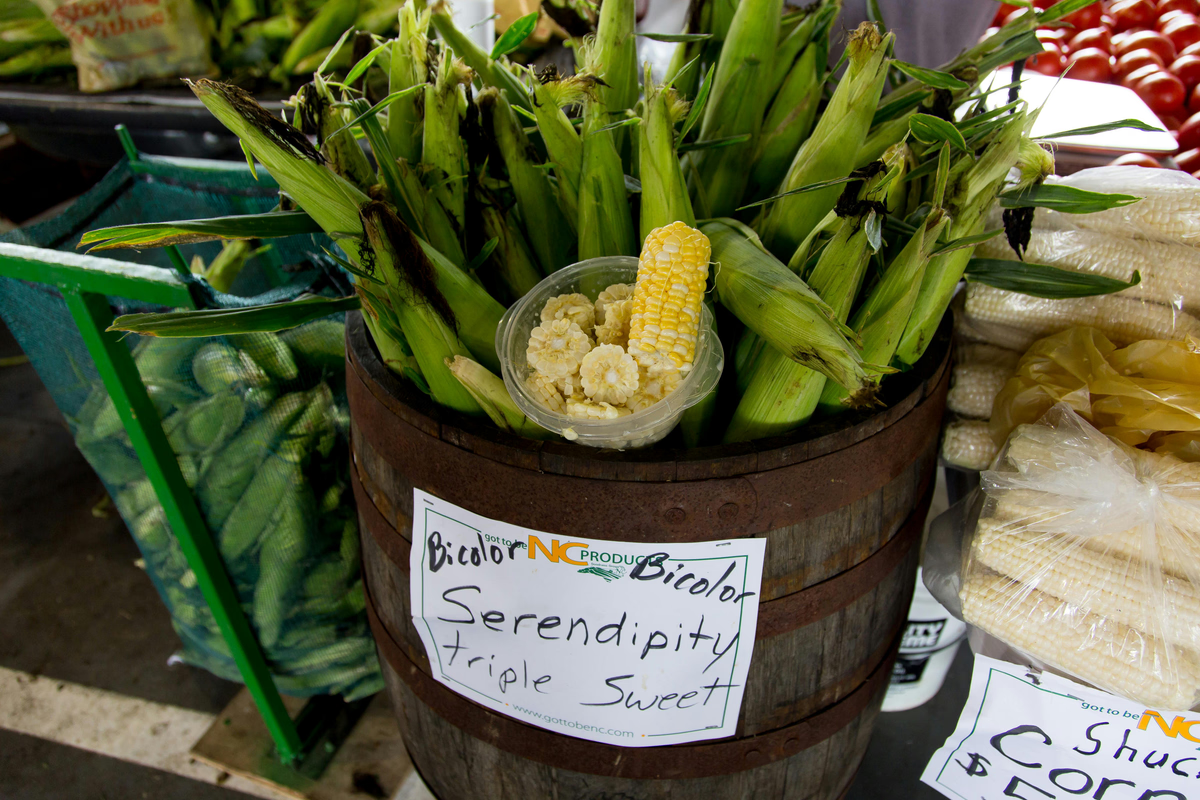
Corn plants within the Zea mays genus/species include hundreds of different varieties (also called “subspecies”). When corn is planted as a field crop, these varieties typically match up with the ultimate use of the crop. For example, the vast majority of dent corn varieties are used for animal feed; flour corn varieties are used to produce dried corn flour; and sweet corn varieties are type that we typically find in the supermarket and enjoy in our meals. Sweet corn varieties commonly include both yellow and white ears of corn. While blue and purple ears are most often used to produce dried and ground corn meal or corn flour, it is also possible to find blue and purple varieties of sweet corn that can be enjoyed in fresh ear form.
Some popular varieties of corn in the U.S. include Silver Queen, Silver King, Jubilee, Ambrosia, Mirai, Legend, and Revelation. White, yellow, and bicolor varieties can all be found within this group.
We get asked by readers about the characteristics of what is most often called “baby corn.” This term does not refer to any specific variety of corn but to many different varieties that can be harvested very early during growth (before the silks have formed and before fertilization has occurred). While the United States is a major marketplace for baby corn, very little is produced in the U.S. and is instead imported from countries in Asia, and especially from Thailand. For these reasons, most of the baby corn found in U.S. supermarkets is canned or jarred and not available in fresh form.
History
As mentioned in our Description section, corn is a food originally cultivated in Mesoamerica over 8,000 years ago. Its long history of use as a food has been the topic of many books and research studies. Among all countries in the world, the United States is currently the largest single producer of corn, with over 94 million acres of corn planted each year. However, the vast majority of this acreage is not used to grow sweet corn for fresh use. (Less than 5% of total corn crops are used for that purpose.) Animal feed, ethanol fuel production, and commercial food supply ingredients like high fructose corn syrup, corn starch, and corn oil drive the vast amount of corn production in the U.S. In addition, about 10-20% of all U.S. corn crops are exported each year. If limited to an analysis of sweet corn only (the kind that is used for fresh corn on the cob), the states of Washington, Minnesota, Wisconsin, California, and Florida were the top five sweet corn-producing states in the U.S. in 2016.
As mentioned earlier, the U.S. produces more corn than any other country when all types and reasons for corn production are taken into account. China, Brazil, Mexico, and Argentina are also top corn-producing countries when all types of corn production are considered.
How to select and store
From a food safety standpoint, we recommend selection of corn that has not been exposed to any substantial amount of heat. Exposure to excess heat can increase the susceptibility of fresh corn to microbial contamination. If you are shopping in the grocery store, your safest bet is corn that is being displayed in a refrigerated produce bin. Next safest would be corn that, while not refrigerated, is still being displayed in a cool store location, out of direct sun and not near a heat source. These same recommendations apply for corn in a farmer’s market or roadside stand. Here display of corn in the shade and out of direct sunlight can be important from a food safety standpoint.
Look for corn whose husks are fresh and green and not dried out. They should envelope the ear and not fit too loosely around it. To examine the kernels, gently pull back on part of the husk. The kernels should be plump and tightly arranged in rows.
Certified organically grown corn is recommended. Repeated research studies on organic foods as a group show that exposure to contaminants such as pesticides and heavy metals can be greatly reduced through the purchase of certified organic produce, including corn. In many cases, you may be able to find a local organic grower who sells corn but has not applied for formal organic certification either through the U.S. Department of Agriculture (USDA) or through a state agency. (Examples of states offering state-certified organic foods include California, New York, Oregon, Vermont, and Washington.) However, if you are shopping in a large supermarket, your most reliable source of organically grown corn is very likely to be corn that displays the USDA organic logo.
Traditionally to enjoy the optimal sweetness of fresh corn, it was recommended to eat it the day of purchase. New varieties allow you 3 days to still enjoy its full flavor. Store corn in an air-tight container or tightly wrapped plastic bag in the refrigerator if you do not intend to cook it on the day of purchase. Do not remove its husk since this will protect its flavor.
Fresh corn freezes well if placed in heavy-duty freezer bags. To prepare whole ears for freezing, blanch them first for five minutes depending. If you just want to freeze the kernels, first blanch the ears and then cut the kernels off the cob at about three-quarters of their depths. Frozen whole corn on the cob will keep for up to one year, while the kernels can be frozen for two to three months.
Tips for preparing and cooking
Preparation
Corn can be cooked either with or without its husk in a variety of different ways. If using the wet heat methods of boiling or steaming, make sure not to add salt or overcook as the corn will tend to become hard and lose its flavor. Or, they can be broiled in the husk. If broiling, first soak the corn in the husk beforehand.
When purchasing corn tortillas, purchase those that include lime (the mineral complex calcium hydroxide, not juice from the fruit) in their ingredient list. The addition of lime to the corn meal helps make the niacin (vitamin B3) in the tortilla more available for absorption.
The benefits of eating popcorn differ from those of eating fresh or fresh/frozen corn, with the latter being more concentrated in nutrients. Yet, given that many people do enjoy popcorn as a snack there are some nutritional considerations worth noting.
Cooking for nutrient retention
Of all of the cooking methods we tried when cooking corn, our favorite is Quick Steaming.
Quick Steaming (similar to Quick Boiling and Healthy Saute) follows three basic cooking guidelines that are generally associated in food science research with improved nutrient retention. These three guidelines are: (1) minimal necessary heat exposure; (2) minimal necessary cooking duration; (3) minimal necessary food surface contact with cooking liquid.
To Quick Steam fresh corn, fill the bottom of the steamer with 2 inches of water and bring to a rapid boil. Steam corn for 5 minutes. For extra flavor, dress with extra virgin olive oil, sea salt, and pepper. (See our Steamed Mexican Corn on the Cob recipe for details on how to prepare Quick Steamed corn with extra flavor.]
How to enjoy
Serving ideas
- Eat corn on the cob either just as is or seasoned with a little organic butter, olive oil or flaxseed oil, salt and pepper, nutritional yeast or any other herbs or spices you enjoy.
- Healthy sauté cooked corn with green chilies and onions. Served hot, this makes a wonderful side dish.
- Enjoy a cold salad with an ancient Incan influence by combining cooked corn kernels, quinoa, tomatoes, green peppers and red kidney beans.
- Use polenta (a type of cornmeal) as a pizza crust for a healthy pizza.
- Add corn kernels and diced tomatoes to guacamole to give it extra zing.
- Adding corn to soup, whether it chili or chowder, enhances the soup’s hardiness, let alone its nutritional profile.
Recipes that feature corn
- Hot Polenta Breakfast with Dried Fruit Compote
- 15-Minute Black Bean Salad
- Kidney Bean Salad with Mediterranean Dressing
- Zesty Mexican Soup
- Black Bean Chili
- Polenta, Onion and Gorgonzola Pizza
- Healthy Creamed Corn
- Steamed Mexican Corn on the Cob
Nutritional profile
One each (77g) at 74 calories provides vitamin C (13.7% DV), pantothenic acid (12% DV), vitamin B5 (11.8% DV). Smaller but measurable amounts of phosphorus (8% DV), vitamin B3 (8% DV), fiber (7% DV), manganese (7% DV), vitamin B6 (6% DV) round out the profile. Antioxidant phytonutrients are provided by all varieties of corn. The exact phytonutrient combination, however, depends on the variety itself. Yellow corn is richer in carotenoids, especially lutein and zeaxanthin. Blue corn has unique concentrations of anthocyanins, especially cyanidin-3-glucosides. Other phytonutrients commonly found in corn include organic acids like ferulic, diferulic, and coumaric acid, and the flavonoid quercetin.
Individual concerns
(Since much of the corn produced today is genetically engineered (GE), be sure to purchase organically grown corn to avoid GE corn.)
Genetically modified corn
href=” is your approach to genetically modified foods?
Other controversies
Some animal foods and some plants foods have been the subject of ongoing controversy that extends well beyond the scope of food, nutrient-richness, and personal health. This controversy often involves environmental issues, or issues related to the natural lifestyle of animals or to the native habitat for plants. Corn has been a topic of ongoing controversy in this regard. The Controversial Foods Q & A provides more detailed information about these issues.
A fine mesh strainer like the Rösle Stainless Steel Fine Mesh Strainer rinses small grains and seeds without losing a single one — essential for quinoa, millet, and anything delicate.
Recipes with Corn, Fresh Sweet
- Steamed Mexican Corn on the Cob
- Hot Polenta Breakfast with Dried Fruit Compote
- 15-Minute Black Bean Salad
- Kidney Bean Salad with Mediterranean Dressing
- Zesty Mexican Soup
- Black Bean Chili
- Polenta, Onion and Gorgonzola Pizza
- Healthy Creamed Corn
- 7-Minute Healthy Sautéed Crimini Mushrooms
- Asian Sautéed Cauliflower
- 7-Minute "Quick Steamed" Butternut Squash
- 5-Minute "Quick Steamed" Brussels Sprouts
- Garlic Dip
Full Nutrient Profile
Related Articles
- A New Way of Looking at Fats
- A New Way to Look at Carbohydrates
- Are bitter vegetables better for you?
- Can you please direct me to where I can find a list of alkaline foods to help balance the excess acidity?
- Can you tell me more about blackstrap molasses?
- Do dried fruits contain more nutritional value than fresh fruits?
- Grass Feeding 101
- How can my diet help protect me from sunburn?
- How does fruit juice compare to whole fruit?
- How is wheat related to other grains?
- Kicking the Sugar Habit
- More About Lamb From Our Newsletter
- Should I restrict my intake of naturally occurring sugars (like the sugar in fruits), or is it only added sugars that can cause problems?
- The UltraMind Solution: Heal the Body, Heal the Brain
- What are hydrogenated fats?
- What are the best foods for an anti-inflammatory diet?
- What are the pros and cons of raw eggs?
- What are the "World's Unhealthiest Foods"?
- What does GMO mean?
- What Is Your Approach to Genetically Modified Foods?
- WHFoods Approach To Controversial Foods
- Why is beef one of your 10 Most Controversial WHFoods?
- Why is soy included among the World's Healthiest Foods?
- Why We Avoid Cooking With Extra Virgin Olive Oil
References
- Bertoia ML, Mukamal KJ, Cahill LE, et al. Changes in Intake of Fruits and Vegetables and Weight Change in United States Men and Women Followed for Up to 24 Years: Analysis from Three Prospective Cohort Studies. PLoS Med. 2015 Sep 22;12(9):e1001878. doi: 10.1371/journal.pmed.1001878. https://doi.org/10.1371/journal.pmed.1001878
- Dall'Asta C, Falavigna C, Galaverna G, et al. In vitro digestion assay for determination of hidden fumonisins in maize. J Agric Food Chem. 2010 Nov 24;58(22):12042-7. 2010. https://doi.org/10.1021/jf103799q
- De Oliveira GPR and Rodriguez-Amaya DB. Processed and prepared corn products as sources of lutein and zeaxanthin: compositional variation in the food chain. Journal of Food Science, 2007, 72, 1, pages S79-S85. https://doi.org/10.1111/j.1750-3841.2006.00235.x
- Gellar L, Royner AJ and Nansel TR. Whole Grain and Legume Acceptability Among Youths With Type 1 Diabetes. Diabetes Educ. 2009 May—Jun; 35(3): 422-427. 2009. https://doi.org/10.1177/0145721709333267
- Geliebter A, Grillot CL, Aviram-Friedman R, et al. Effects of oatmeal and corn flakes cereal breakfasts on satiety, gastric emptying, glucose, and appetite-related hormones. Ann Nutr Metab. 2015;66(2-3):93-103. doi: 10.1159/000365933. https://doi.org/10.1159/000365933
- Jakeman SA, Henry CN, Martin BR, et al. Soluble corn fiber increases bone calcium retention in postmenopausal women in a dose-dependent manner: a randomized crossover trial. Am J Clin Nutr. 2016 Sep;104(3):837-43. https://doi.org/10.3945/ajcn.116.132761
- Jonnalagadda SS, Harnack Liu LH, et al. Putting the Whole Grain Puzzle Together: Health Benefits Associated with Whole Grains-Summary of American Society for Nutrition 2010 Satellite Symposium. The Journal of Nutrition. Bethesda: May 2011. Vol. 141, Iss. 5; p. 1011S-1022S. 2011. https://doi.org/10.3402/fnr.v56i0.18891
- Junpatiw A, Lertrat K, Lomthaisong K, et al. Effects of steaming, boiling and frozen storage on carotenoid contents of various sweet corn cultivars. International Food Research Journal, 2013, 20, 5, pages 2219-2225.
- Kljak K and Grbesa D. Carotenoid content and antioxidant activity of hexane extracts from selected Croatian corn hybrids. Food Chemistry, Volume 167, 15 January 2015, pages 402-408. https://doi.org/10.1016/j.foodchem.2014.07.002
- Lin CY, Ma YQ, Wang X, et al. Comparison of polyphenols of sweet corn cob extracted by different methods. Food Research and Development, 2016, 37, 24, pages 58-63. https://doi.org/10.1186/s40643-017-0137-9
- Masisi K, Le K, Ghazzawi N, et al. Dietary corn fractions reduce atherogenesis in low-density lipoprotein receptor knockout mice. Nutrition Research, Volume 37, January 2017, pages 87-96. https://doi.org/10.1016/j.nutres.2016.12.005
- Masisi K, Diehl-Jones WL, Gordon J, et al. Carotenoids of aleurone, germ, and endosperm fractions of barley, corn and wheat differentially inhibit oxidative stress. Journal of Agricultural and Food Chemistry, 2015, 63, 10, pages 2715-2724. https://doi.org/10.1021/jf5058606
- McKeown NM, Yoshida M, Shea MK et al. Whole-Grain Intake and Cereal Fiber Are Associated with Lower Abdominal Adiposity in Older Adults. J Nutr. 2009 October; 139(10): 1950-1955. doi: 10.3945/jn.108.103762. 2009. https://doi.org/10.3945/jn.108.103762
- Nankar AN, Dungan B, Paz N, et al. Quantitative and qualitative evaluation of kernel anthocyanins from southwestern United States blue corn. J Sci Food Agric. 2016 Oct;96(13):4542-52. https://doi.org/10.1002/jsfa.7671
- Ndolo VU and Beta T. Distribution of carotenoids in endosperm, germ, and aleurone fractions of cereal grain kernels. Food Chemistry, Volume 139, Issues 1—4, 15 August 2013, pages 663-671. https://doi.org/10.1016/j.foodchem.2013.01.014
- Perez-Rodriguez N, Torrado Agrasar A, and Dominguez JM. High hydrostatic pressure as pretreatment and adjuvant for the enzymatic release of ferulic acid from corn cob. Process Biochemistry, In Press, Corrected Proof, Available online 7 April 2017. https://doi.org/10.1016/j.procbio.2017.04.011
- Petroni M, Trinei M, Fornari V, et al. Dietary cyanidin 3-glucoside from purple corn ameliorates doxorubicin-induced cardiotoxicity in mice. Nutrition, Metabolism and Cardiovascular Diseases, Volume 27, Issue 5, May 2017, pages 462-469. https://doi.org/10.1016/j.numecd.2017.02.002
- Piperno DR, Ranere AJ, Holst I et al. Starch grain and phytolith evidence for early ninth millennium B.P. maize from the Central Balsas River Valley, Mexico. Proc Natl Acad Sci U S A. 2009 Mar 31;106(13):5019-24. 2009. https://doi.org/10.1073/pnas.0812525106
- Ranilla LG, Apostolidis E, Genovese MI, et al. Evaluation of indigenous grains from the Peruvian Andean region for antidiabetes and antihypertension potential using in vitro methods. J Med Food. 2009 Aug;12(4):704-13. 2009. https://doi.org/10.1089/jmf.2008.0122
- Rumpagaporn P, Reuhs BL, Kaur A, et al. Structural features of soluble cereal arabinoxylan fibers associated with a slow rate of in vitro fermentation by human fecal microbiota. Carbohydr Polym. 2015 Oct 5;130:191-7. https://doi.org/10.1016/j.carbpol.2015.04.041
- Sitthitrai K, Lertrat K, and Tangwongchai R. Effects of domestic cooking on enzyme activities, bioactives and antioxidant capacities in mini-ear supersweet corn. International Food Research Journal, 2016, 23, 4, pages 1564-1575. https://doi.org/10.52547/fsct.17.106.47
- Stewart ML, Nikhanj SD, Timm DA et al. Evaluation of the effect of four fibers on laxation, gastrointestinal tolerance and serum markers in healthy humans. Ann Nutr Metab. 2010;56(2):91-8. 2010. https://doi.org/10.1159/000275962
- Whisner CM, Martin BR, Nakatsu CH, et al. Soluble Corn Fiber Increases Calcium Absorption Associated with Shifts in the Gut Microbiome: A Randomized Dose-Response Trial in Free-Living Pubertal Females. J Nutr. 2016 Jul;146(7):1298-306. doi: 10.3945/jn.115.227256. https://doi.org/10.3945/jn.115.227256
- Bodi Z. Ferric ion reducing antioxidant capacity of yellow maize genotypes (Zea mays L. convarietas dentiformis). Növénytermelés (Crop Production), Tom. 2008; 57. No. 3:236-241. 2008.
- Cortes, GA, Salinas MY, San Martín-Martinez E, et al. Stability of anthocyanins of blue maize (Zea mays L.) after nixtamalization of separated pericarp-germ tip cap and endosperm fractions. Journal of Cereal Science. 2006;43:57-62. 2006. https://doi.org/10.1590/s0101-20612014000100021
- Ejigui J, Savoie L, Marin J et al. Improvement of the nutritional quality of a traditional complementary porridge made of fermented yellow maize (Zea mays): effect of maize-legume combinations and traditional processing methods. Food Nutr Bull. 2007 Mar;28(1):23-34. 2007. https://doi.org/10.1177/156482650702800103
- Grandjean AC, Fulgoni VL 3rd, Reimers KJ, et al. Popcorn consumption and dietary and physiological parameters of US children and adults: analysis of the National Health and Nutrition Examination Survey (NHANES) 1999-2002 dietary survey data. J Am Diet Assoc. 2008 May;108(5):853-6. 2008. https://doi.org/10.1016/j.jada.2008.02.018
- Hoorelbeke B, Van Damme EJ, Rouge P et al. Differences in the mannose oligomer specificities of the closely related lectins from Galanthus nivalis and Zea mays strongly determine their eventual anti-HIV activity. Retrovirology. 2011 Feb 11;8(1):10. 2011. https://doi.org/10.1371/journal.ppat.1003199
- Kean EG, Hamaker BR and Ferruzzi MG. Carotenoid bioaccessibility from whole grain and degermed maize meal products. J Agric Food Chem. 2008 Nov 12;56(21):9918-26. 2008. https://doi.org/10.1021/jf8018613
- Kwon YI, Apostolidis E, Kim YC et al. Health benefits of traditional corn, beans, and pumpkin: in vitro studies for hyperglycemia and hypertension management. J Med Food. 2007 Jun;10(2):266-75. 2007. https://doi.org/10.1089/jmf.2006.234
- Li J, Walker CE, and Faubion JM. Acidulant and oven type affect total anthocyanin content of blue corn cookies. J Sci Food Agric. 2011 Jan 15;91(1):38-43. 2011. https://doi.org/10.1002/jsfa.4173
- Li W, Wei CV, White PJ, et al. High-amylose corn exhibits better antioxidant activity than typical and waxy genotypes. J Agric Food Chem. 2007 Jan 24;55(2):291-8. 2007. https://doi.org/10.1021/jf0622432
- Marshall L and Caswell P. Biofuels and Land-Use Change: Estimation Challenges. Amber Waves. Washington: Jun 2011. Vol. 9, Iss. 2; p. 7. 2011. https://doi.org/10.22004/ag.econ.121236
- Mawussi G, Sanda K, Merlina G et al. Assessment of average exposure to organochlorine pesticides in southern Togo from water, maize (Zea mays) and cowpea (Vigna unguiculata). Food Addit Contam Part A Chem Anal Control Expo Risk Assess. 2009 Mar;26(3):348-54. 2009. https://doi.org/10.1080/02652030802528343
- Miao MS, Zhang GL, Miao YY et al. [Influence of Zea mays L. saponin (ZMLS) on ultrastructure of kidney and pancreas in diabetes rats induced by streptozocin]. Zhongguo Zhong Yao Za Zhi. 2008 May;33(10):1179-83. Chinese. 2008.
- Thakkar SK and Failla ML. Bioaccessibility of pro-vitamin A carotenoids is minimally affected by non pro-vitamin a xanthophylls in maize (Zea mays sp.). J Agric Food Chem. 2008 Dec 10;56(23):11441-6. 2008. https://doi.org/10.1021/jf802430u
- United States Department of Agriculture. World Agricultural Supply and Demand Estimates. Office of the Chief Economist, Economic Research Service. WASDE 2001;495. 2011.
- Valencia Zavala MP, Vega Robledo GB, Sanchez, et al. Maize (Zea mays): allergen or toleragen? Participation of the cereal in allergic disease and positivity incidence in cutaneous tests. Rev Alerg Mex. 2006 Nov-Dec;53(6):207-11. 2006.
- Gellar L, Royner AJ and Nansel TR. Whole Grain and Legume Acceptability Among Youths With Type 1 Diabetes. Diabetes Educ. 2009 May–Jun; 35(3): 422-427. 2009. https://doi.org/10.1177/0145721709333267
- Bodi Z. Ferric ion reducing antioxidant capacity of yellow maize genotypes (Zea mays L. convarietas dentiformis). Növénytermelés (Crop Production), Tom. 2008; 57. No. 3:236-241. 2008.
- Gellar L, Royner AJ and Nansel TR. Whole Grain and Legume Acceptability Among Youths With Type 1 Diabetes. Diabetes Educ. 2009 Mayâ\x80\"Jun; 35(3): 422-427. 2009. https://doi.org/10.1177/0145721709333267
- Jonnalagadda SS, Harnack Liu LH, et al. . Putting the Whole Grain Puzzle Together: Health Benefits Associated with Whole Grains-Summary of American Society for Nutrition 2010 Satellite Symposium. The Journal of Nutrition. Bethesda: May 2011. Vol. 141, Iss. 5; p. 1011S-1022S. 2011.
- Kean EG, Hamaker BR and Ferruzzi MG. Carotenoid bioaccessibility from whole grain and degermed maize meal products. . J Agric Food Chem. 2008 Nov 12;56(21):9918-26. 2008. https://doi.org/10.1021/jf8018613
- Li J, Walker CE, and Faubion JM. . Acidulant and oven type affect total anthocyanin content of blue corn cookies. J Sci Food Agric. 2011 Jan 15;91(1):38-43. 2011.
- Marshall L and Caswell P. . Biofuels and Land-Use Change: Estimation Challenges. Amber Waves. Washington: Jun 2011. Vol. 9, Iss. 2; p. 7. 2011.