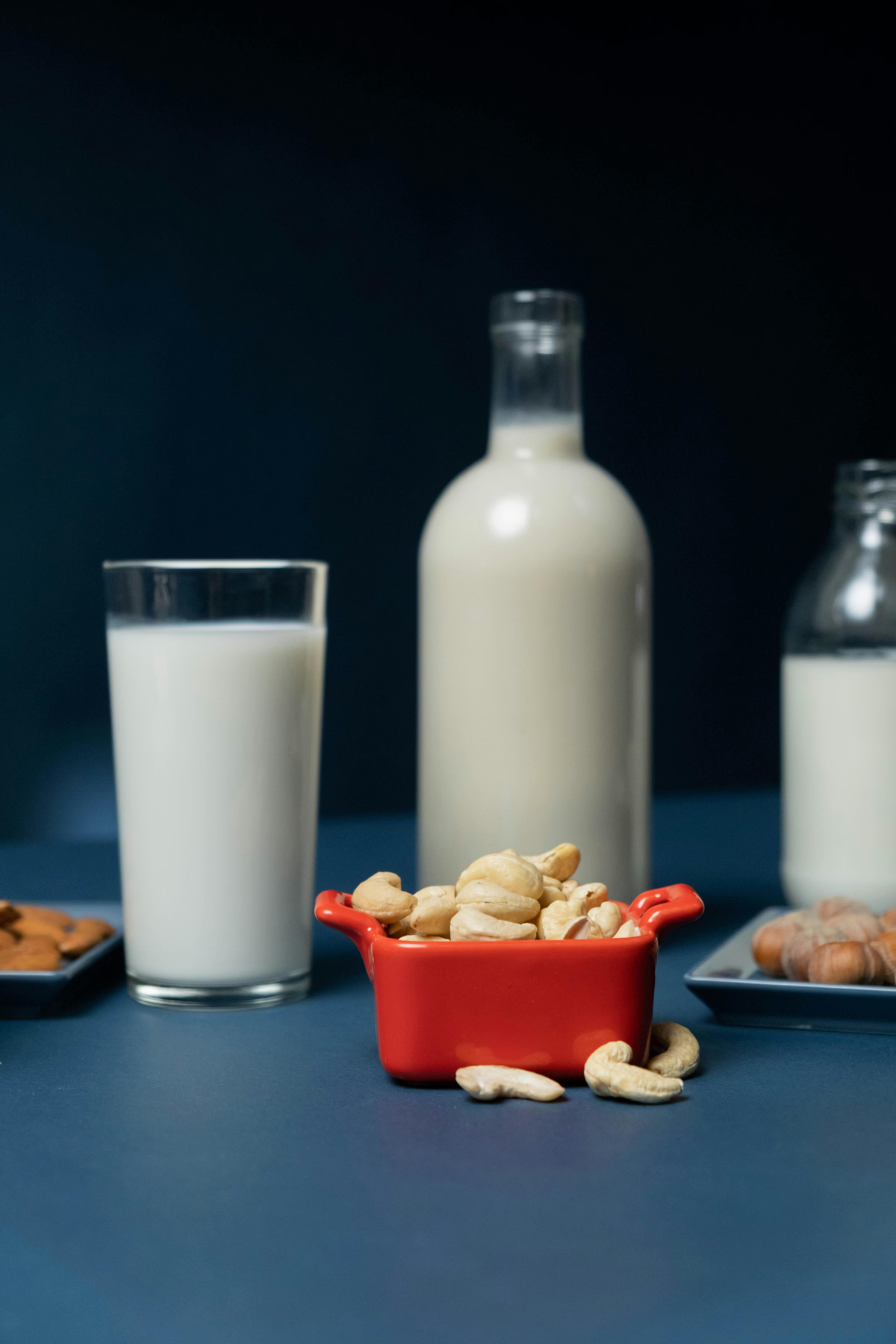
Cashews
Serving: 0.25 cup (40g, 221 cal)
Key Nutrients
| Nutrient | Amount | DV% | Rating |
|---|---|---|---|
| copper | 0.88 mg | 98% | Excellent |
| phosphorus | 237.2 mg | 34% | Good |
| manganese | 0.66 mg | 29% | Good |
| magnesium | 116.8 mg | 28% | Good |
| zinc | 2.31 mg | 21% | Good |
| tryptophan | 0.09 g | 28.1% | Good |
copper
Excellentphosphorus
Goodmanganese
Goodmagnesium
Goodzinc
Goodtryptophan
GoodAbout Cashews
Health benefits
Monounsaturated fat profile
Cashews carry less total fat than most tree nuts. Of the 17.5 g of fat in a quarter-cup (40 g) serving, roughly 54% is monounsaturated, predominantly oleic acid (18:1), the same fatty acid that dominates olive oil. The remaining unsaturated fraction is largely linoleic acid (18:2) at 3.1 g per serving.
In clinical trials with diabetic patients, replacing a portion of dietary carbohydrate with monounsaturated fat lowered fasting triglyceride concentrations. Triglycerides circulate as lipoproteins in the blood; elevated levels correlate with increased cardiovascular risk. Cashews provide a concentrated, whole-food source of oleic acid without the added sodium or processing found in many snack alternatives.
Nut consumption and coronary heart disease
A review in the British Journal of Nutrition (Blomhoff R, Carlsen MH) measured total antioxidant content across plant foods and ranked several tree nuts near the top. That antioxidant density may partly explain the cardiovascular data.
The Iowa Women’s Health Study tracked nut and peanut butter intake against mortality. Total death rates fell 11% with weekly consumption and 19% with intake of one to four times per week.
A separate review in the British Journal of Nutrition (Kelly JH, Sabate J) pooled data from four large prospective cohorts: the Adventist Health Study, Iowa Women’s Study, Nurses’ Health Study, and Physician’s Health Study. Subjects eating nuts at least four times weekly showed a 37% lower risk of coronary heart disease compared to those who rarely consumed them. Each additional weekly serving was linked to an 8.3% average reduction in risk.
A quarter-cup of cashews or a tablespoon of cashew butter four times a week aligns with the intake levels associated with these reductions.
Copper: enzymes, connective tissue, and pigmentation
A quarter-cup serving delivers 0.88 mg of copper, covering 98% of the Daily Value. Copper is a cofactor for dozens of enzymes across distinct metabolic pathways.
Superoxide dismutase (Cu/Zn-SOD), one of the primary intracellular antioxidant enzymes, requires copper at its active site to catalyze the conversion of superoxide radicals into hydrogen peroxide and molecular oxygen. Lysyl oxidase, another copper-dependent enzyme, cross-links collagen and elastin fibrils, providing tensile strength to blood vessels, bone matrix, and joint cartilage. Copper also feeds into tyrosinase, the enzyme that synthesizes melanin in skin and hair.
Low copper intake has been linked to increased fecal free radical production and elevated fecal water alkaline phosphatase activity, both considered risk markers for colorectal damage (Davis CD, J Nutr 2003).
Inadequate copper over time is associated with iron deficiency anemia (since copper-containing ceruloplasmin oxidizes iron for transport), weakened arterial walls, reduced bone density, elevated LDL cholesterol with depressed HDL, arrhythmias, and impaired immune cell function.
Magnesium: bone structure and neuromuscular regulation
Each quarter-cup provides 116.8 mg of magnesium (28% DV). About two-thirds of total body magnesium resides in bone, split between the hydroxyapatite crystal lattice (structural) and the bone surface (a labile reservoir the body draws from when serum levels drop).
Magnesium competes with calcium at voltage-gated calcium channels on nerve and muscle cells. By occupying these channels, magnesium limits calcium influx and keeps neurons and smooth muscle in a resting state. When dietary magnesium falls short, unopposed calcium entry overactivates nerve cells, producing excessive contraction of smooth muscle and skeletal muscle alike.
This mechanism connects magnesium status to blood pressure regulation, airway smooth muscle tone, and vascular spasm. Clinical data link adequate magnesium intake to lower frequency of migraine episodes, reduced blood pressure readings, and fewer cardiac events.
Gallstone risk
Twenty years of dietary data from the Nurses’ Health Study (80,000 women) showed a 25% lower risk of gallstone formation among women consuming at least 1 ounce of nuts or peanut butter weekly. One ounce equals roughly 28 cashew halves or 2 tablespoons of cashew butter.
Nut intake and body weight
A 28-month prospective study in Obesity (Bes-Rastrollo M et al.) followed 8,865 adults in Spain. Participants eating nuts at least twice weekly were 31% less likely to gain 5 kg or more than those who rarely consumed nuts. Among those who did gain weight, infrequent nut consumers accumulated an average of 424 g more than regular nut eaters.
The authors noted: “Frequent nut consumption was associated with a reduced risk of weight gain (5 kg or more). These results support the recommendation of nut consumption as an important component of a cardioprotective diet and also allay fears of possible weight gain.”
Possible explanations include the satiating effect of protein and fat (cashews deliver 7.3 g protein and 17.5 g fat per quarter-cup), incomplete absorption of lipid calories from intact nut cell walls, and a modest increase in resting energy expenditure observed with higher unsaturated fat intake.
Description
The cashew “nut” is technically a seed. It grows attached to the base of the cashew apple, the fleshy fruit of Anacardium occidentale, a tropical tree native to northeastern Brazil’s coastal regions. Cashew apples are eaten fresh across Brazil and the Caribbean but rarely exported.
The seed itself is kidney-shaped, mild in flavor, and slightly spongy when raw. Cashews are never sold in-shell because the shell interior contains anacardic acid, a phenolic lipid caustic enough to blister skin. Processing removes this resin completely before the kernels reach market. The same resin finds industrial use in brake linings and protective coatings.
Anacardium occidentale belongs to the Anacardiaceae family alongside mango and pistachio.
History
The cashew tree originated along Brazil’s Atlantic coast. Portuguese traders carried it to Goa, Mozambique, and other tropical colonies in the 16th century. For several hundred years the tree was valued primarily for its timber, its fruit, and the caustic balm extracted from the nut shell. The kernel itself gained commercial significance only in the early 1900s. India, Brazil, Mozambique, Tanzania, and Nigeria remain the largest producers.
How to select and store
Cashews are sold in prepackaged containers and bulk bins. When buying from bulk bins, check that lids are closed and stock rotates frequently. Look for plump, unbroken kernels free of moisture, insect holes, or shriveling. Smell them if possible; rancid cashews give off a sharp, paint-like odor from oxidized unsaturated fatty acids.
Oleic acid’s single double bond makes cashews more oxidation-resistant than highly polyunsaturated nuts like walnuts, but they still benefit from cold storage. Sealed in an airtight container, they keep roughly six months refrigerated or one year frozen. Cashew butter should be refrigerated after opening.
How to enjoy
Serving ideas
- Toss cashews with dried mango and pumpkin seeds for a trail mix.
- Stir whole cashews into a hot pan of vegetables just before removing from heat; the residual warmth toasts them lightly without scorching.
- Saute cashews with shrimp, Thai basil, and green beans in a wok for a fast weeknight stir-fry.
- Swirl a spoonful of maple syrup through warm oatmeal, then top with roughly chopped cashews.
- Blend cashew butter into a breakfast smoothie for an extra 5+ g of protein per quarter-cup.
- Whisk cashew butter with soy sauce, minced garlic, grated ginger, cayenne, and warm water to make a sauce for steamed fish or grilled tofu.
- Roast raw cashews gently at 160-170 F (about 75 C) for 15-20 minutes to preserve the unsaturated fatty acids.
Individual concerns
Oxalate content
Cashews contain high levels of oxalate, a naturally occurring organic acid. For individuals with calcium oxalate kidney stones, hyperoxaluria, or certain intestinal malabsorption conditions, dietary oxalate restriction is standard medical guidance.
Cashews and food allergies
Tree nuts, including cashews, are one of the eight major allergen groups identified by U.S. labeling law (FALCPA). Cashew allergy can trigger anaphylaxis; cross-reactivity with pistachio (a fellow Anacardiaceae member) is well documented.
Nutritional profile
A quarter-cup (40 g) of raw cashews provides 0.88 mg copper (98% DV), 237.2 mg phosphorus (34% DV), 0.66 mg manganese (29% DV), 116.8 mg magnesium (28% DV), and 2.31 mg zinc (21% DV).
Toasting nuts and seeds on a heavy-gauge Nordic Ware Natural Half Sheet Pan (2-Pack) brings out their natural oils and deepens flavor — a simple step that makes a real difference.
Recipes with Cashews
Full Nutrient Profile
Related Articles
- A New Way of Looking at Fats
- Adapting a Meal Plan for Little or No Grains
- Allergies
- Can you tell me about oxalates, including the foods that contain them and how are they related to nutrition and health?
- Can you tell me more about adverse reactions to cow's milk?
- How the healthy fats in nuts help protect against cardiovascular disease
- How to prepare great tasting vegetables with Nutrient-Rich Cooking
- I enjoy the flavor of roasted nuts but am concerned that roasting may make nuts more difficult to digest or may damage nuts' healthy fats, resulting in the production of free radicals and causing nuts to become rancid more rapidly. Should I be concerned or can nuts be roasted without affecting their healthy benefits?
- What Is the best way to roast nuts and seeds?
- What Nutrients Are Most Likely to be Deficient in a Vegetarian Diet?
References
- Bes-Rastrollo M, Sabate J, Gomez-Gracia E, Alonso A, Martinez JA, Martinez-Gonzalez MA. Nut consumption and weight gain in a Mediterranean cohort: The SUN study. Obesity (Silver Spring). 2007 Jan;15(1):107-16. 2007. PMID:17228038. https://doi.org/10.1038/oby.2007.507
- Blomhoff R, Carlsen MH, Andersen LF, Jacobs DR Jr. Health benefits of nuts: potential role of antioxidants. Br J Nutr. 2006 Nov;96 Suppl 2:S52-60. 2006. PMID:17125534. https://doi.org/10.1017/bjn20061864
- Davis CD. Low dietary copper increases fecal free radical production, fecal water alkaline phosphatase activity and cytotoxicity in healthy men. J Nutr. 2003 Feb; 133(2):522-7. 2003. https://doi.org/10.1093/jn/133.2.522
- Ensminger AH, Ensminger, ME, Kondale JE, Robson JRK. Foods & Nutriton Encyclopedia. Pegus Press, Clovis, California. 1983.
- Ensminger AH, Esminger M. K. J. e. al. Food for Health: A Nutrition Encyclopedia. Clovis, California: Pegus Press; 1986. 1986. PMID:15210.
- Fortin, Francois, Editorial Director. The Visual Foods Encyclopedia. Macmillan, New York. 1996.
- Hu FB, Stampfer MJ. Nut consumption and risk of coronary heart disease: a review of epidemiologic evidence. Curr Atheroscler Rep 1999 Nov;1(3):204-9. 1999. https://doi.org/10.1007/s11883-999-0033-7
- Kelly JH Jr, Sabate J. Nuts and coronary heart disease: an epidemiological perspective. Br J Nutr. 2006 Nov;96 Suppl 2:S61-7. 2006. PMID:17125535. https://doi.org/10.1017/bjn20061865
- Resnicow K, Barone J, Engle A, et al. Diet and serum lipids in vegan vegetarians: a model for risk reduction. J Am Diet Assoc 1991 Apr;91(4):447-53. 1991. PMID:16190. https://doi.org/10.1016/0024-3205(77)90360-5
- Tsai CJ, Leitzmann MF, Hu FB, Willett WC, Giovannucci EL. Frequent nut consumption and decreased risk of cholecystectomy in women. Am J Clin Nutr. 2004 Jul;80(1):76-81. 2004. PMID:15213031. https://doi.org/10.1093/ajcn/80.1.76
- Wood, Rebecca. The Whole Foods Encyclopedia. New York, NY: Prentice-Hall Press; 1988. 1988. PMID:15220. https://doi.org/10.1002/food.19770210206