Apricots
Serving: 1.00 whole (35g, 17 cal)
Key Nutrients
About Apricots
Health benefits
Apricots contain a range of antioxidant compounds in a low-calorie package (17 calories per whole fruit).
Antioxidant compounds in apricots
One whole apricot (35g) provides vitamin A (4% DV from beta-carotene) and vitamin C (5% DV). Beyond these vitamins, apricots contain polyphenolic compounds including flavonoids that have been associated with reduced cardiovascular disease risk in cohort studies.
Key antioxidant compounds identified in apricots include:
- Quercetin
- Proanthocyanidins
- Catechins
- Epicatechins
- Hydroxycinnamics
- Gallic acid
- Caffeic acid
- Coumaric acid
- Ferulic acid
Carotenoids and eye health
Apricots contain carotenoids and xanthophylls, including lutein, which absorbs blue light wavelengths in the retina and may slow age-related macular degeneration. One whole apricot provides 31 mcg of lutein and zeaxanthin.
Epidemiologic data associate intake of three or more daily fruit servings with reduced risk of age-related vision loss.
Catechins and anti-inflammatory activity
Apricots supply catechins, a subclass of flavonoids also concentrated in green tea and cocoa. A single apricot contains approximately 4-5 mg of catechins. These compounds inhibit cyclooxygenase-2 (COX-2), an enzyme that produces pro-inflammatory prostaglandins.
Most mechanistic research on catechins comes from animal studies. Human trials with catechin-rich foods (tea, cocoa) have shown vascular protection and improved blood pressure control, though apricot-specific human data remain limited.
Fiber content
One apricot provides 0.7g of dietary fiber, split roughly evenly between soluble and insoluble forms. The soluble fraction binds bile acids in the intestine, promoting their excretion and thereby contributing to cholesterol regulation.
Description
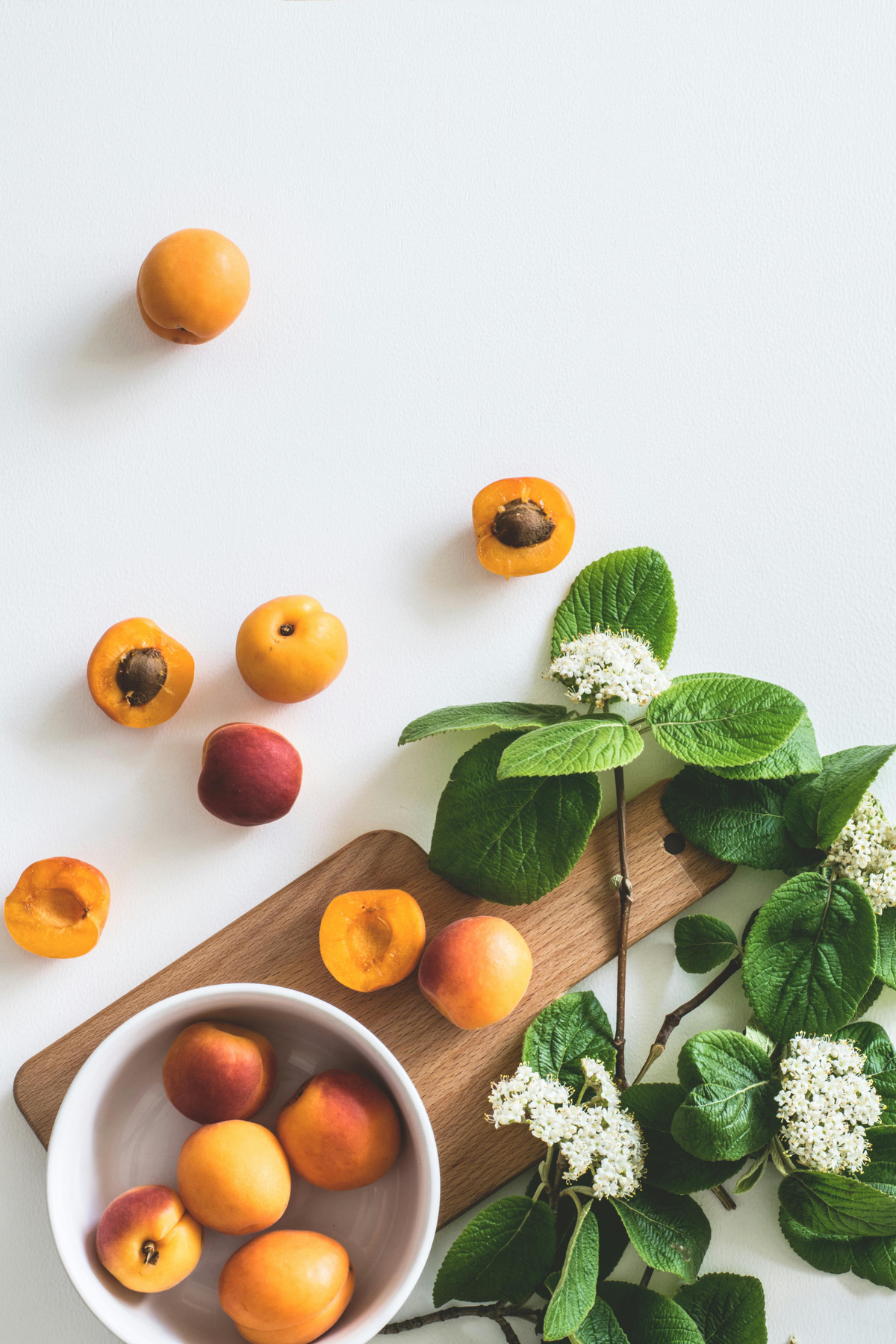
Apricots are small, golden orange fruits, with velvety skin and flesh: not too juicy but definitely smooth and sweet. Their flavor is almost musky, with a faint tartness that is more pronounced when the fruit is dried. Some people think of the flavor as being somewhere between a peach and a plum, fruits to which they’re closely related.
History
Apricots are originally from China but arrived in Europe via Armenia, which is why the scientific name is Prunus armenaica. The apricot tree came to Virginia in 1720 but its appearance in the Spanish missions of California around 1792 marked the fruit’s real arrival. The climate there is perfectly suited to apricot culture, and apricots in the United States are grown primarily in the sunny orchards of California.
Apricots are enjoyed as a fresh fruit but also dried, cooked into pastry, and eaten as jam. The fruits are also distilled into brandy and liqueur. Essential oil from the pits is sold commercially as bitter almond oil. Turkey, Italy, Russia, Spain, Greece, U.S.A. and France are the leading producers of apricots.
How to select and store
Apricot season in the U.S. runs from May through August. In the winter, apricots are imported from South America. Look for fruits with a rich orange color while avoiding those that are pale and yellow. Fruits should be slightly soft. If they are too firm they have not been tree-ripened, and tree-ripened fruits always taste best. For the most antioxidants, choose fully ripened fruit.
Certified organic apricots reduce exposure to pesticide residues and heavy metals. Local growers without formal USDA certification may also follow organic practices. In large supermarkets, look for the USDA organic logo.
How to enjoy
A few quick serving ideas:
- Add sliced apricots to hot or cold cereal.
- The next time you make whole grain pancakes add some chopped apricots to the batter.
- Give a Middle Eastern flavor to chicken or vegetable stews with the addition of dried, diced apricots.
- Serve fresh apricots in your green salad when they are in season.
Individual concerns
Dried apricots and sulfites
An Overview of Adverse Food Reactions
Nutritional profile
One whole apricot provides vitamin A (4% DV as pro-vitamin A carotenoids, primarily beta-carotene at 383 mcg), vitamin C (5% DV), copper (3% DV), fiber (3% DV), and potassium (91 mg, 3% DV).
Apricots also contain lycopene, a carotenoid pigment that contributes to their orange-red coloring, along with the alpha-carotene and cryptoxanthin that characterize Prunus species.
For roasting vegetables, a ceramic baking dish like the Staub Ceramic Baking Dish Set retains heat beautifully and goes straight from oven to table.
Recipes with Apricots
Full Nutrient Profile
Related Articles
- Adverse Food Reactions: Environment and Cross Related Reactions
- Do dried fruits contain more nutritional value than fresh fruits?
- Eating in Season: Your Need-to-Know Basics
- How can I get more lycopene in my diet?
- How does fruit juice compare to whole fruit?
- How to Help Avoid the Swine Flu and Seasonal Flu by Strengthening Your Immune System with the World's Healthiest Foods
- Rejuvenating Foods for Springtime
References
- Bureau S, Renard CMGC, Reich M, et al. Change in anthocyanin concentrations in red apricot fruits during ripening. Food Sci Technol 2009;42:372-7. https://doi.org/10.1016/j.lwt.2008.03.010
- Cho E, Seddon JM, Rosner B, Willett WC, Hankinson SE. Prospective study of intake of fruits, vegetables, vitamins, and carotenoids and risk of age-related maculopathy. Arch Ophthalmol. 2004 Jun;122(6):883-92. 2004. PMID:15197064. https://doi.org/10.1001/archopht.122.6.883
- Craig W. Phytochemicals: guardians of our health. J Am Diet Assoc. 1997;97(Suppl 2) S199-S204. 1997.
- Doganay S, Duz C, Firat PG, et al. The effect of apricots on the experimental cataract model formed by sodium selenite. Food Chem Toxicol 2013;55:371-7. https://doi.org/10.1016/j.fct.2012.12.061
- Dorai T, Cao YC, Dorai B, et al. Therapeutic potential of curcumin in human prostate cancer. III. Curcumin inhibits proliferation, induces apoptosis, and inhibits angiogenesis of LNCaP prostate cancer cells in vivo. Prostate 2001 Jun 1;47(4):293-303. 2001. PMID:16280. https://doi.org/10.1016/s0031-6997(25)06712-2
- Dragovic-Uzelac V, Pospisil J, Levaj B, et al. The study of phenolic profiles of raw apricots and apples and their purees by HPLC for the evaluation of apricot nectars and jams authenticity. Food Chem 2005;91:373-83. https://doi.org/10.1016/j.foodchem.2004.09.004
- Ensminger AH, Esminger M. K. J. e. al. Food for Health: A Nutrition Encyclopedia. Clovis, California: Pegus Press; 1986. 1986. PMID:15210.
- Erdogan-Orhan I, Kartal M. Insights into research on phytochemistry and biological activities of Prunus armeniaca L. (apricot). Food Res Int 2011;44:1238-43. https://doi.org/10.1016/j.foodres.2010.11.014
- Hankinson SE, Stampfer MJ, Seddon JM, et al. Nutrient intake and cataract extraction in women: a prospective study. BMJ 1992;305(6849):335-9. 1992. https://doi.org/10.1136/bmj.305.6849.335
- Jacques PF, Chylack LT. Epidemiologic evidence of a role for the antioxidant vitamins and carotenoids in cataract prevention. Am J Clin Nutr 1991;53:352S-5S. 1991. https://doi.org/10.1093/ajcn/53.1.352s
- Jian L, Lee AH, Binns CW. Tea and lycopene protect against prostate cancer. Asia Pac J Clin Nutr. 2007;16 Suppl 1:453-7. 2007. PMID:17392149. https://doi.org/10.6133/APJCN.2007.16.S1.83
- Kohlmeyer L, Kark JD, Gomez-Gracia E, et al. Lycopene and myocardial infarction risk in the EUROMIC study. Am J Epidemiol 1997;146:618-26. 1997.
- Koushan K, Rusovici R, Li W, et al. The role of lutein in eye-related disease. Nutrients 2013;22:1823-39. https://doi.org/10.3390/nu5051823
- Na JR, Oh KN, Park SU, et al. The laxative effects of Maesil (Prunus mume Siebold & Zucc.) on constipation induced by a low-fibre diet in a rat model. Int J Food Sci Nutr 2013;64:333-45. https://doi.org/10.3109/09637486.2012.738648
- Nadtochiy SM, Redman EK. Mediterranean diet and cardioprotection: the role of nitrite, polyunsaturated fatty acids, and polyphenols. Nutrition 2011;27:733-44. https://doi.org/10.1016/j.nut.2010.12.006
- Olszewska M, Glowacki R, Wolbis M, Bald E. Quantitative determination of flavonoids in the flowers and leaves of Prunus spinosa L. Acta Pol Pharm 2001 May-2001 Jun 30;58(3):199-203. 2001. PMID:16270. https://doi.org/10.1098/rspb.1977.0044
- Papazian R. Sulfites: Safe for most, dangerous for some. US Food and Drug Administration. FDA Consumer. Dec 1996. 1996. https://doi.org/10.1371/journal.pone.0186629
- Parlakpinar H, Olmez E, Acet A, et al. Beneficial effects of apricot-feeding on myocardial ischemia-reperfusion injury in rats. Food Chem Toxicol 2009;47:802-8. https://doi.org/10.1016/j.fct.2009.01.014
- Risasanen, T, Voutilainen S, Nyyssonen K et al. Low plasma lycopene concentration is associated with increased intima-media thickness of the carotid artery wall. Arterioscler Thromb Vasc Biol 2000 Dec;20(12):2677-81. 2000. https://doi.org/10.1161/01.atv.20.12.2677
- Shen CL, Smith BJ, Lo DF, et al. Dietary polyphenols and mechanisms of osteoarthritis. J Nutr Biochem 2012;23:1367-77. https://doi.org/10.1016/j.jnutbio.2012.04.001
- Skinner M, Hunter D. Bioactives in Fruit: Health Benefits and Functional Foods. Hoboken, NJ:Wiley and Sons; 2013. https://doi.org/10.1093/ajcn/78.3.517s
- Wills RB, Scriven FM, Greenfield H. Nutrient composition of stone fruit (Prunus spp.) cultivars: apricot, cherry, nectarine, peach and plum. J Sci Food Agric 1983 Dec;34(12):1383-9. 1983. PMID:16280. https://doi.org/10.1016/s0031-6997(25)06712-2
- Yilmaz I, Karaman A, Vardi N, et al. Effects of organic apricot on liver regeneration after partial hepatectomy in rats. Transplant P 2013;45:2455-60. https://doi.org/10.1016/j.transproceed.2013.04.005
- Wood, Rebecca. The Whole Foods Encyclopedia. New York, NY: Prentice-Hall Press; 1988. 1988. PMID:15220. https://doi.org/10.1002/food.19770210206
- Wuthi-udomler M, Grisanapan W, Luanratana O, Caichompoo W. Antifungal activity of Curcuma longa grown in Thailand. Southeast Asian J Trop Med Public Health 2000;31 Suppl 1:178-82. 2000. PMID:16270. https://doi.org/10.1098/rspb.1977.0044
- Risasanen, T, Voutilainen S, Nyyssonen K et al. Low plasma lycopene concentration is associated with increased intima-media thickness of the carotid artery wall. Arterioscler Thromb Vasc Biol 2000 Dec;20(12):2677-81 2000. https://doi.org/10.1161/01.atv.20.12.2677